Claypotts Castle – Dundee

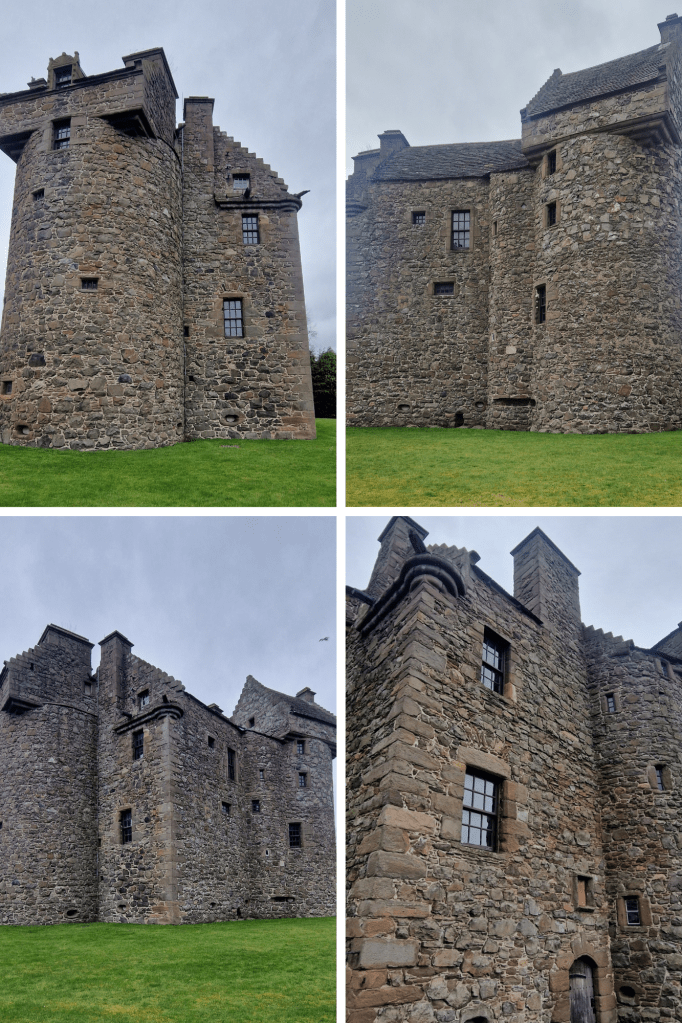
In the West Ferry area of Dundee, you’ll find the fairy-tale-like Claypotts castle. This curious and striking castle comprises a Z-plan Tower House, built as a family home by John Strachan and his son over two decades in the 1500’s and was, at that time, surrounded by several outbuildings and farm land. It consists of a rectangular main block, two large round towers and crowned with square gabled chambers at opposite corners. The round towers and diagonal corners meant that any attackers could easily be spotted.

The lands at Claypotts had originally been owned by Lindores Abbey and as the name ‘Claypotts’ suggests it was used by the Abbey as the location for their pottery production around 1247. By the early 1500’s the land had passed to John Strachan when he married Eufame Durham. Their servants included Jonet Wilkie, who worked for them here for over 14 years, Margaret Swynton who was house keeper and responsible for supervising the other servants and it’s known she earned a salary of six pounds a year. A male servant, George Tailyour was the family porter who answered the door and took care of all the candles and lighting. Eufame lived here all of her married life until her death in 1580. Her will still exists and lists property including her brown riding horse and 15 oxen for ploughing.
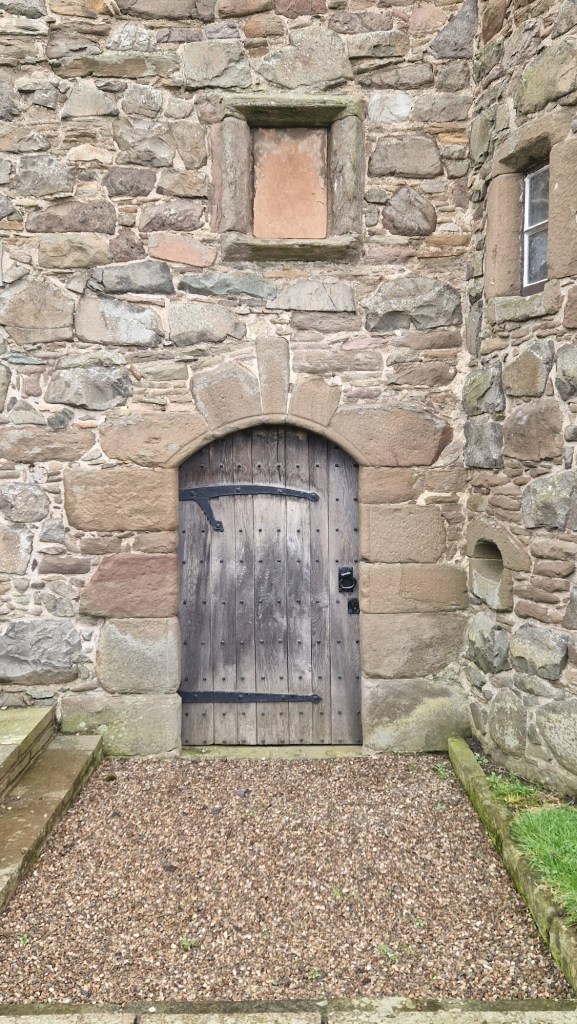
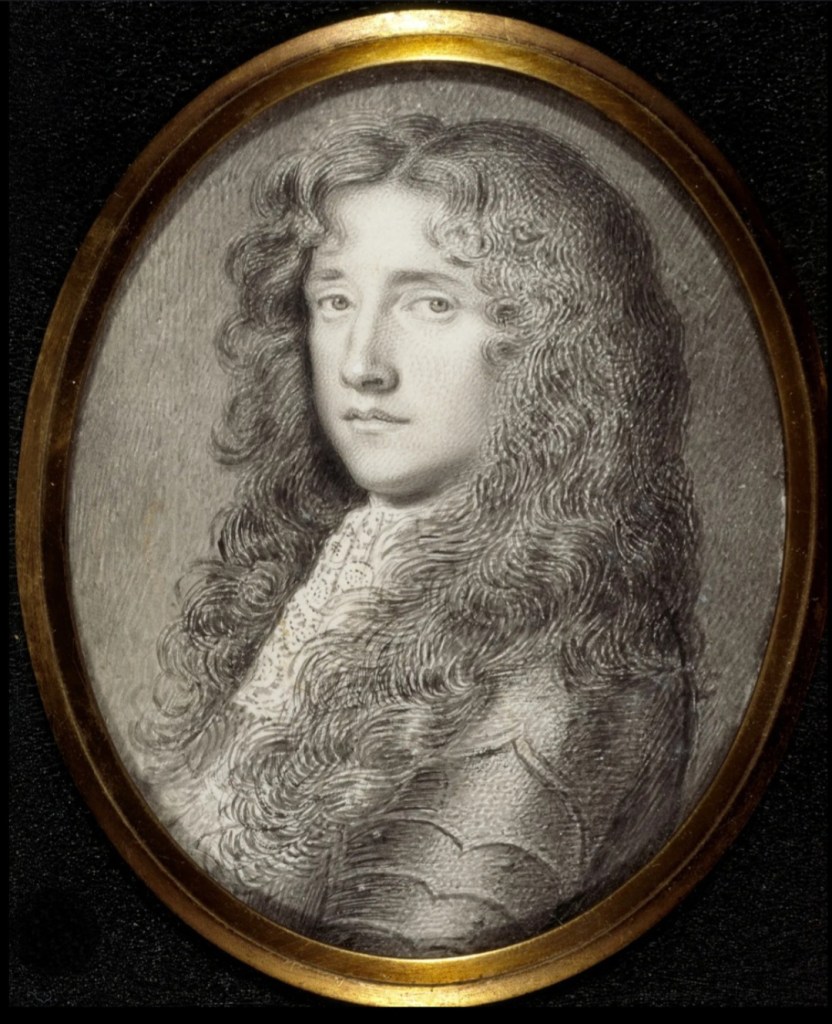
The Castle was sold to the Grahams in 1620. John Graham, 7th Laird of Claverhouse & 1st Viscount of Dundee, inherited Claypotts in 1653 when he was only 4 years old. Claverhouse was a professional soldier and gained a reputation as ‘Bluidy Clavers’ because of his enthusiastic persecution of Covenanters in Galloway. He became a prominent character during the Jacobite rebellion, earning himself the nickname ‘Bonnie Dundee’ (and by all accounts he was a very handsome fellow – see image below) by his supporters after he was shot and fell from his horse, mortally wounded, leading the Jacobites to victory over the forces of King William III & Queen Mary II at the battle of Killiecrankie in 1689. He was buried 3 days later in the mausoleum at St Brides Kirk, Old Blair. His lands were forfeited in 1694 and passed to Douglas, Earl of Angus, when the Jacobean cause was lost, then latterly passing to the Horne family. Thereafter the castle fell into a dilapidated condition but continued to be lived in by farm labourers until the late 19th century.
Claypotts finally fell into State care in 1926 when the surrounding buildings were demolishing and eventually replaced by incongruous modern housing. I felt sad to find this lovely, quirky castle sitting cheek by jowl with such dreary buildings.

It’s said that Claypotts is haunted by the spirit of a ‘White Lady’. This ghostly apparition is thought to be Marion Ogilvie, long-term mistress of Cardinal David Beaton and there is also an eerie legend that John Graham of Claverhouse still haunts the rooms of the castle.

The Castle Grounds are open all year however access to the Claypotts Castle itself needs to be arranged via Historic Scotland – 0121 878 756

Ravenscraig Castle, Dysart – Fife

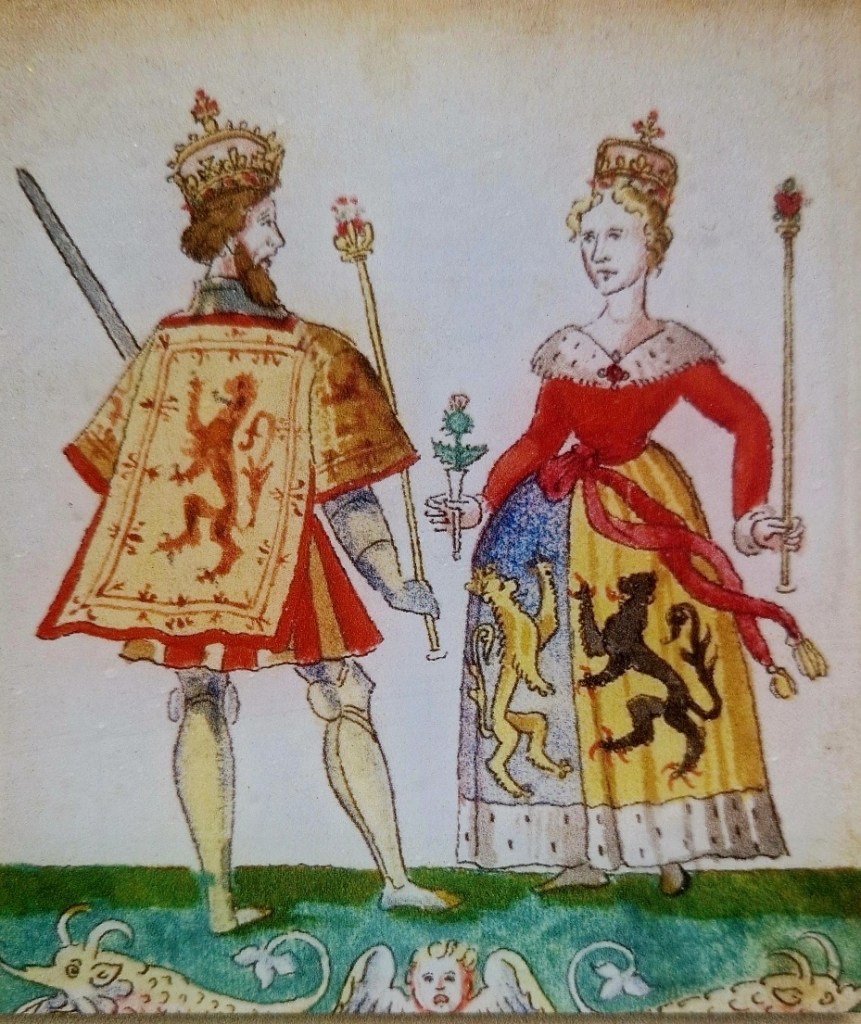
Now ruinous, Ravenscraig Castle belonged to one of the most powerful women in Scottish history, Queen Mary of Guelders, wife of James II.  Mary was descended from one of Europe’s most prominent families and had been raised at the court of her great-uncle, The Duke of Burgundy. She arrived in Scotland in June 1449, first visiting the Isle of May to pray at the shrine of St Adrian before making her way to Leith and staying at the Convent of St Anthony. On her wedding day, on 3 July 1449, crowds of commoners and nobles lined the streets of Edinburgh to watch her make her way to Holyrood Abbey for her marriage to King James II of Scotland. She was 14 and he was 18.

In 1460 King James gave his wife the land here at Dysart to build a castle but he was killed just a few months later. James had witness the introduction of gunpowder and was fascinated with artillery so the Duke Of Burgundy gifted him Mons Meg (this still sits on the parapet of Edinburgh Castle to this day). Mons Meg is a massive, iron cannon which took a team of oxen to move, constantly became stuck because of its enormous weight and could travel no farther than 5km a day. As Roxburgh Castle had long been held by the English, King James ordered some special new cannons from Flanders to ensure success in his bid to retrieve Roxburgh. During the siege, he stood proudly beside one of his new cannons, The Lion, and ordered it to be fired. One of the cannons iron rings had worked loose during transportation and it exploded, sending a piece of iron slicing through the King’s thigh, cutting it in half. He bled out quickly and was dead within minutes. King James was 29 years old. Roxburgh castle fell to James’ forces a few days later.

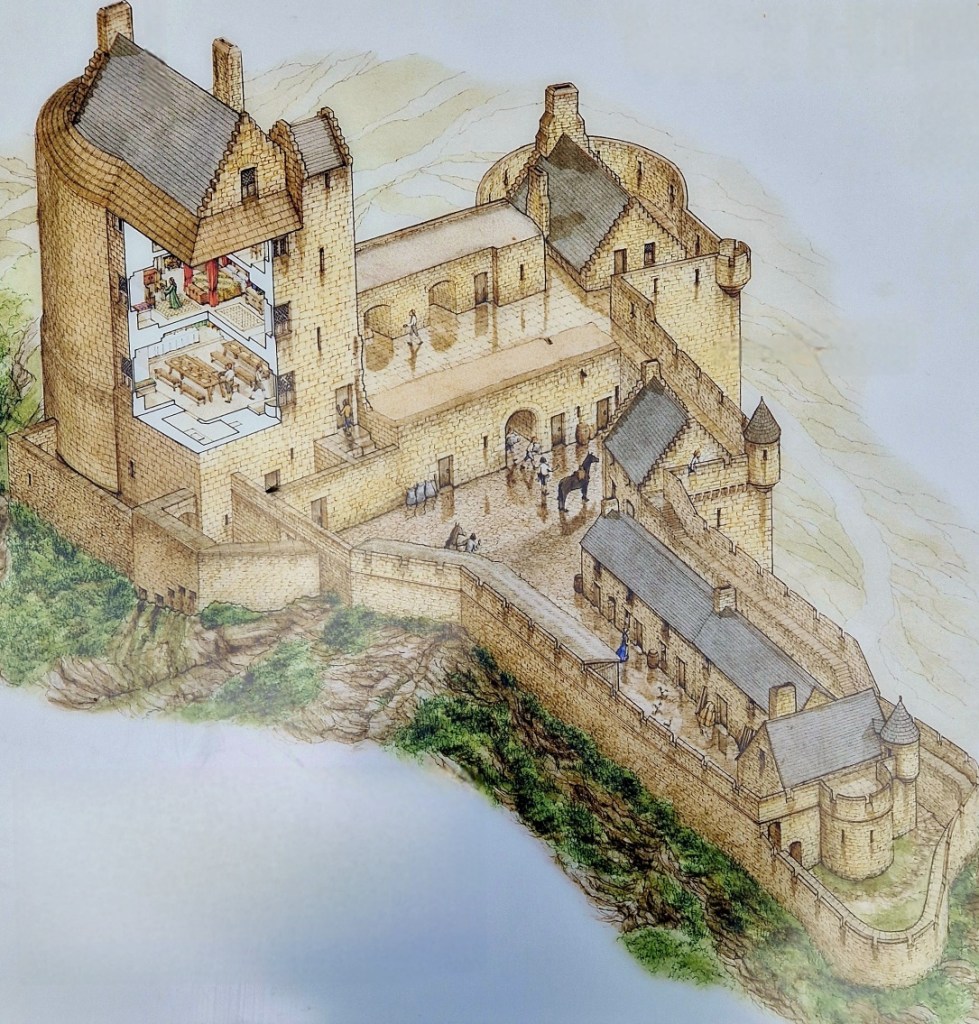
The death of King James left Mary to rule over the Kingdom as regent, on behalf of their young son James III.  She was only in her mid-twenties when she took over governance of Scotland and ordered the construction of Ravenscraig Castle. Ravenscraig was built as a fortress to guard the Firth of Forth and the first in Scotland erected to withstand return artillery fire. The Castle consists of two D-plan towers with 3.5m thick walls, linked by a two-storey block with a broad parapet and gun loops for safely firing upon attackers. The courtyard is cut off from the surrounding area by a very deep ditch and could be reached only by drawbridge. Building this Castle was a huge undertaking and the Queen employed master of works, David Boys, to lead a team that included master carpenter, Andrew Lesouris, and master mason Henry Merlzioun. Between 1461 & 1462 more than £600 had been spent. The construction, however, was interrupted when Mary died at Ravenscraig, just three years after her husband in 1463.

King James III wasn’t interested in Ravenscraig so made William Sinclair, who at the time was 1st Earl of Caithness and Norse Earl of Orkney, exchange his fiefdom of Kirkwall Castle on Orkney for Ravenscraig Castle in Dysart in 1470.  At that time, only three storeys of the east tower and the foundations of the adjacent hall were complete. Sinclair continued the building, altering the original design and had a gun platform constructed where Queen Mary’s great hall had been planned. It was to be a self contained residence with a bedroom on the top floor, the great hall below, then public areas, a bakery and other outbuildings filled the promontory. The gun platform was located between the two towers with cellars underneath. Ravenscraig Castle is known to have protected Merchant Ships from pirates who were based on the Isle of May in the outer part of the Forth Estuary.

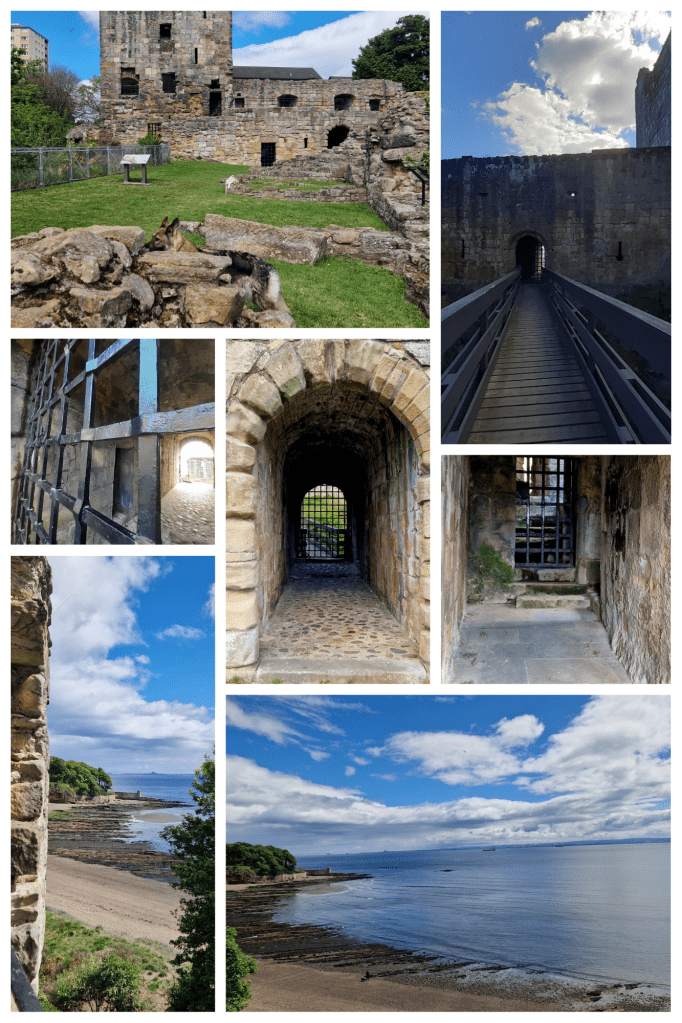
Built eastward along the shore from Ravenscraig, high walls protected against would-be invaders. A watchtower is built into the wall from which guards would have seen vessels coming & going from all directions. A gateway through the wall would have allowed for the delivery of goods, although this originally had a secure iron gate. A beehive dovecot from the 16th century also remains. The pigeons housed within would have been an important source of meat and eggs during tough winter months. The land around the castle is now parkland, ‘Ravenscraig Park’, once known as ‘Three Trees Park’. Legend tells that three brothers of the Sinclair family mistook each other as robbers one dark night and shot each other dead. Trees were planted over their graves.

Ravenscraig Castle remained in the Sinclair family until 1898 when it was sold to local linoleum manufacturer, Sir Michael Nairn, then finally taken into State care in 1955 due to its decayed and dangerous condition. Some parts of the Castle are still accessible to visitors but, disappointingly, the stairway to the remaining upper level is now locked behind an iron gate. Millie & I scrambled around trying to take photos but they don’t do justice to the size and might of this once proud Castle, built here in this prominent position overlooking the Firth of Forth.

NB: Notably, William Sinclair also had Rosslyn Chapel built.

Holy Well, Scotlandwell – Fife

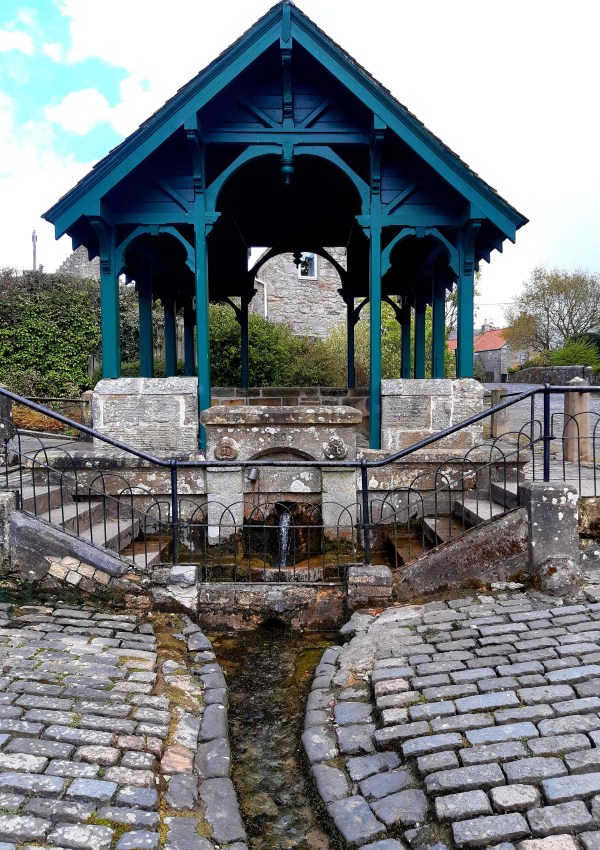
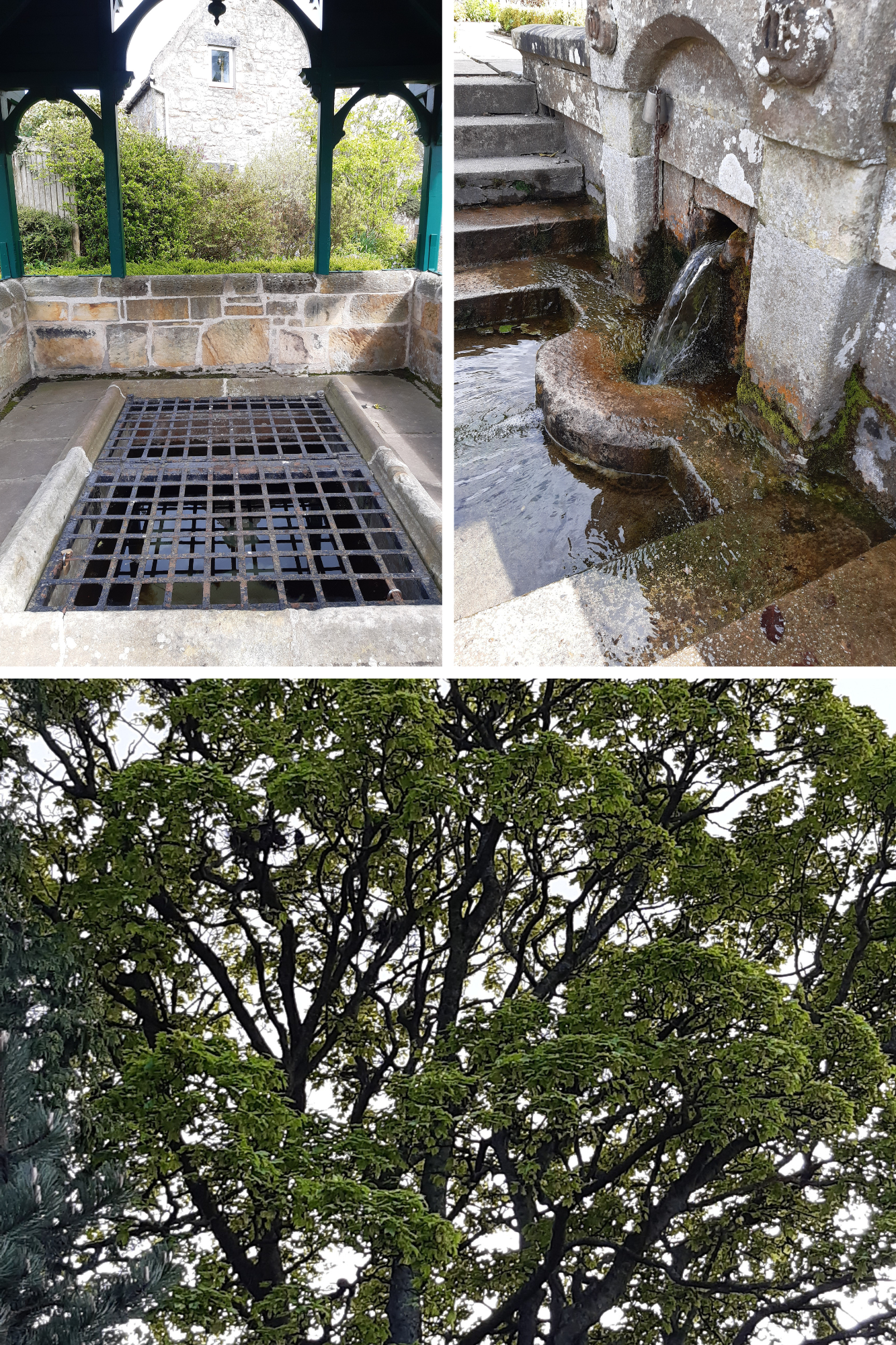
The natural spring water that bubbles up from deep underground and through the sand in the cistern of this well has a history mingled with folklore. It has been renowned for its curative properties for centuries and was first named ‘Fons Scotiae’ (Well of Scotland) by the Romans who passed through this area in 1st century AD. 

The widespread assertion that the water had healing powers meant that Scotlandwell became a significant place of pilgrimage throughout the Medieval period. 

Around 1250, the Trinitarian Friars (aka Red Friars) moved here to establish a hospice, using the healing waters from the holy well for patients in their new hospital of St Mary. It’s said that in the early 14th century, King Robert the Bruce came here in the hope of a cure for his leprosy and records show that Charles II travelled from his Palace in Dunfermline to take the ‘curative’. Mary Queen of Scots is also known to have visited the well to partake of its exquisite water.

The lovely, ornamental structure which now houses this ancient well is built from local sandstone, put in place and completed in 1858 by mason, Thomas Hay, and the wooden canopy constructed by joiner, Alexander Kelloch of Lindores.  The reconstruction of the well, building of an adjacent wash house and drying green was benefacted to the local community by landowner, Thomas Bruce of Arnot and his wife Henrietta Dorin, at a cost of £154. Quite a tidy sum at the time. 

I stop by here often to sit in the peacefulness of this place, drink the water and listen to the cascading of the water as it streams out of the well spout….if it’s not drowned out by the squawking of hundreds of crows that live in nearby sycamore trees.

Lady’s Tower, Elie – Fife

Driving through Elie in the East Neuk of Fife, I was attracted to the window display of a little pop-up clothing shop on the High Street. I stopped to take a peek inside. There, I joined in conversation with the friendly staff and a gaggle of other ladies who had also been tempted to browse. An hour later, I walked out with a pink gift bag on my arm containing several lovely items I hadn’t even known I needed! 

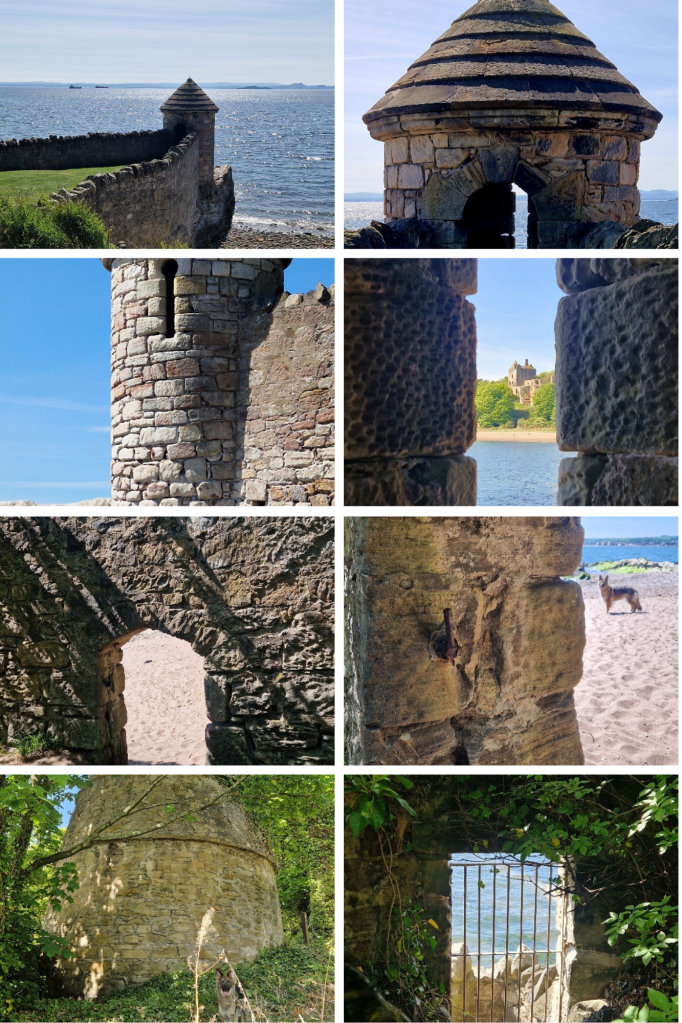
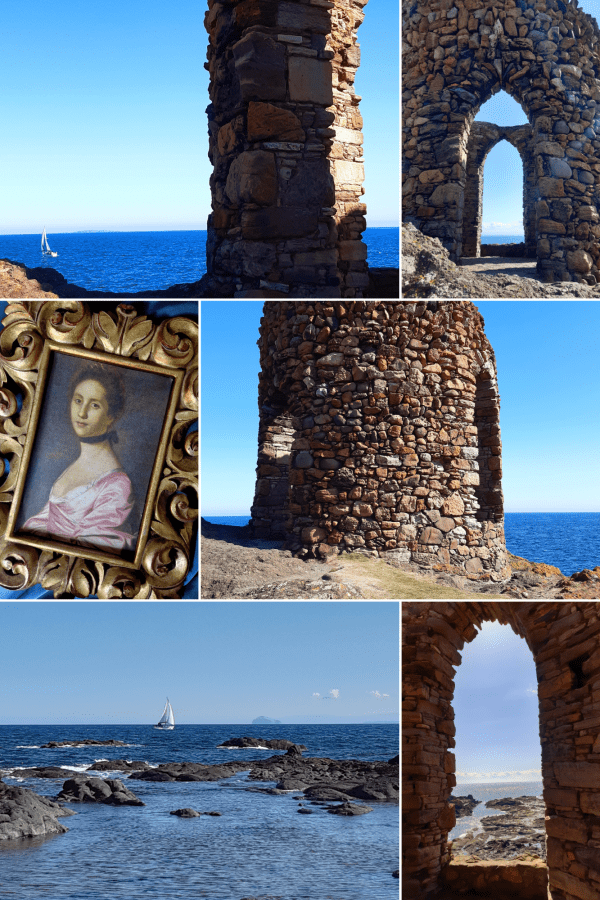
The purpose of my journey here, however, wasn’t to go shopping but to visit Lady’s Tower.  The Tower sits on a rocky promontory at Ruby Bay, just outside Elie.  Tiny garnets can be found in the reddish coloured sand here, hence the name, ‘Ruby Bay’. The tower itself is a red sandstone landmark which is set against the expanse of the Forth Estuary and like so many 18th century buildings it‘s now in ruin but, nevertheless, a very attractive and fascinating one to visit.

The tower comprises three massive arched window apertures which afford stunning views of the Forth. On the day I visited I could see as far as the Bass Rock and North Berwick Law. There had been two levels in the tower; a fireplace on the east wall of the ground floor with a staircase built against the west wall leading to an upper viewing platform.

Sir John Anstruther had the tower built in the 1770’s for the pleasure of his much doted upon wife, Lady Janet. Sir John was a Baronet, Scottish politician, local entrepreneur and industrialist who married Janet in 1750. She was the daughter of wealthy businessman and Scottish MP, Captain James Fall.  It was alleged the Fall family were of gypsy heritage and much to her displeasure, Janet was nicknamed ‘Queen of the Gypsies’.  She was a renowned beauty and most shockingly for the time, had a reputation amongst the men in their social circles for being an outrageous flirt! She was famously described by Thomas Carlisle, Scottish essayist, historian, and philosopher, as ‘a coquette and a beauty’.

Lady Anstruther loved sea-swimming and the health benefits she felt from it. As her habit was to swim naked, she insisted upon absolute privacy and so before bathing a servant would be sent into Elie, ringing a bell, to ensure locals stayed away. To enable Janet to dress discretely after her swim, her husband also had a vaulted changing room built down at shore level. The Tower was a place where she could relax and take in the views, watch the world go by and unwind from the exertions of her swim. There was, however, something which marred Janet’s overall pleasure of this wonderful setting and that was the tiny hamlet of Balclevie, a collection of dilapidated dwellings where some of the poorest people in the community lived.

Revealing her arrogant and cold-hearted nature, Janet felt Balclevie was offending to her eyes therefore had the entire village razed to improve her view. It is thought that, in truth, the tinker inhabitants of the hamlet reminded her too much of her own family origins. Flattening Balclevie did nothing, however, to abate the taunts about Janet’s gypsy background being made in the streets of Elie. She was determined to be recognised as a member of the landed gentry, her dress and deportment contrived to express her aristocratic rank. It’s said an old woman who had been evicted when her home at Balclevie was demolished upon Janet’s instructions, placed a curse on the family in retribution. Legend tells that the curse would see only six generations of the Anstruther family live in the grand ‘Elie House’. This foretelling did come to pass, when the cash-strapped sixth generation of Anstruther’s sold Elie House to the Baird family in 1853.

Lady Janet died in 1802, aged 77. I was able to ascertain that she is buried in the Elie Churchyard and although I spent time looking for the grave, I was unable to find it. It could be that hers was a burial slab, now overgrown with moss or perhaps, as the Anstruther family had commissioned the building of the church tower, she had been afforded an internment within the church itself.  Finding her is a quest for another day.

Little Garve Bridge, Garve – Ross & Cromarty

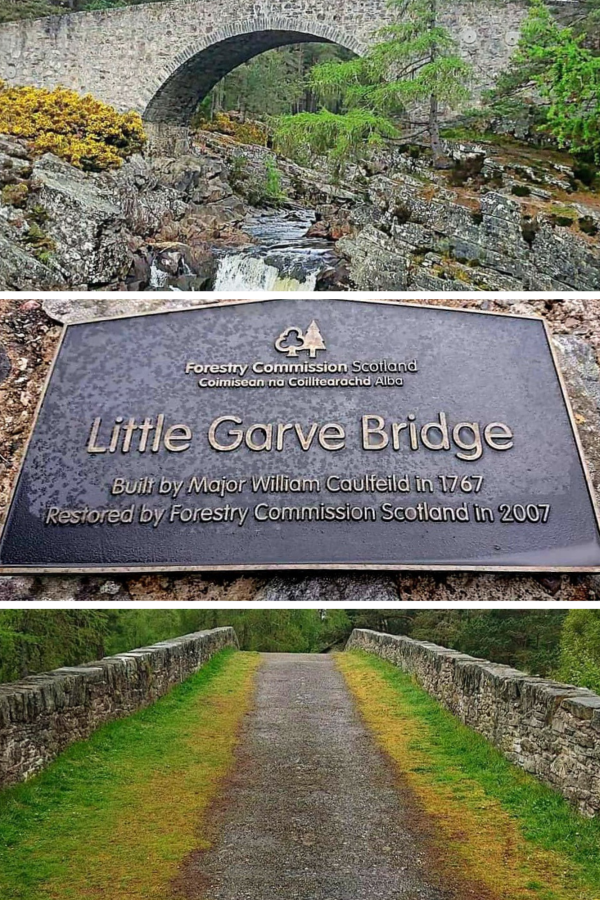
In the wake of the 1715 Jacobite Rebellion, General George Wade oversaw the building of a massive road infrastructure to support the movement of the British Army in the Highlands for the purpose of maintaining suppression of the population. A network of over 250 miles of interconnecting roads and 40 bridges were built, predominantly determined by the location of forts and army barracks. There are areas of the road and some bridges still in use today and referred to these days as the ‘Old Military Road’.

Now a scheduled monument, Little Garve Bridge spans a deep chasm of the Black Water River and had been part of the military road between Contin & Poolewe on the West Coast. Although known as Wade’s Bridge, it was in fact commissioned by his successor, Major William Caulfield.

Earl’s Palace, Birsay – Orkney

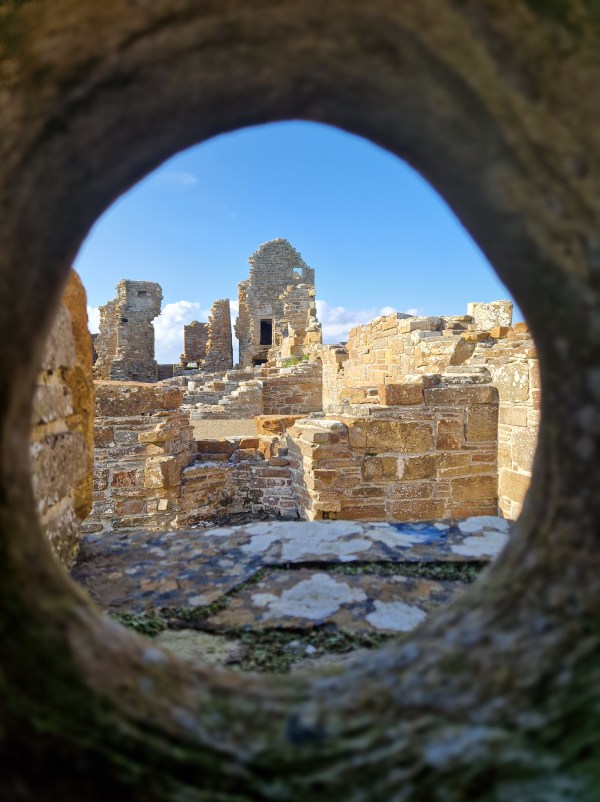
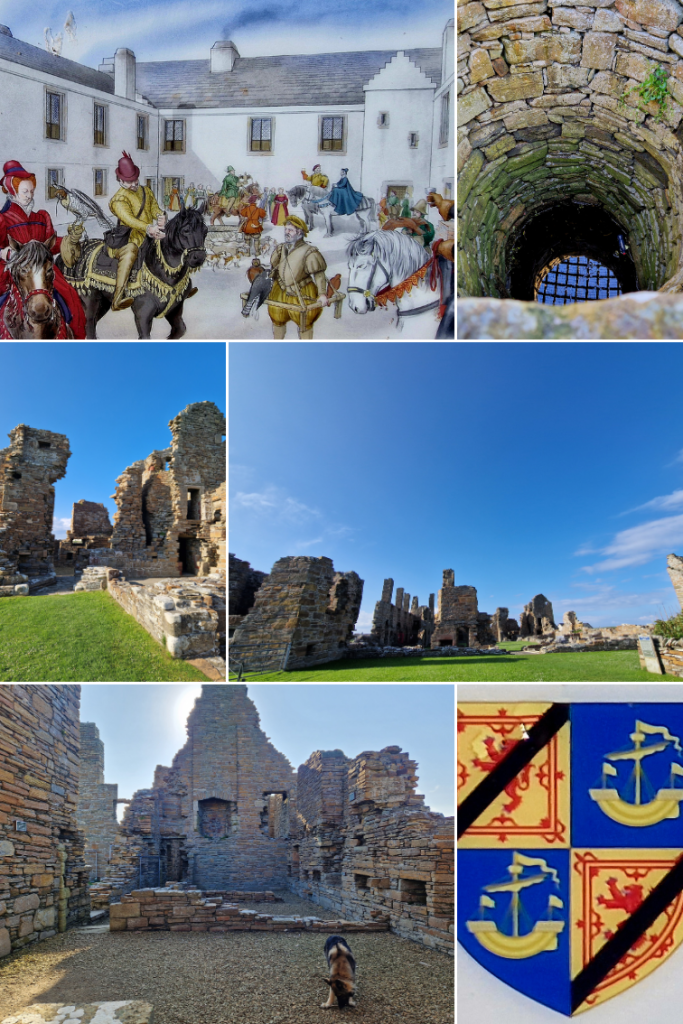
The Palace was built in the 1570’s – 1580’s for the notorious Earl Robert Steward, half brother of Mary Queen of Scots. Mary had 13 siblings and Robert was an illegitimate son of King James V and noblewoman Euphimia Elphinstone. After Mary’s forced abdication, Robert remained in the good graces of her son, the young James VI so that in 1581, he was elevated to Earl (Sheriff) of Orkney. Robert considered himself absolute ruler of Orkney and Shetland and this Renaissance style palace was a bold statement of his wealth and power. An inscription in Latin above the palace’s main entrance read – ‘Lord Robert Stewart, son of King James V, King of Scots, commissioned this building’. While Robert clung to his Royal connection, his coat of arms required the Scottish Royal Arms to bear a ribbon through the middle, a symbol of his illegitimacy, while the 2nd and 3rd quarters show the arms of the Earldom of Orkney.

Despite being a luxurious home, defence was still a major consideration. The palace was built around three sides of a courtyard with projecting towers at 3 of its 4 corners and a wall enclosing the north side. There were entrances to the south and west. To mitigate any security risk, only the upper floors had large windows while the ground floors had small openings and an array of gun loops from which artillerymen could cover every side of the building. Despite the many gun holes, the palace was still a place of grandeur and elegance. A single long gallery with views out to sea ran along the west wing and the building had fine panelling and painted ceilings in all the rooms that were needed to keep the Earl living in style. There were kitchens, a ‘girnel’ (granary), brewhouse and ample cellars for supplies. The palace was also equipped for sport and exercise, having archery butts, and a bowling green.

Earl Robert died in 1593 and his son Patrick succeeded him to also become Earl. Patrick was known as ‘Black Patie’ with a reputation for violence and a taste for luxury he couldn’t afford. In 1609 Patrick was imprisoned for ‘monyfauld wrongis’, including theft of lands and funds, oppression of local people, kidnapping, torture and murder. While incarcerated in Dumbarton, Patrick orchestrated a rising in Orkney however it failed and he was summarily beheaded for treason. By the time the Palace was taken over for use by Cromwell’s troops in 1653, most traces of Earl Robert’s extravagant lifestyle were gone and the kitchen contained ‘nothing, but mukk and filth!’ Thereafter the palace was used occasionally by later earls of Orkney but by 1700 it had fallen into decay.

It was such a beautiful, sunny day when we visited and although now in ruin, the palace still exudes an air of its previous magnificence. Definitely worth taking the time stop by.

Packhorse Bridge, Carrbridge

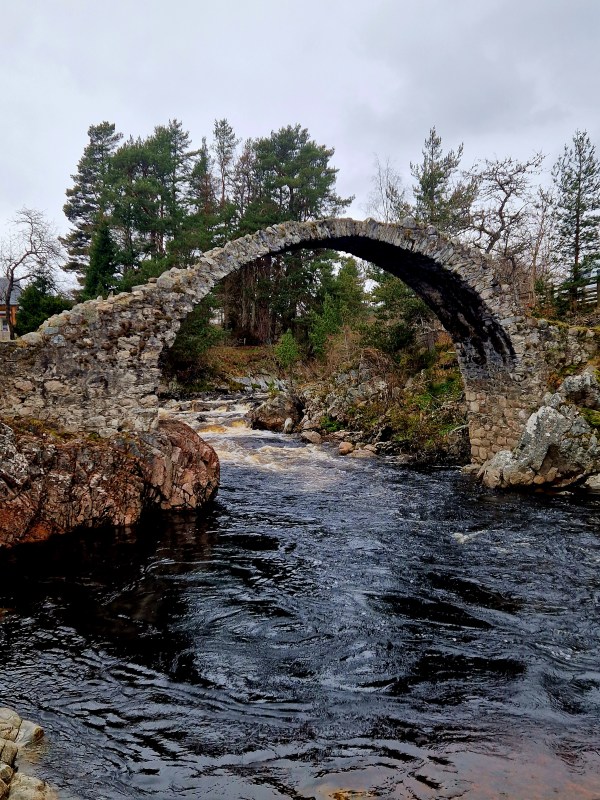
While passing through the Cairngorms we stopped to take a look at this iconic old bridge. Situated in the picturesque Highland village of Carrbridge and also known as ‘Coffin Bridge’, this bridge was built in 1717 to allow funeral processions to reach Duthil Church by crossing the River Dulnain. Notwithstanding, it was a welcome addition to the village, providing a way for tradesmen and locals to traverse the river. It’s a single span humpback arched bridge, now no longer in use and with its side rails missing, all that remains is a slender arch across the river. The viewpoint plaque reads:

“At the beginning of the eighteenth century, to the inconvenience of both travellers and local people, there was no point at which the River Dulnain could be crossed when it was in spate, and burials at the Church of Duthil were often delayed.

Brigadier-General Alexander Grant of Grant, Clan Chief, commissioned John Niccelsone, a mason from Ballindaloch, to build a bridge at Lynne of Dalrachney. Built between May and November 1717, the bridge was paid for out of stipends of the Parish of Duthill.

Its parapets and side walls were badly damaged in the 18th century and again in the famous flood of August 1829, giving the appearance it still has today. At the beginning of the eighteenth century, to the inconvenience of both travellers and local people, there was no point at which the River Dulnain could be crossed when it was in spate, and burials at the Church of Duthil were often delayed.

Brigadier-General Alexander Grant of Grant, Clan Chief, commissioned John Niccelsone, a mason from Ballindaloch, to build a bridge at Lynne of Dalrachney. Built between May and November 1717, the bridge was paid for out of stipends of the Parish of Duthill.

Its parapets and side walls were badly damaged in the 18th century and again in the famous flood of August 1829, giving the appearance it still has today.”

Queen’s Well, Glen Esk

A 4mile (6.4Km) roundtrip ‘stroll’ will take you from Invermark to the magnificent ‘Queen’s Well’ in Glen Esk. The route is strewn with boulders so presents a bit of a challenge in places, however, certainly worth the effort as the scenery is spectacular, especially when the heather is in full bloom.

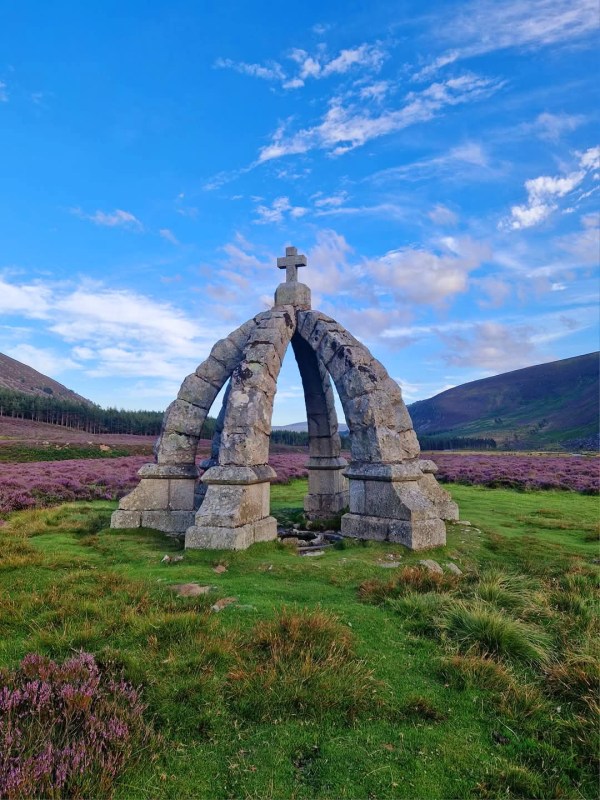
This granite crown shaped monument sits over a natural spring originally known as the ‘White Well’. The stone well was erected by Lord Dalhousie in 1861 to commemorate a visit made there by Queen Victoria and Prince Albert earlier that year. During their annual sojourn at Balmoral, the Royal couple and their entourage rode the 15mile (24Km) trip on ponies from Bridge of Muik, stopping for a picnic along the way. They met with Lord Dalhousie at the White Well where they refreshed themselves with the spring water before heading off to spend the night at his home, Invermark Lodge.

The inscription at the monument reads – ‘Her Majesty, Queen Victoria, and his Royal Highness the Prince Consort, visited this well and drank of its refreshing waters, on the 20th September, 1861, the year of Her Majesty’s great sorrow.’

Albert died on 14th December 1861, aged 42 years, having been diagnosed with typhoid fever.

Blog at WordPress.com.

Up ↑