Witches’ Stone – Spott, East Lothian

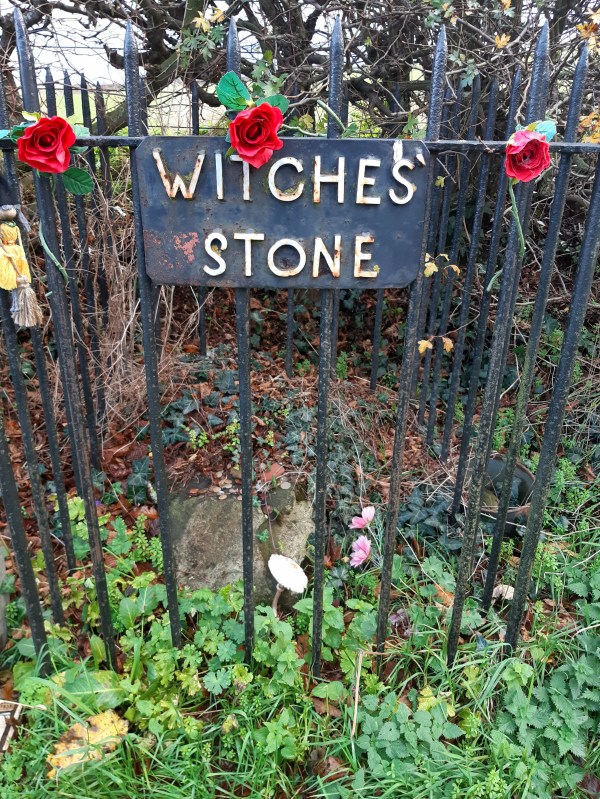
On my first trip away in the van, I drove by here as I’d heard about this stone. Spott is a tiny village only two miles from Dunbar and infamous as the place where the last witch trials and executions were held during the early 18th century. The stone here is a memorial to the burning of a witch in the South of Scotland, Marion Lillie, the Ringwoody Witch. Under the Birley Tree which stood nearby, the local Birley Court was held and sentenced Marion to death. This was in fact just a sham court set up by local Kirk Elders to deal with ‘problematic’ people within their farming community.

Marion had previously been accused of bewitching in 1698 but was never convicted however in 1704 she appeared before the court again, accused of so frightening a pregnant woman that she had a miscarriage. This time Marion was found guilty and in 1705, she was taken to the top of Spott Loan and burned to death as a witch. According to the Spott Kirk Session minutes of the time, ‘Many witches were burnt on Spott Loan’, on 11 February, 1705, un-named but apparently 13 of them in all, the size of a witches coven. These could well have been Marion’s accusers who she perhaps named while being ‘coerced’ during her trial.

This Witches Stone and the plaque which sits by it, now honours Marion Lillie and all those others who lost their lives during the Witch Hunt madness of the 17th & 18th centuries.
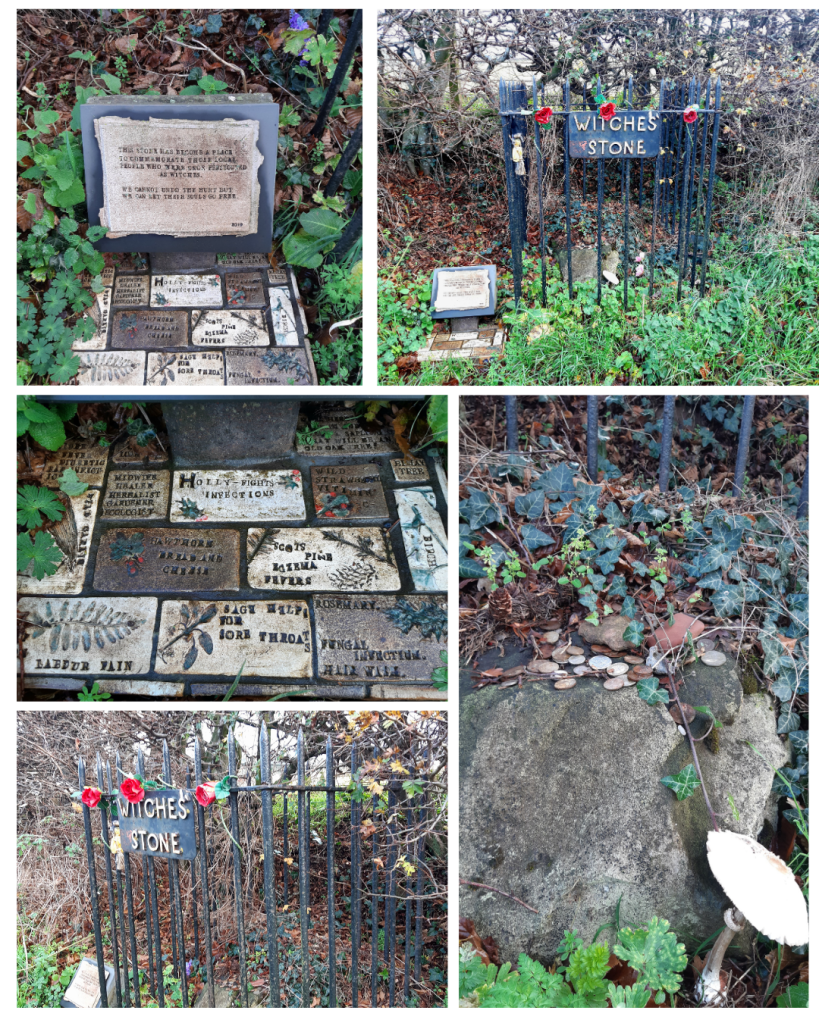
The plaque bears a dedication by local poet, Ruth Gilchrist, and reads: ‘This stone has become a place to commemorate those local people who were once persecuted as witches. We cannot undo the hurt but we can let their souls go free.’
Dunino Den – Fife

As I wandered into the grove beyond Dunino church, sunlight danced through the leaves of the trees surrounding Dunino Den, obscuring my vision. With a sudden fluttering of birds around me, I felt that there was indeed a supernatural atmosphere about this place. It’s said to be haunted by fairies, steeped in Celtic legend and a site of pagan worship that continues to attract pilgrims today. The fabled ‘Altar Stone’ sits up high, overlooking a burn running through the narrow gully below. A small, circular well worn into the rock here is rumoured to have once been used by Druids in their rituals of human sacrifice. Near the well, is a carved footprint, suggesting this was once a place of great significance. Carved footprints were used in Neolithic times, during inauguration rituals where our ancient chieftains would place a foot in such grooves and swear oaths to protect their people and lands. This would suggest that kings from our pre-history might once have been crowned here.

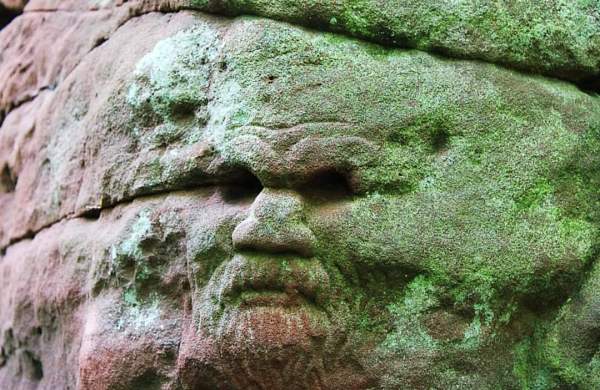
Steps lead down into the Den, to a Wheelhead Cross, ancient symbols and a mysterious face all carved in to the rock. Here, modern day worshippers now leave offerings, believing this place to be a portal to the otherworld. Ribbons flutter from the trees, messages for loved ones, since departed, are stuffed into cracks in the rock and coins left in crevices. Beware! It’s said that removing anything from this place will bring bad luck.

Legend tells of a visitor who came to Dunino Church and having followed the path through the woods to the altar stone, he saw an enchanting hamlet on the other side of the gully. The cottages were thatched and swathed in rambling roses. An old man in knee breeches and a woman in a long gown, stood at the entrance to one of the houses while a blacksmith leant on his hammer outside his workshop. A year later, the visitor returned, this time with a companion to whom he had recounted his story. They arrived at the Den to find the cottages gone and nothing but trees on the other side. It is said that a collection of cottages and a smithy once existed on the land there, but they had been demolished long, long ago….

“Come Faeries, take me out of this dull world, for I would ride with you upon the wind and dance upon the mountains like a flame!” – W B Yeats

Mermaid of the North

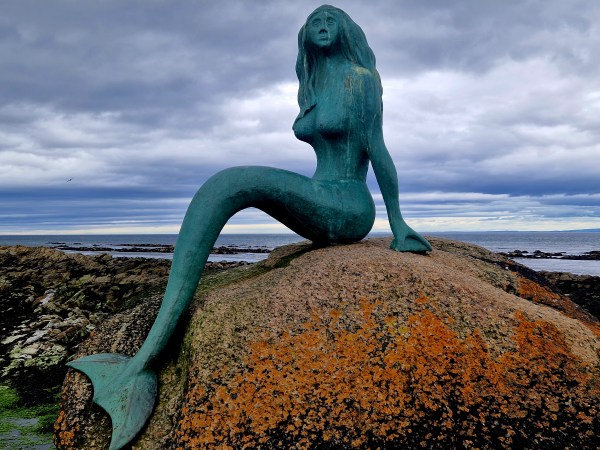
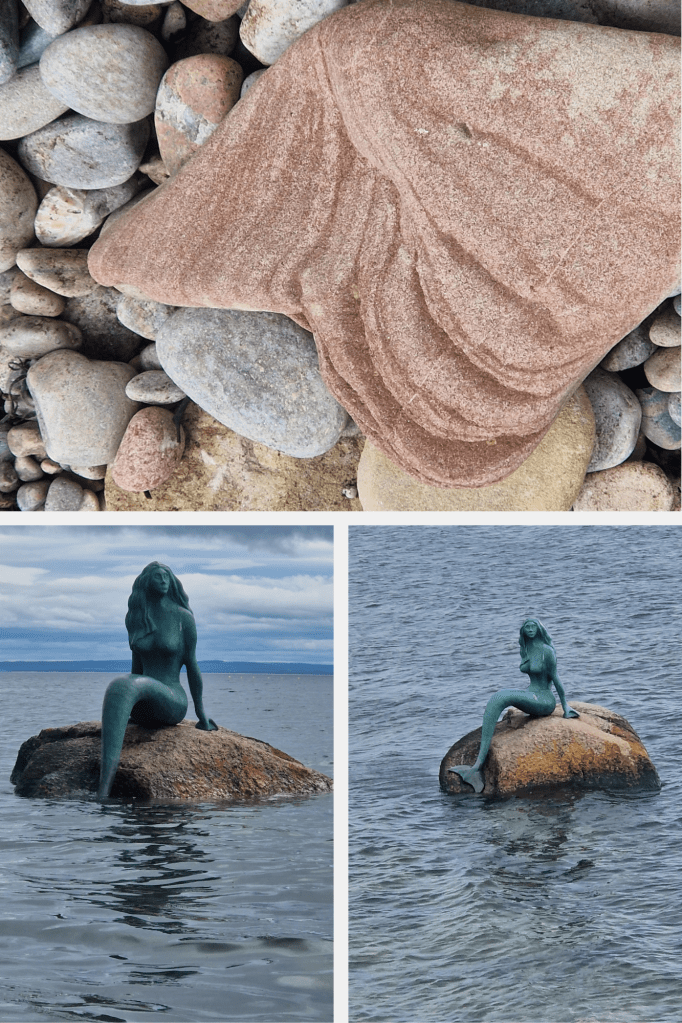
Capturing the imaginations of those who visit her, the alluring Mermaid of the North perches on ‘Clach Dubh’ (Black Rock) by the village of Balintore, Easter Ross. Coastal fables tell of a Mermaid who was captured by a cunning fisherman who hid her tail. Years later, after bearing his children, she found her tail and escaped back to sea, returning regularly to the shore, bringing fish for her hungry family.

Donal had left his boat to gather gulls’ eggs, up high on the cliff, when he noticed a beautiful, long haired woman sitting, singing on a rock below. He crept down for a closer look and upon realising she was a mermaid, grasped hold of her left hand, which it was said was the way to capture a mermaid as all of her strength is in her right hand. She begged him to let her go but being a lonely bachelor, he hid her tail so she couldn’t return to the sea and resolved to make her his wife. The Mermaid gradually settled into life with Donal, had several children with him and made a life for herself, caring for her family. One day though, while she was clearing away some dusty old things in the loft, she came upon her tail. She held it close and hurriedly ran back to the sea lest anyone stop her. Donal would often row out to sea, calling her, begging her to come home but she never returned to him. Everyday, however, her children would visit the shore where she would bring them fish to take home.

Millie & I always stop by, sometimes bringing friends, to visit The Mermaid of the North on our trips around the North Coast. She sits on her rock against the dramatic backdrop of the Moray Firth, where there are superb views of the coastline.

Blog at WordPress.com.

Up ↑