Tomb of Robert Munro Ferguson – Kirkcaldy, Fife

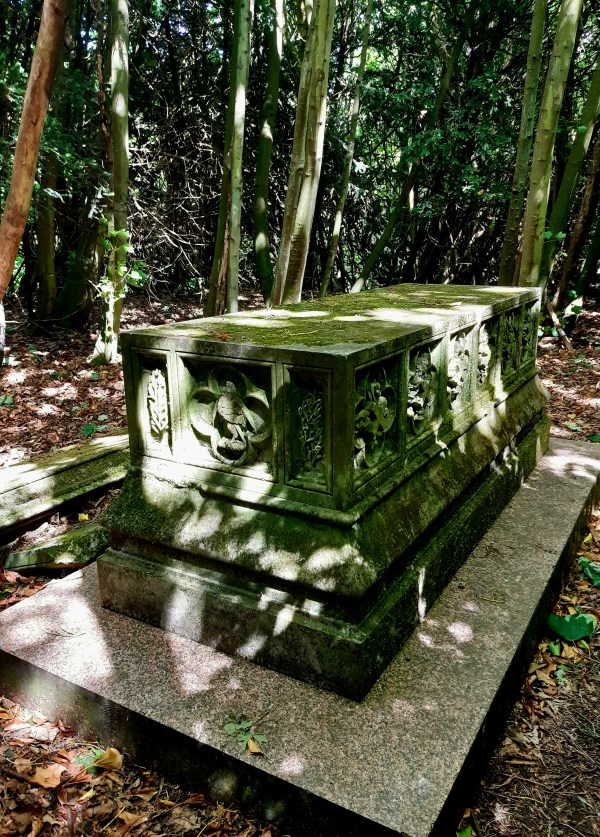
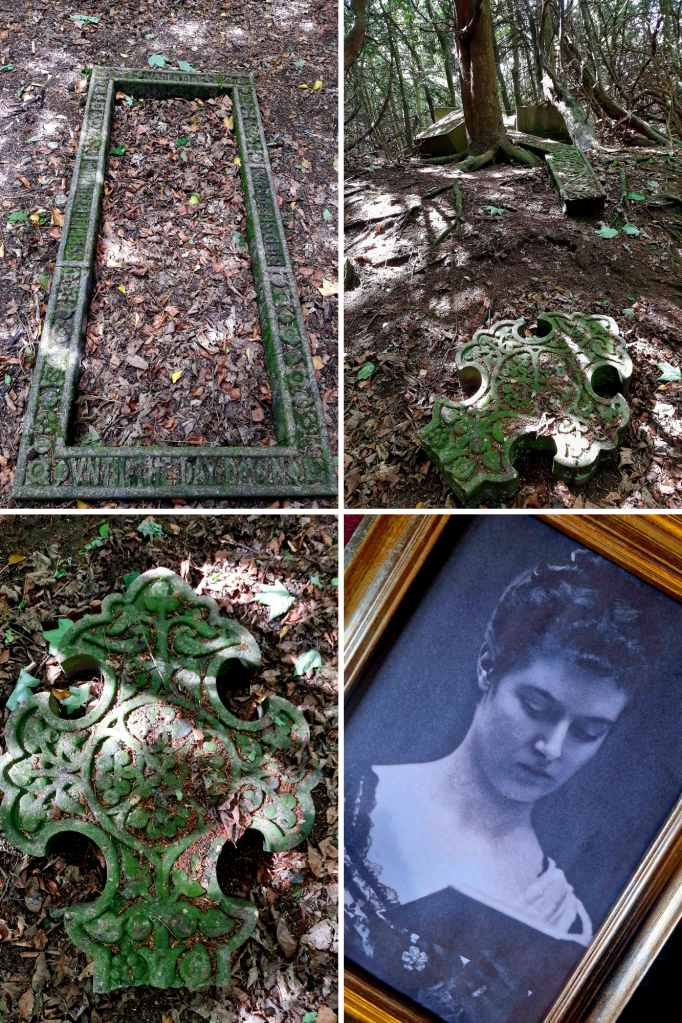
In an overgrown tangle of trees on a hill in the Raith Estate, on the outskirts of Kirkcaldy, there’s a long forgotten tomb. This is a place only visited by the occasional dog walker and teenagers searching for a bit of woodland adventure. Millie didn’t care that it took a while to find the location and what a magnificent resting place this would have been, once upon a time, when it overlooked Raith Lake and the surrounding rolling hills.

This is the Tomb of Lieutenant Robert Munro Ferguson, an officer of the 79th Regiment of Foot who became Colonel of his Regiment, commanding from 1835 to 1841. He was born on 20th August 1802, grew up in Muirton in Fife then went on to study in Edinburgh. Robert was the son of Ronald Craufurd Ferguson (also Colonel of the 79th from 1821 to 1841) and was appointed commanding officer with the rank of lieutenant-colonel on 13 March 1835, thus commanding in the regiment under his Father. The regiment had been serving in Canada but returned to Scotland in 1836.

On retiring from the army, Robert got into politics and became Liberal MP for Kirkcaldy Burghs from 1841 to 1862. He wholeheartedly supported the Liberal agenda, wanted electoral reform, male suffrage and the secret ballot, supported triennial fixed parliaments, voted for revision of Corn Laws and income tax. He also voted for universal, free schooling. Robert was re-elected unopposed at 4 consecutive general elections.

On 17th May 1859 he married Emma Elizabeth Mandeville at Westminster in London and they went on to have six children together: Ronald Craufurd, Alice Edwina, Emma Valentine, Hector, Robert Harry & Edith Isabel. In 1864 Robert inherited the baronies of Novar in Ross and Muirton on condition of adding ‘Munro’ to his surname. He died on 28 November 1868 and was laid to rest here.
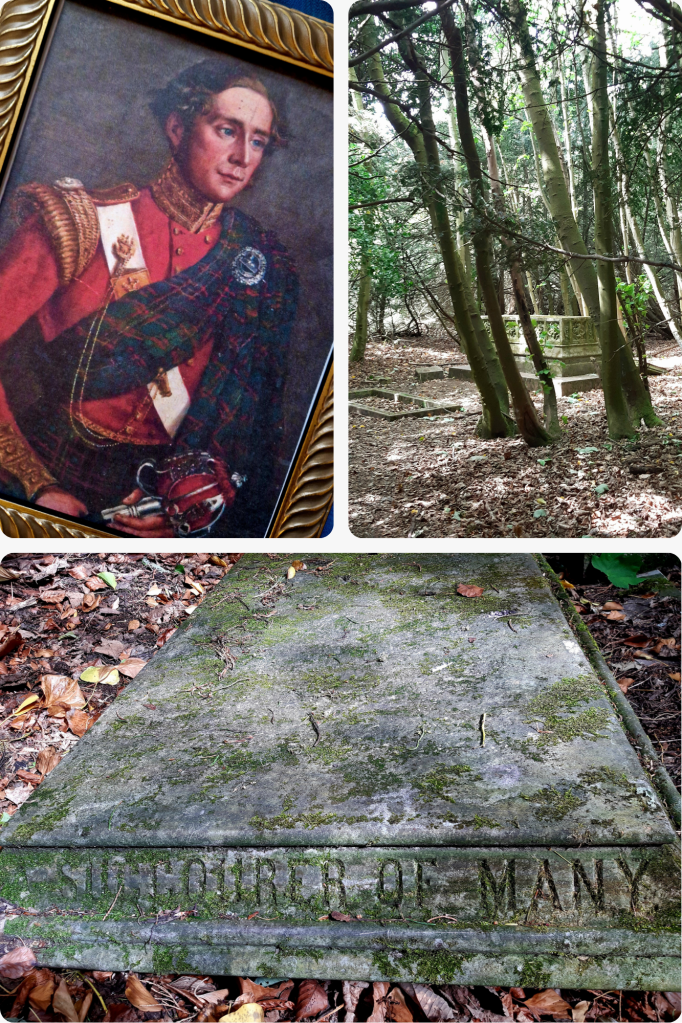
The slab from the top of his tomb now lies unceremoniously, toppled to one side and the inscription around its rim reads: Robert Munro Ferguson of Raith & Novar. Lieutenant Colonel of the 79th Highlanders. Born 20th Aug 1802, Died 27th November 1868, Succourer Of Many.

His daughter, Emma Valentine, also held her father’s liberal views, was in favour of women’s suffrage and is known to have created a leaflet entitled ‘Union of Practical Suffragists within the the Women’s Liberal Federation’. In 1890 she became engaged to Scottish born politician, Richard Burdon, Viscount Haldane, but for reasons I haven’t been able to ascertain, she broke off the engagement. Sadly, Emma died at the age of 34 years and was laid to rest here alongside her Father. The beautifully intricate, now broken cross lying in pieces on the slope was in memoriam of her as the base bears her name. The inscription around her grave is still legible and says: Valentine. Born Feb 14 1863. Died Sep 14 1897. Until The Day Dawn.
The Eleanor Cross – Kenmore, Perthshire

I’d parked overnight in a layby at the east end of Loch Tay at Kenmore and took a swim in the morning sunshine alongside several other morning dippers. Slipping into the cool, clear water of the still loch was a refreshing way to wash away the remnants of sleep. Meanwhile, Millie danced around at the waters’ edge desperate for me to come out. She’s a paddler not a swimmer.

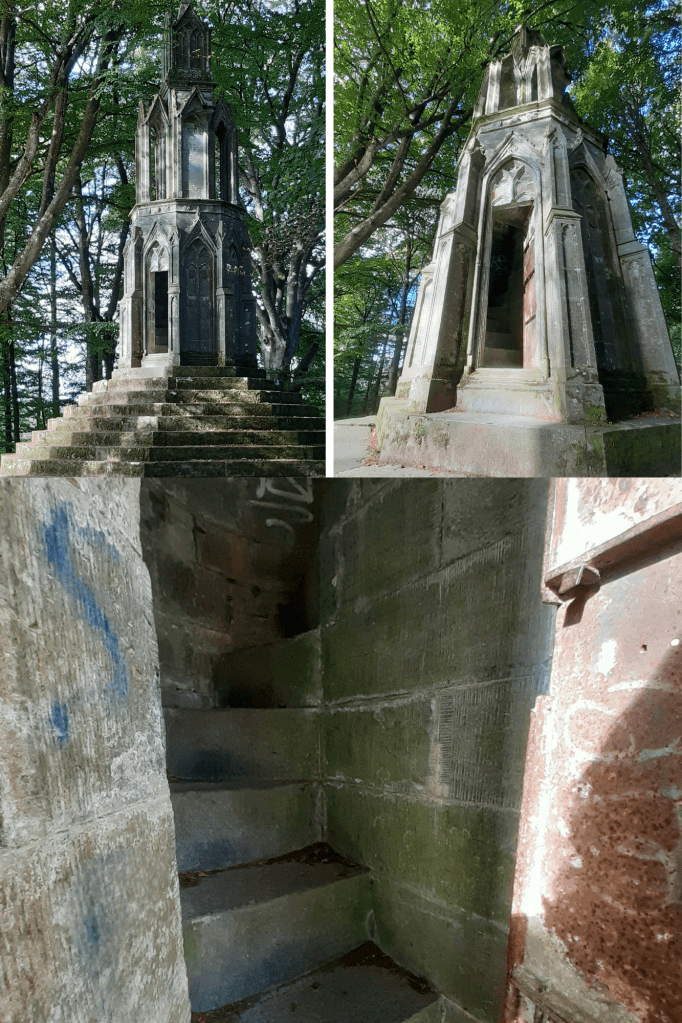
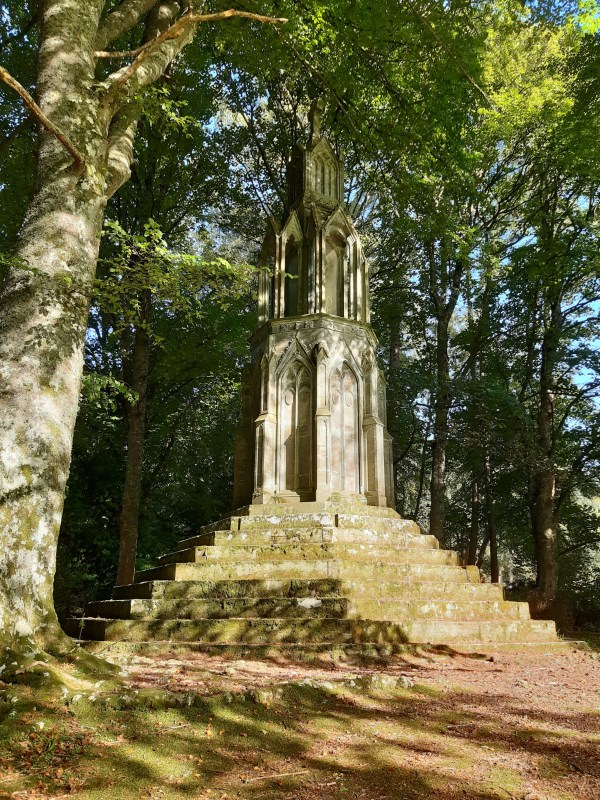
I’d brought my Children camping to Kenmore over the years so it evoked happy memories to be visiting again. There are lovely walks around this area and so Millie and I set off on a jaunt through the woods to take in the Eleanor Cross and onward towards Aberfeldy. The pathway starts by the bridge at the mouth of the Loch and meanders along the north side of the river for a while then heads up the hill through the woods. The Cross was commissioned in 1831 by Lord Breadalbane in tribute to his beloved wife Mary. At that time it would have had a view of the hills and down along the valley with beautiful vistas of the River & Loch Tay. In all these many years however the woodland has grown up high into beautiful mature trees with birdsong echoing through them.

Eleanor Cross is built on the site of an old summer house known as Maxwell’s House. It stands 30 feet tall with a 9 step octagonal base encircling it, a cruciform mid section and a square pinnacle top surmounted with a cross. Delightfully, a door on its south side opens to a spiral stairway. This leads to a small open-air arched gallery surrounding the structure. Climbing up the steps, it feels like a childhood adventure to reach the platform and look through the trees at height. Sadly the interior has been sprayed with graffiti: evidence of bored minds and idle hands.

A brass plaque acclaims – This Building is Dedicated to my Faithful Friend and Fellow-Labourer, MARY, COUNTESS OF BREADALBANE, whose maternal care has been extended to all around this place. anno domini, 1831.

I’ve been as yet unable to ascertain why this particular monument was named ‘Eleanor Cross’ so for the moment will surmise that the reason was purely a romantic gesture in keeping with Breadalbane’s status and the era. (The Victorians were fond of building ornamental ‘follies’ and they can be found throughout Scotland in beautiful rural settings.) NB: King Edward I of England had twelve Eleanor Crosses erected as markers built along the funeral route taken by his wife Queen Eleanor of Castile. They marked the nightly resting places of her coffin procession from Lincoln to Westminster Abbey in 1290.

Scotland’s Last Fatal Duel – Kirkcaldy, Fife

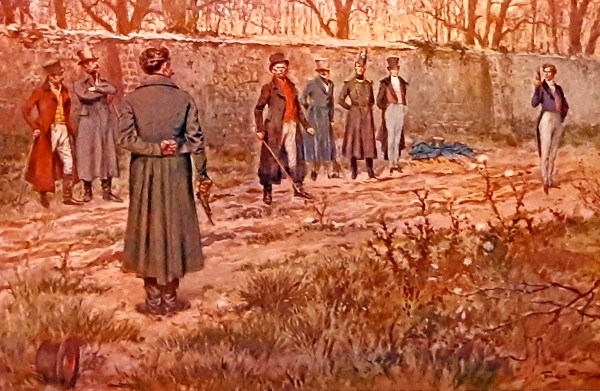
It was a blow from an umbrella on a rainy day on Kirkcaldy High Street which triggered the duel. George Morgan, the hot-headed agent of the Bank of Scotland and retired Lieutenant from the 77th Regiment of Foot, struck David Landale, a linen merchant, with his umbrella. It was the final insult in an escalating argument which led to Pistols at Dawn and the death of one of them.

Landale was angered that Morgan’s gossiping had damaged his business reputation. They had quarrelled over a bank loan, and the banker had spread rumours about the merchant’s creditworthiness. In response, Landale took his business elsewhere and wrote a stiff letter of complaint to the Bank of Scotland headquarters in Edinburgh. This enraged Morgan who was seething with anger and baying for revenge and knew if he struck Landale a duel would ensue. The pair crossed paths on Kirkcaldy High Street where Morgan proceeded to strike Landale about the head with his umbrella , shouting “Take that, sir. By God, sir, you shall more of this yet!” Landale fled the attack shouting “You are a coward, sir, a poor, silly coward.”

Duelling was a remnant from the age of chivalry, it was about honour and a public assault by one gentleman on another had left Landale with no alternative. He wrote to Morgan, challenging him to a duel “I must request that you will meet me tomorrow morning at seven o’clock with pistols and give me the satisfaction which as a gentleman I am entitled to.” Landale however was a novice shot, had to quickly purchase pistols, arrange for a ‘second’, and put his affairs in order.

Early on the morning of 23rd August 1826 the pair met at Cardenbarns Farm, south of Cardenden, where Morgan refused the opportunity to apologise for his public assault on Landale. He was confident that with his military prowess he would emerge from this incident the victor. The gentlemanly code of the time to regulate such confrontations, defined where the combatants should stand, what they should wear, and how and when they should fire. The seconds acting for Landale and Morgan agreed the terms of the duel and the pair stood 12 paces apart. On command, they fired simultaneously.

Morgan staggered and slumped to the ground, blood pouring from his mouth. He was fatally wounded. Lansdale, the novice, had fired straight and true at his target then immediately fled the scene to the Lake District where he kept a low profile for a time. He wrote to the legal authorities, promising to appear at his trial and one month after the duel he stood on trial for murder in Perth. Fortunately, he was acquitted “with character unsullied”.

Ironically 25 years later, the Landale and Morgan families were reconciled when David Landale’s daughter married George Morgan’s nephew.

David Landale had hurriedly purchased this pair of pistols from John Thomson of Edinburgh the day before the duel. They came highly recommended as they has killed a man in a duel two years previously. These beautiful but deadly weapons have walnut stocks, steel barrels with decorative mounts and are still together with their original gun powder flask and lead bullets. The pistols can be seen on display at Kirkcaldy Museum.

Blog at WordPress.com.

Up ↑