Tullibody Old Kirk & Maiden’s Grave Stone – Tullibody, Clackmannanshire

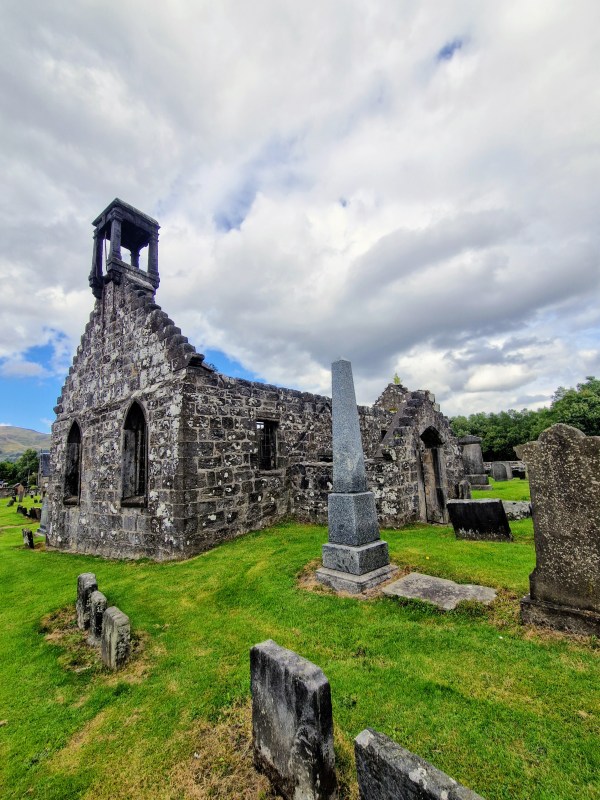
The roofless ruin of this Old Kirk in Tullibody, Clackmannanshire, is now a scheduled monument. It was founded in 1149, however, various sources note there were earlier churches on this site and it’s thought that there was a Kirk here from the end of the fourth century. This existing structure has been rebuilt a couple of times, first in the 16th century then again in 1760.

French troops removed the roof of the Kirk to build a bridge over the River Devon after Sir William Kirkcaldy of Grange destroyed the Tullibody Bridge to prevent them from retreating to Stirling at the end of 1560. Sir William was a Scottish Politician and Soldier who initially fought for the Scottish Reformation. He eventually vowed his allegiance to Mary Queen of Scots, became her champion during times of need and held Edinburgh Castle on her behalf from 1568 to 1573. Following the abdication of the Queen, the Marian Civil War ensued and Edinburgh Castle was eventually surrendered by the ‘Queens Men’ on May 28th 1573 when Kirkcaldy was taken prisoner and held at Holyroodhouse. Great efforts were made to save him from reprisal of his enemies, but they were all in vain. John Knox had prophesied that he would be hanged and so Sir William was taken and hanged at the Cross in Edinburgh on 3rd August 1573.
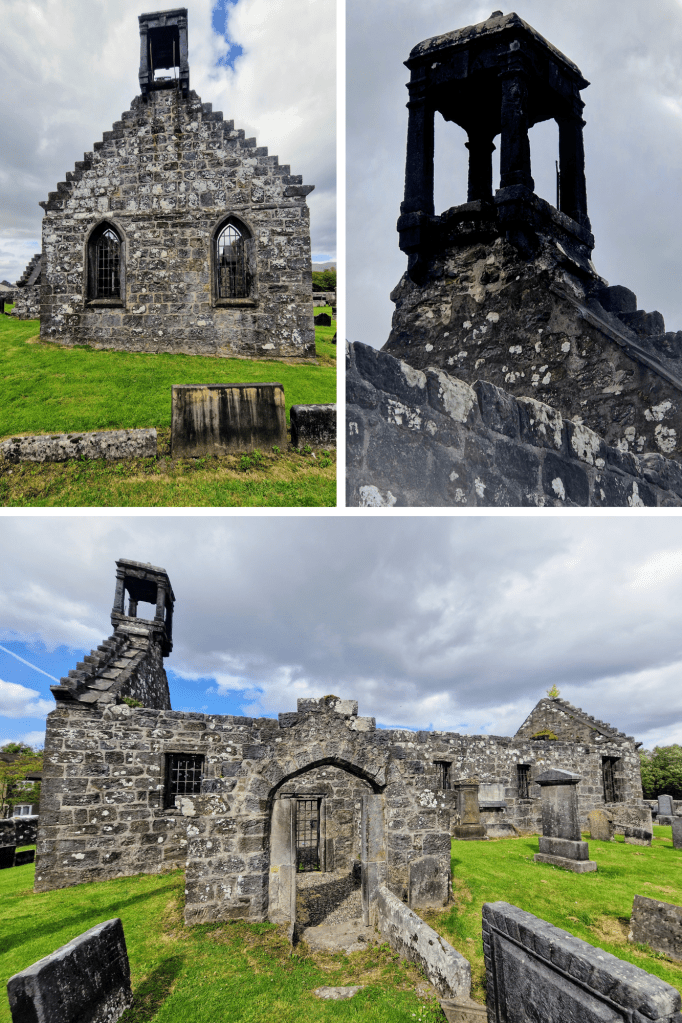
As it had become dilapidated, the Old Kirk was again renovated in 1760 with the bellcote being added in 1772, then latterly, the western windows and a south porch in the 1800’s. In 1904, St Serf’s Parish Church was built to the north of the Old Kirk which sadly thereafter, became disused.

There are many interesting grave stones and slabs to look at and ponder within the grounds of Tullibody Old Kirk but none more so than the ‘Maiden’s Stone’ and the story of forbidden love and tragedy woven around it.
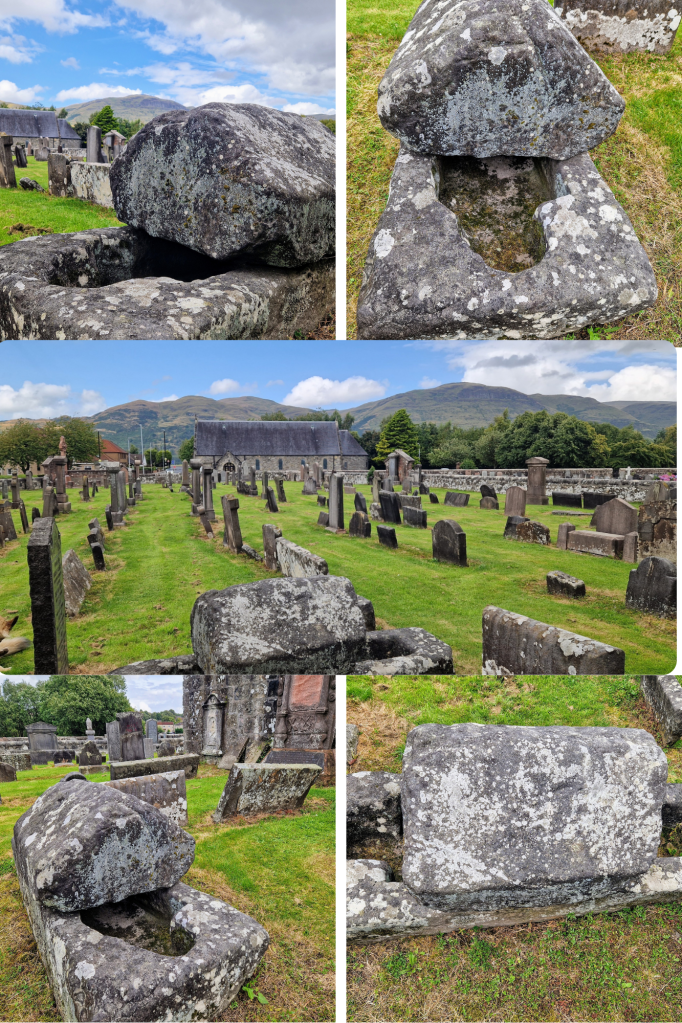
The ‘Stone’ is an ancient sarcophagus, topped with what remains of a coping stone lid. It’s said that this is was the coffin of Martha Wishart, the maid of Myretoun. In 1450, Martha, a beautiful maiden and only daughter of wealthy landowner, the Laird of Myretoun, fell prey to the young and very handsome local priest, Peter Beaton. He seduced her while she fell in love with him. On hearing the news she was pregnant, Beaton abandoned her to her shame. The unscrupulous and ambitious priest had toyed with her heart for access to her family connections. His sights were on rising through the ranks of the community and the church. Martha kept her pregnancy secret from those outside the family, languishing and dying of a broken heart before her child was born. On her deathbed, she requested her parents place her grave by the door of the Kirk so each time the priest entered he would be required to walk past her. Beaton blocked up the Kirk’s north door following Martha’s internment, establishing a new entryway through a south door in order to avoid passing her grave. Soon, the locals knew the truth and Beaton was shunned by the community he’d contrived to become such a lofty member off. The Abbot of Cambuskenneth heard of Beaton’s transgressions and it’s said that the news of his errant behaviour reached as far as the Vatican. One day however, Beaton simply disappeared, a story circulating that he had wandered off, a madman. Or, had he instead met vengeance in the form of a grieving Father?
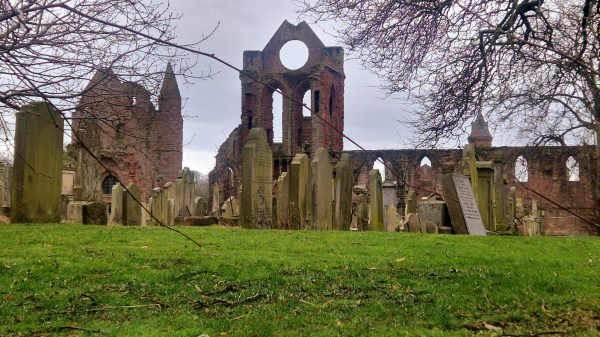
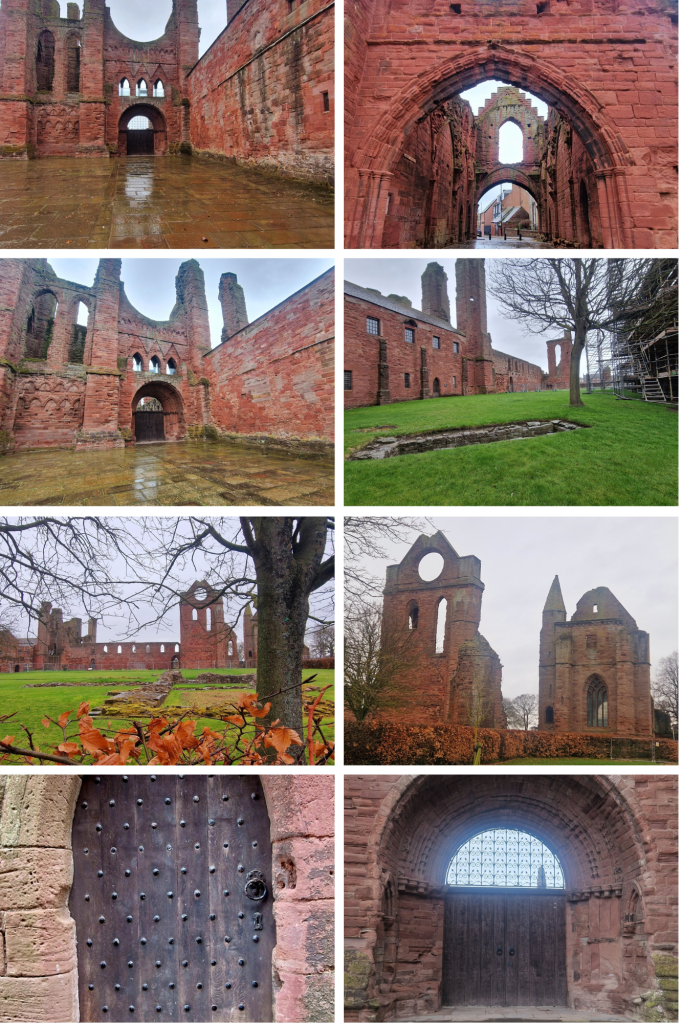
Arbroath Abbey, Arbroath – Angus

As you walk into the heart of the city of Arbroath, you get a feeling of the enormity that this Abbey once was. Impressive parts of this red sandstone cruciform Church still survive, the west end, south transept & sacristy, the gatehouse and the Abbot’s house which is now the museum. The cloister and other buildings are now ruinous but their foundations are still apparent and there’s also a large cemetery within the grounds.

Arbroath Abbey was founded in 1178 by King William (1st), the Lion, for the Tironensian Benedictin Monks from Kelso Abbey. King William bestowed considerable lands and great wealth upon the Abbey as well as custody of the Monymusk Reliquary, the casket believed to contain the relics of St Columba. It’s believed that he had the Abbey built in memory of his murdered dear friend, Thomas Becket (St Thomas the Martyr) and in the hope of currying favour with God for his own safety. William had been captured by English forces at the Battle of Alnwick in 1174 and only released by King Henry II a year later after being forced into signing the Treaty of Falaise which acknowledged Henry as William’s feudal superior. William was eventually buried here in 1214.

The Declaration of Arbroath, asserting Scottish independence over English aggression, was signed here in 1320. The original document is in the keeping of National Records of Scotland however a copy can been seen in the abbey’s museum. In 1951 a group of students stole back Scotland’s Stone of Destiny from Westminster Abbey. It had been seized in 1296 by Edward I of England from Scone Palace (nr Perth) where all Scottish Kings were crowned upon it. Edward took the stone to demonstrate his power over Scotland. It was used in the coronation of British monarchs thereafter however this was hugely resented by Scots. The students eventually placed it at the High Alter of Arbroath Abbey. The Stone of Destiny is now currently on display at Perth Museum.

In the 1800’s Arbroath’s huge fishing fleet would look for the massive round window of the Abbey’s south transept gable to guide them home from the open sea. A red beacon fire was lit at the iconic window and this practice gave the people from Arbroath the nickname of ‘Red Lichties’ (red lights).

The Aberlermno Stones – Forfar

I was excited to come here on this wet and incredibly windy day to encounter a trio of remarkable remnants from our ancient past.  AND what a way to begin my journey into Scotland’s pre-history!  The Picts ruled much of Scotland during the Dark Ages, had a strong and distinct culture yet little is known of these warring and artistic people.  Along the roadside in the village of Aberlermno are three magnificent Pictish stones bearing symbols from three graphic styles as their society evolved from Pagan to Christian worship.

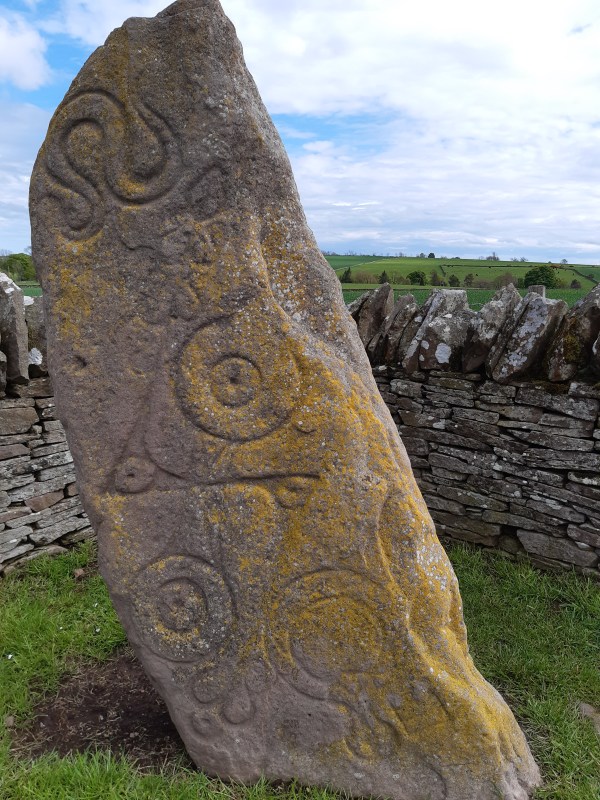
The Serpent Stone – cup marks on the left side of this stone suggest that it was most probably a neolithic standing stone, reused by the Picts. This is a Class I stone, standing nearly 2m tall with carvings deeply incised and still clearly visible.

Class I stones – are natural rocks or boulders bearing incised Pictish symbols dating from the early bronze age. They bear no Christian images therefore likely carved before the arrival of St Columba and adoption of Christianity into Pictish culture.

This stone’s markings show a serpent above a double-disc and z-rod then a mirror and comb.

Serpent – throughout the World snakes have been associated with magic, death and rebirth, sex and healing.

Double Disk – perhaps represents two worlds: the here-and-now and the otherworld, life and death.  Its has also been suggested that it signifies the marriage of two families. Z-Rod – this could represent someone whose spear was broken – dead – or who was a breaker of spears – a great warrior

Mirror & Comb – although on some stones the mirror is shown alone it is frequently thought to represent a woman. In the ancient world it has been used elsewhere as a symbol of the mother Goddess.  Mirrors and combs also have magical connotations, appearing in folklore as enchanted objects

Whatever the meaning behind the symbols on this wonderful stone, they had a clear significance for the people who made them.  The incisions are carbon dated at around 1500 years ago, elements of a lost hieroglyphical system used by the Picts for up to four centuries.  They could represent a person of status within their community, mark a tribal location or make known tribal allegiance.

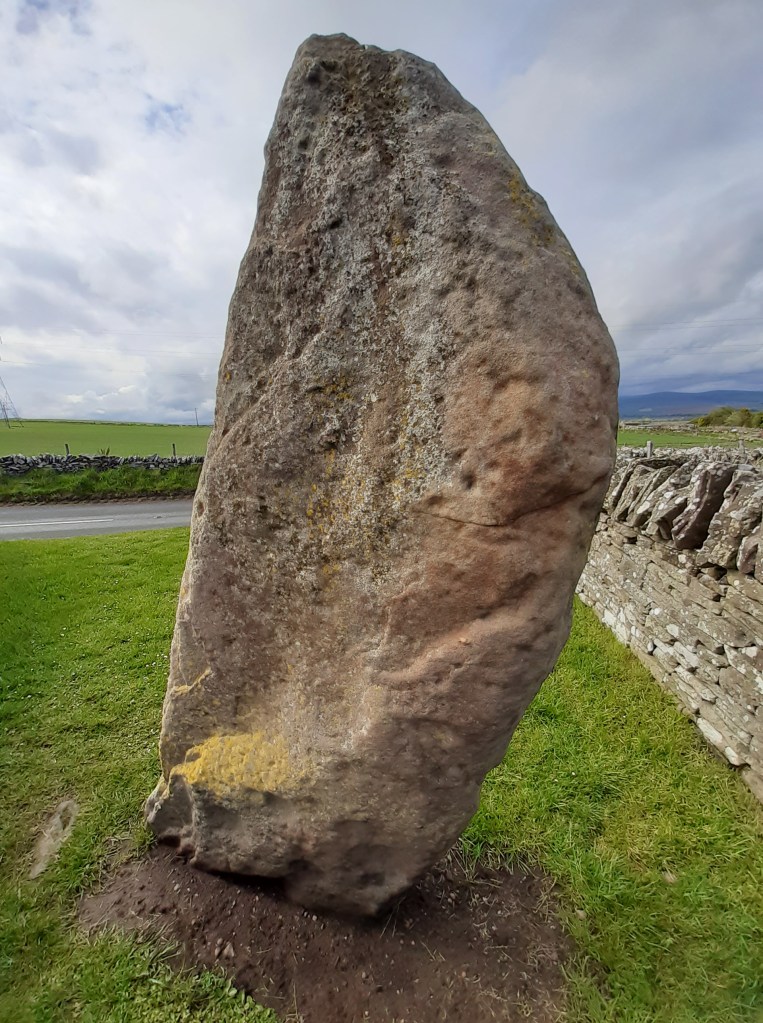
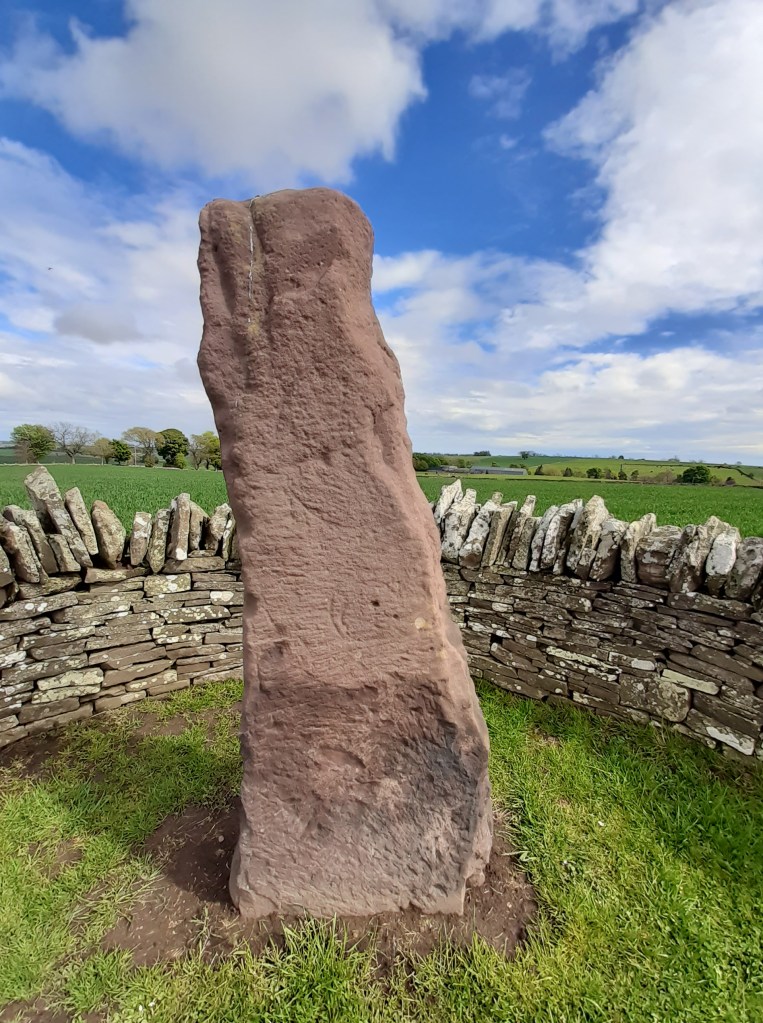
The Crescent Stone – only faint traces of a crescent marking and mirror remain on this Picitsh standing stone but nevertheless it still stands impressively alongside its neighbouring monoliths.   

Crescent – having lunar associations, this could also represent the firmament. Often crossed with a v-rod (broken arrow), it’s one of the most common Pictish symbols.

Over these many centuries, such ancient monuments have eroded so that their stories are now completely lost to the wind and rain.

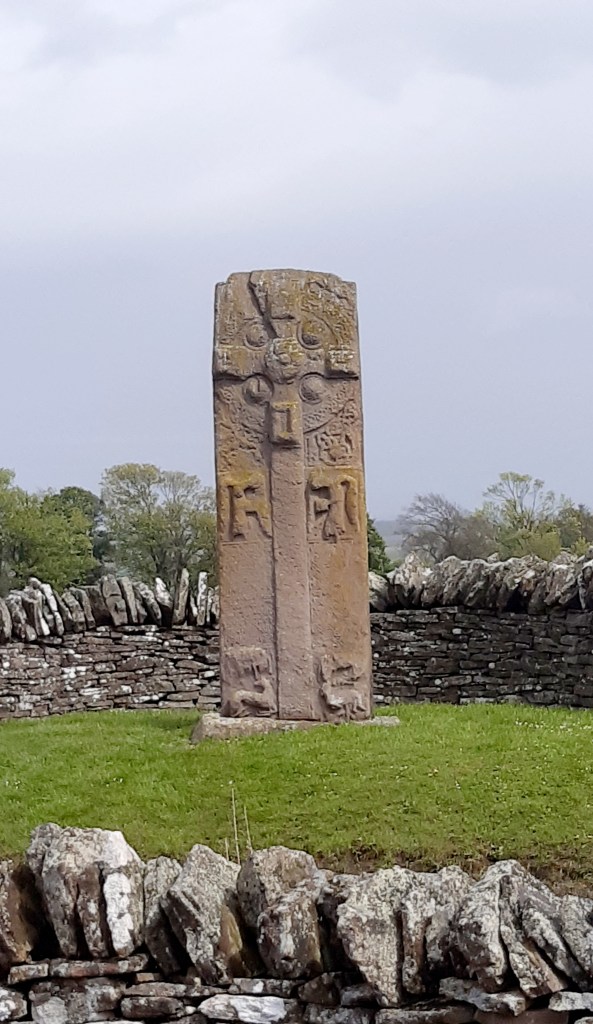
The Roadside Cross – standing in its original socket for over 1200 years, this stone is a Class II stone and testament to flourishing Christianity which had turned the Picts away from their Pagan religion within a mere 200 years of introduction.  This impressive cross-slab was a declaration to the Glory of God. 

Class II stones – these are shaped stones, carved in relief and almost always cross-slabs with Christian imagery and some traditional Pictish symbols.

The front of this stone has been deciphered as follows:  Within a massive wheelhead cross there are Five circular bosses on the cross – possibly representing the wounds of Christ.  Mourning Angels – holding gospel books.

The rear side:  the top displays a Pictish symbol, the V-Rod – possibly the rising and setting of the sun/moon, then, below it there’s a Double Disk and Z-Rod – more elabourate than on the Serpent stone.  A ceremonial hunt – with trumpeters below prominent Pictish symbols. David saving his flock from a lion – perhaps representing Christ the saviour. A centaur gathering medicinal plants – representing Christ the healer                                    

These stones truly are incredible and although sitting by the roadside, each has been situated sympathetically in a small walled area to allow them to be viewed up-close.  Grab your raincoat and go…!

Dunino Den – Fife

As I wandered into the grove beyond Dunino church, sunlight danced through the leaves of the trees surrounding Dunino Den, obscuring my vision. With a sudden fluttering of birds around me, I felt that there was indeed a supernatural atmosphere about this place. It’s said to be haunted by fairies, steeped in Celtic legend and a site of pagan worship that continues to attract pilgrims today. The fabled ‘Altar Stone’ sits up high, overlooking a burn running through the narrow gully below. A small, circular well worn into the rock here is rumoured to have once been used by Druids in their rituals of human sacrifice. Near the well, is a carved footprint, suggesting this was once a place of great significance. Carved footprints were used in Neolithic times, during inauguration rituals where our ancient chieftains would place a foot in such grooves and swear oaths to protect their people and lands. This would suggest that kings from our pre-history might once have been crowned here.

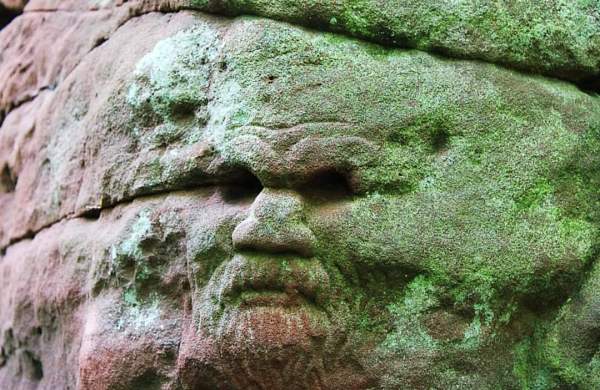
Steps lead down into the Den, to a Wheelhead Cross, ancient symbols and a mysterious face all carved in to the rock. Here, modern day worshippers now leave offerings, believing this place to be a portal to the otherworld. Ribbons flutter from the trees, messages for loved ones, since departed, are stuffed into cracks in the rock and coins left in crevices. Beware! It’s said that removing anything from this place will bring bad luck.

Legend tells of a visitor who came to Dunino Church and having followed the path through the woods to the altar stone, he saw an enchanting hamlet on the other side of the gully. The cottages were thatched and swathed in rambling roses. An old man in knee breeches and a woman in a long gown, stood at the entrance to one of the houses while a blacksmith leant on his hammer outside his workshop. A year later, the visitor returned, this time with a companion to whom he had recounted his story. They arrived at the Den to find the cottages gone and nothing but trees on the other side. It is said that a collection of cottages and a smithy once existed on the land there, but they had been demolished long, long ago….

“Come Faeries, take me out of this dull world, for I would ride with you upon the wind and dance upon the mountains like a flame!” – W B Yeats

Modifying the Van

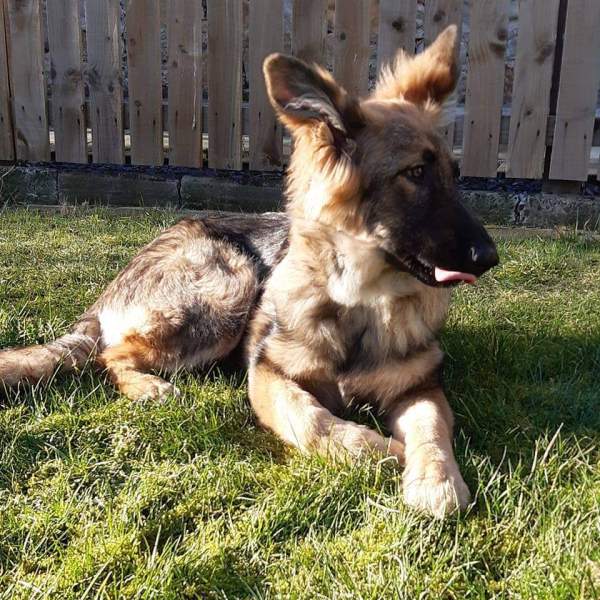
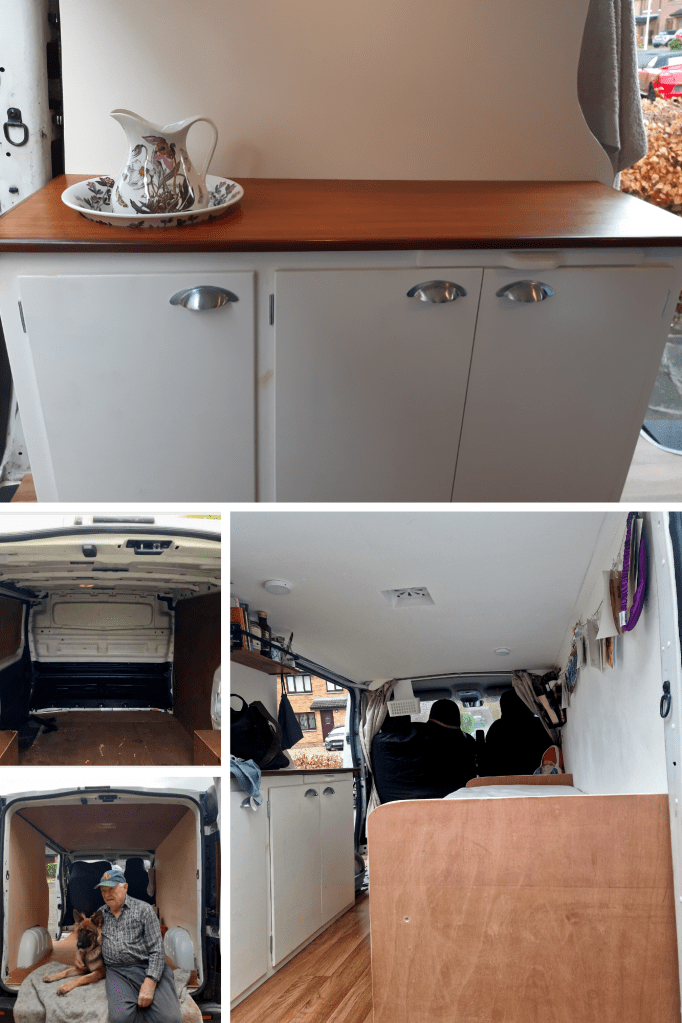
My car was becoming much too cramped for a rapidly growing Millie so I decided that a van would be the perfect alternative, not just for Millie, but something that I’d always wanted and better suited for my outdoor activities. I looked at several vans and settled on a Renault Trafic then got to work adapting it to suit. My Dad was 91 at the time and as a retired carpenter, relished having a new project to get his hands on, albeit at a much slower pace in keeping with his age and hampered mobility.

1st steps – after removing the bulkhead and ripping out the filthy and broken 5mm plywood lining, I gave the van a thorough cleaning. As ventilation is paramount, fitting an air vent was the first item to be addressed. I have to say, it was probably the most stressful part of the whole exercise. Cutting a hole in a perfectly good, solid roof was nerve-wracking and absolutely had to be done right first time. After much ‘debate’ and a wee bit of swearing about measurements my Dad and I settled on drilling numerous small holes around the circumference of the area to be removed. Fortunately, the perforated area popped out easily with a quick thump from a hammer. A heavy duty file and the sander removed and smoothed the rough edges then the area was primed with rustproof paint. The vent fitted perfectly, was screwed into place and the rim, inside & out sealed with silicone to make it watertight.

Insulation – I fitted sound deadening mats which were stuck to all flat areas around the interior to reduce vibration and noise. Then, all the cavities, recesses on the walls and ceiling were filled with loft insulation, the whole lot covered over with insulating foil and fastened into place with foil tape. Ridges on the floor were filled with strips of insulating bubble foil then covered over with radiator reflective foil. (I found that using carpet adhesive spray to hold everything in place as you work, keeps all in situ as you go along).

Strapping and fitting the new ply lining – The ply flooring went down first (10mm thick, cut to shape plywood, using self tapping screws – countersunk). Then, as luck would have it my brother arrived from NZ, got his sleeves rolled up and with my Dad, set about installing the strapping for fixing the plywood lining to the inside of the van. The strapping is made up of cut to size, 40mm x 20mm battens. Using truss head, self tapping screws for better hold, 5mm ply for the ceiling was fitted into place. Lastly the walls went in (10mm cut to shape ply, fastened with countersunk self tapping screws) also acting as additional support for the ceiling. Once checked to ensure they were tight, all countersunk screws were covered over with wood filler then sanded for a good finish.

Flooring – PVA glue was painted all over the floor to seal the wood, then once dry, flock-backed vinyl flooring was cut and fitted using, again, carpet adhesive spray.

The Fixtures – my Dad made a 1950’s style mini kitchen unit using leftover wood from the battens for its frame and plywood off-cuts for the facing. It has inner shelving so affords plenty of space to store groceries, cooking equipment , utensils, plates & mugs, etc. There’s also a pull-out chopping board. The counter top of the unit had been the top of my Great Aunt’s teak dressing table which I’d been storing in my loft for a very long time and in reality, was a piece of furniture I was never going to use. I think it looks superb and I hope she wouldn’t have minded. A circular hole was cut in the left end of the counter top which my Portmerion bowl and ewer fits into nicely. The pull out sofa bed, I made using battens and 10mm x 70mm cut to length wood for the interlocking slats. The bed ends were done with more plywood. There’s ample space underneath the bed for storage where I use laundry baskets for some sort of semblance. A double foam mattress was cut to size (I found that a serrated bread knife worked best for this job) and I used 2 x king size mattress protectors as covering for the pieces needed. The bed is super comfortable, by the way!

Electrics – I studied several tutorial videos with the intention of installing leisure batteries. While I’m confident in my woodworking abilities, I cannot say the same when it comes to anything to do with electricity. In the end I shelved the idea of fitting leisure batteries and went with a much more simple option. My lighting, magnetic touch lights, is rechargeable and this can be done from the van’s 12V socket. To be honest that’s all that’s required. I have a rechargeable lamp which is only ever used as back-up and I cook with a portable gas stove. I did invest in a portable power station, however, it’s only required if I need to use my hairdryer, to perhaps recharge my in-car DVD player or charge up my mobile phone if I’ve forgotten to plug it into the 12V socket while driving. For me, keeping it simple works best.

Other Items – The most useful item I purchased was a Porta Potti. Not having to desperately find a place ‘to go’ or not having to trudge to campsite toilets during the night (especially if it’s raining) is nothing short of bliss. If you have space for it, definitely buy one. A rechargeable camping shower was a gift from my Son, so if I haven’t been for a cold water swim or need to wash my hair, then it’s certainly a great little item.

Reading this back, it all sounds so incredibly straight forward. However, if you’re going to modify your own van, bear in mind there are always going to be challenges in a project like this so be sure to plan everything out and take your time, especially in making sure your measurements are correct. Mistakes can be costly.

Mermaid of the North

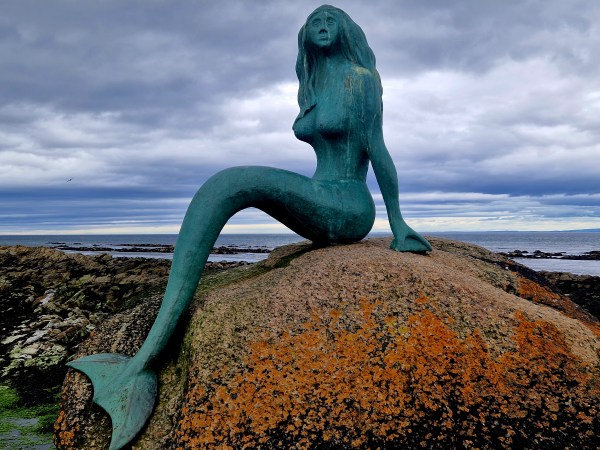
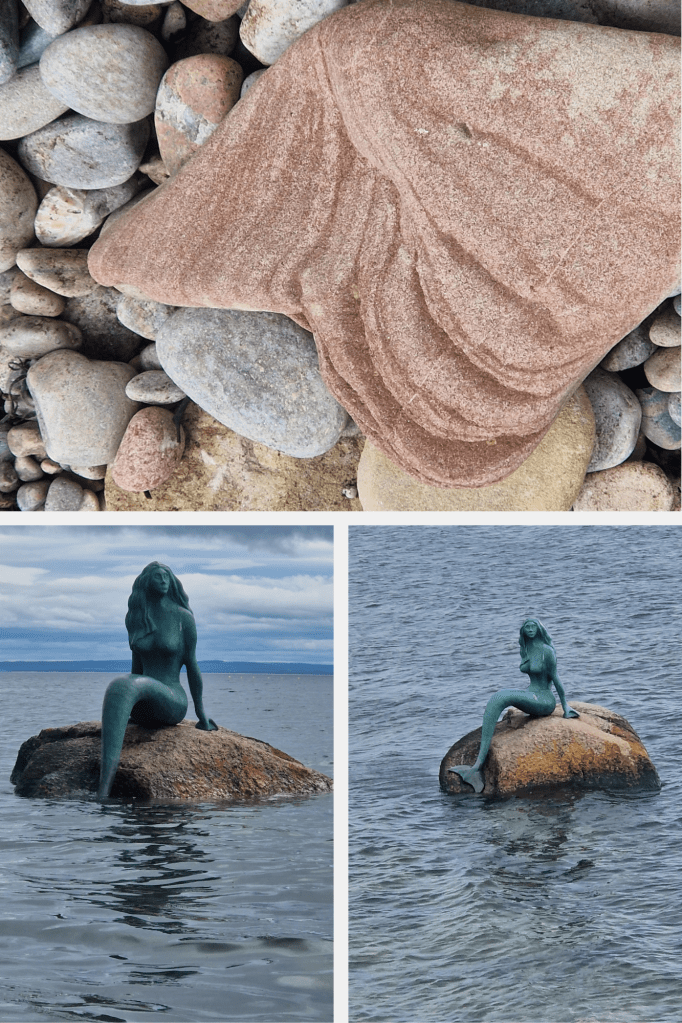
Capturing the imaginations of those who visit her, the alluring Mermaid of the North perches on ‘Clach Dubh’ (Black Rock) by the village of Balintore, Easter Ross. Coastal fables tell of a Mermaid who was captured by a cunning fisherman who hid her tail. Years later, after bearing his children, she found her tail and escaped back to sea, returning regularly to the shore, bringing fish for her hungry family.

Donal had left his boat to gather gulls’ eggs, up high on the cliff, when he noticed a beautiful, long haired woman sitting, singing on a rock below. He crept down for a closer look and upon realising she was a mermaid, grasped hold of her left hand, which it was said was the way to capture a mermaid as all of her strength is in her right hand. She begged him to let her go but being a lonely bachelor, he hid her tail so she couldn’t return to the sea and resolved to make her his wife. The Mermaid gradually settled into life with Donal, had several children with him and made a life for herself, caring for her family. One day though, while she was clearing away some dusty old things in the loft, she came upon her tail. She held it close and hurriedly ran back to the sea lest anyone stop her. Donal would often row out to sea, calling her, begging her to come home but she never returned to him. Everyday, however, her children would visit the shore where she would bring them fish to take home.

Millie & I always stop by, sometimes bringing friends, to visit The Mermaid of the North on our trips around the North Coast. She sits on her rock against the dramatic backdrop of the Moray Firth, where there are superb views of the coastline.

Blog at WordPress.com.

Up ↑