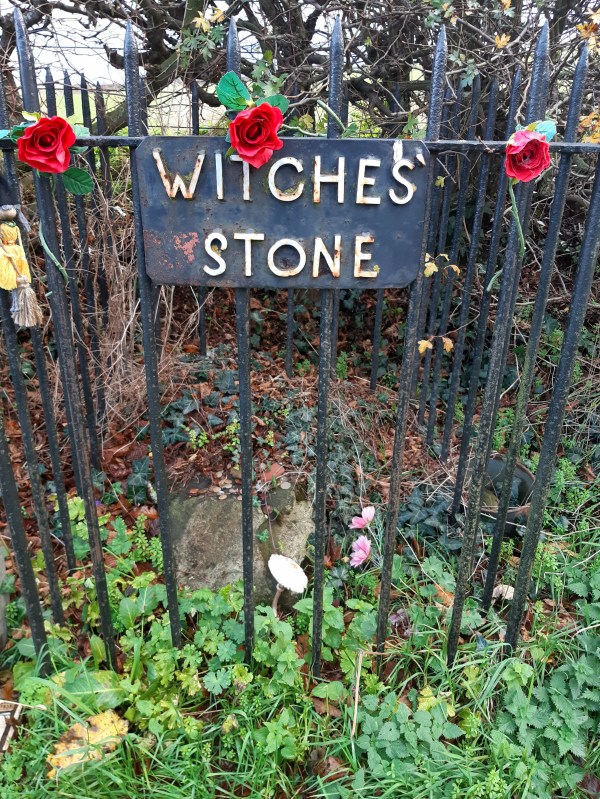
Witches’ Stone – Spott, East Lothian

On my first trip away in the van, I drove by here as I’d heard about this stone. Spott is a tiny village only two miles from Dunbar and infamous as the place where the last witch trials and executions were held during the early 18th century. The stone here is a memorial to the burning of a witch in the South of Scotland, Marion Lillie, the Ringwoody Witch. Under the Birley Tree which stood nearby, the local Birley Court was held and sentenced Marion to death. This was in fact just a sham court set up by local Kirk Elders to deal with ‘problematic’ people within their farming community.

Marion had previously been accused of bewitching in 1698 but was never convicted however in 1704 she appeared before the court again, accused of so frightening a pregnant woman that she had a miscarriage. This time Marion was found guilty and in 1705, she was taken to the top of Spott Loan and burned to death as a witch. According to the Spott Kirk Session minutes of the time, ‘Many witches were burnt on Spott Loan’, on 11 February, 1705, un-named but apparently 13 of them in all, the size of a witches coven. These could well have been Marion’s accusers who she perhaps named while being ‘coerced’ during her trial.

This Witches Stone and the plaque which sits by it, now honours Marion Lillie and all those others who lost their lives during the Witch Hunt madness of the 17th & 18th centuries.
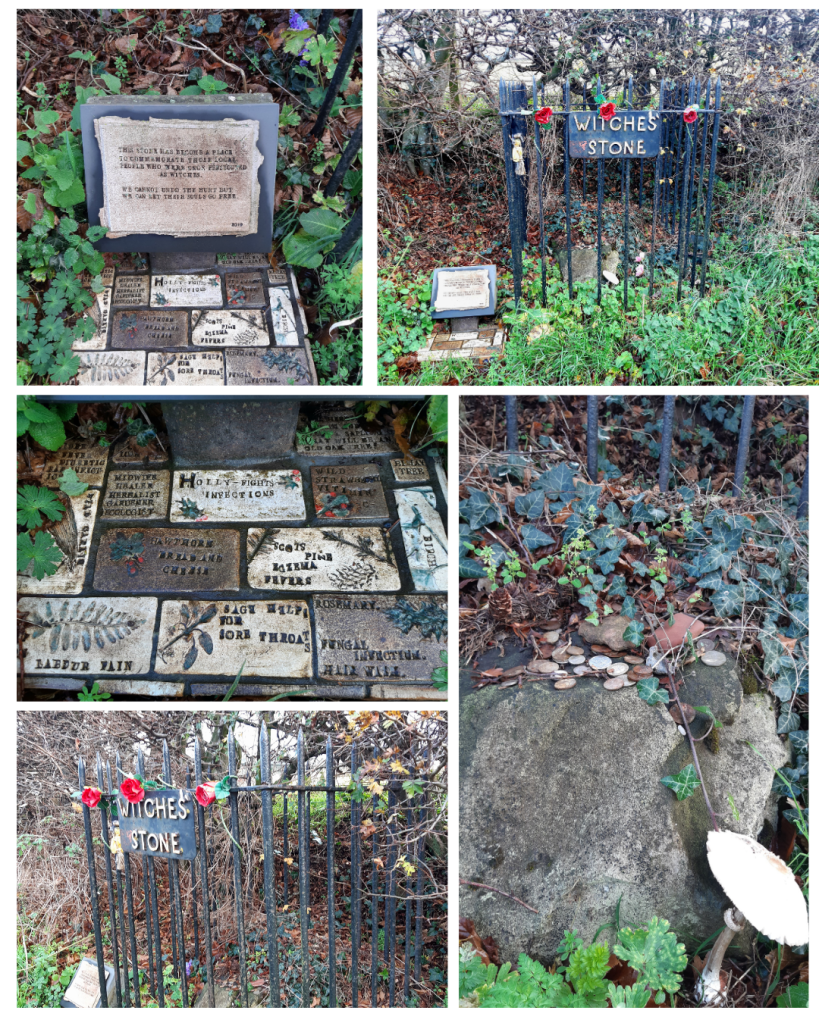
The plaque bears a dedication by local poet, Ruth Gilchrist, and reads: ‘This stone has become a place to commemorate those local people who were once persecuted as witches. We cannot undo the hurt but we can let their souls go free.’
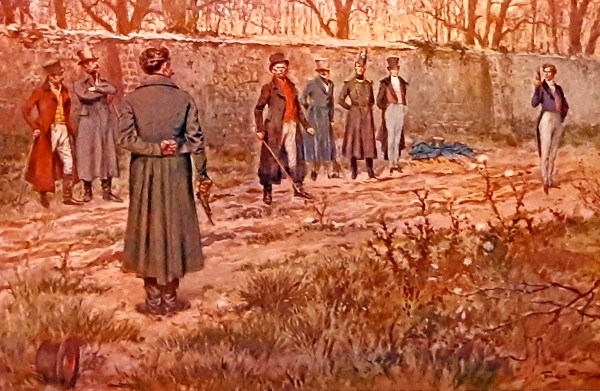
Scotland’s Last Fatal Duel – Kirkcaldy, Fife

It was a blow from an umbrella on a rainy day on Kirkcaldy High Street which triggered the duel. George Morgan, the hot-headed agent of the Bank of Scotland and retired Lieutenant from the 77th Regiment of Foot, struck David Landale, a linen merchant, with his umbrella. It was the final insult in an escalating argument which led to Pistols at Dawn and the death of one of them.

Landale was angered that Morgan’s gossiping had damaged his business reputation. They had quarrelled over a bank loan, and the banker had spread rumours about the merchant’s creditworthiness. In response, Landale took his business elsewhere and wrote a stiff letter of complaint to the Bank of Scotland headquarters in Edinburgh. This enraged Morgan who was seething with anger and baying for revenge and knew if he struck Landale a duel would ensue. The pair crossed paths on Kirkcaldy High Street where Morgan proceeded to strike Landale about the head with his umbrella , shouting “Take that, sir. By God, sir, you shall more of this yet!” Landale fled the attack shouting “You are a coward, sir, a poor, silly coward.”

Duelling was a remnant from the age of chivalry, it was about honour and a public assault by one gentleman on another had left Landale with no alternative. He wrote to Morgan, challenging him to a duel “I must request that you will meet me tomorrow morning at seven o’clock with pistols and give me the satisfaction which as a gentleman I am entitled to.” Landale however was a novice shot, had to quickly purchase pistols, arrange for a ‘second’, and put his affairs in order.

Early on the morning of 23rd August 1826 the pair met at Cardenbarns Farm, south of Cardenden, where Morgan refused the opportunity to apologise for his public assault on Landale. He was confident that with his military prowess he would emerge from this incident the victor. The gentlemanly code of the time to regulate such confrontations, defined where the combatants should stand, what they should wear, and how and when they should fire. The seconds acting for Landale and Morgan agreed the terms of the duel and the pair stood 12 paces apart. On command, they fired simultaneously.

Morgan staggered and slumped to the ground, blood pouring from his mouth. He was fatally wounded. Lansdale, the novice, had fired straight and true at his target then immediately fled the scene to the Lake District where he kept a low profile for a time. He wrote to the legal authorities, promising to appear at his trial and one month after the duel he stood on trial for murder in Perth. Fortunately, he was acquitted “with character unsullied”.

Ironically 25 years later, the Landale and Morgan families were reconciled when David Landale’s daughter married George Morgan’s nephew.

David Landale had hurriedly purchased this pair of pistols from John Thomson of Edinburgh the day before the duel. They came highly recommended as they has killed a man in a duel two years previously. These beautiful but deadly weapons have walnut stocks, steel barrels with decorative mounts and are still together with their original gun powder flask and lead bullets. The pistols can be seen on display at Kirkcaldy Museum.

Blog at WordPress.com.

Up ↑