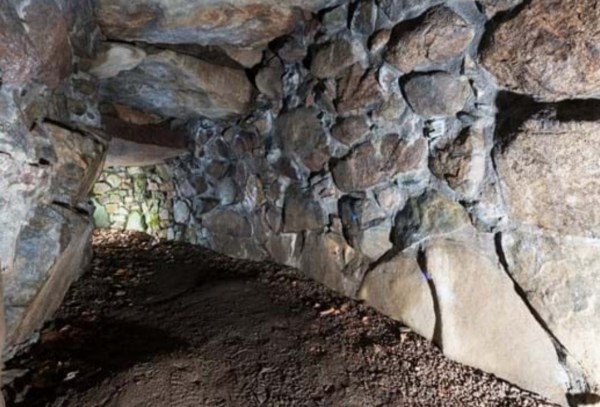
Built about 2,000 years ago, and despite its name, it was not a dwelling, but a 15m stone-lined, underground passage. This Iron Age larder is one of the most complete examples of its kind.
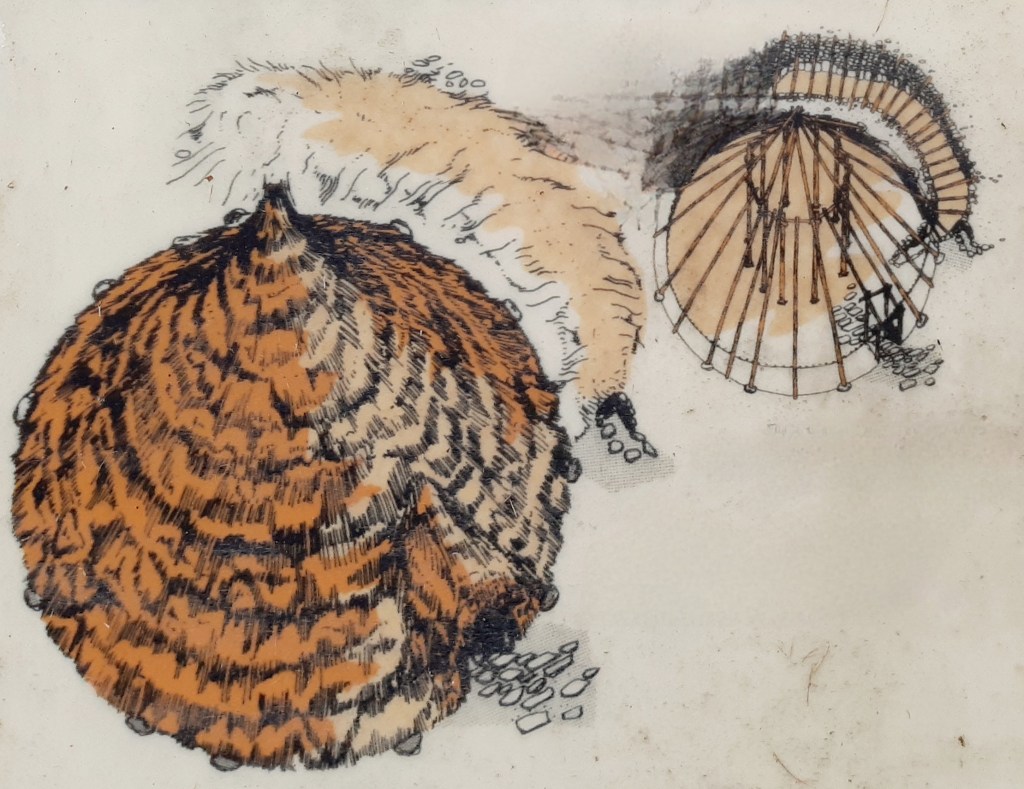
Culsh earth house survives as it was over 2,000 years ago and is one of only a few souterrains in Scotland that can safely be accessed. We don’t know what it was used for – perhaps a storage space, potentially a hiding place, or as two cup-marked stones inside may indicate it may have had some ritual significance. From the outside this souterrain appears to be just a bump in the ground therefore it would not have attracted any attention, It could, however, be entered both from within the round-house built above it and from the concealed outside entrance.
Check out other examples of Scottish souterrains such as those at – Tealing, Ardestie and Carlungie.
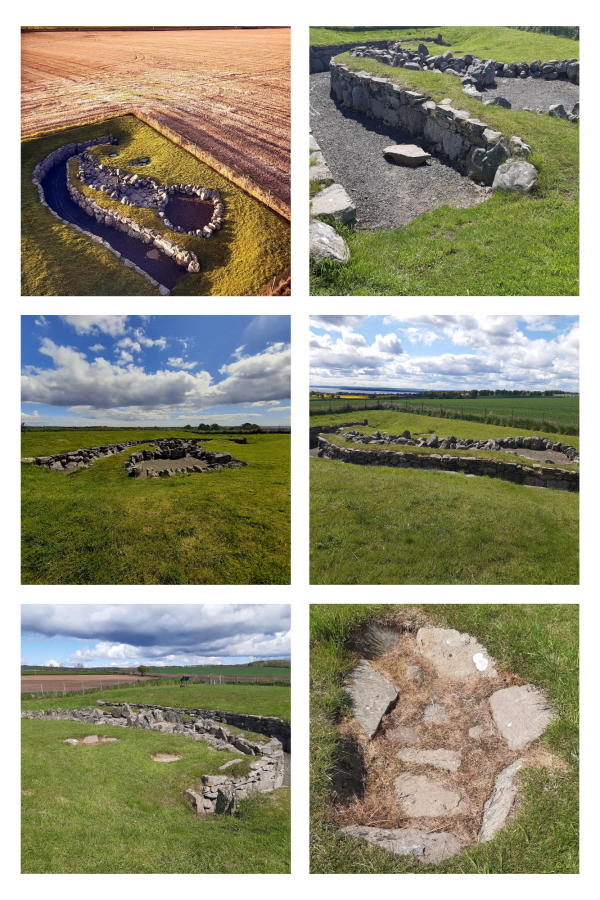
 Scottish Adventures - in a van