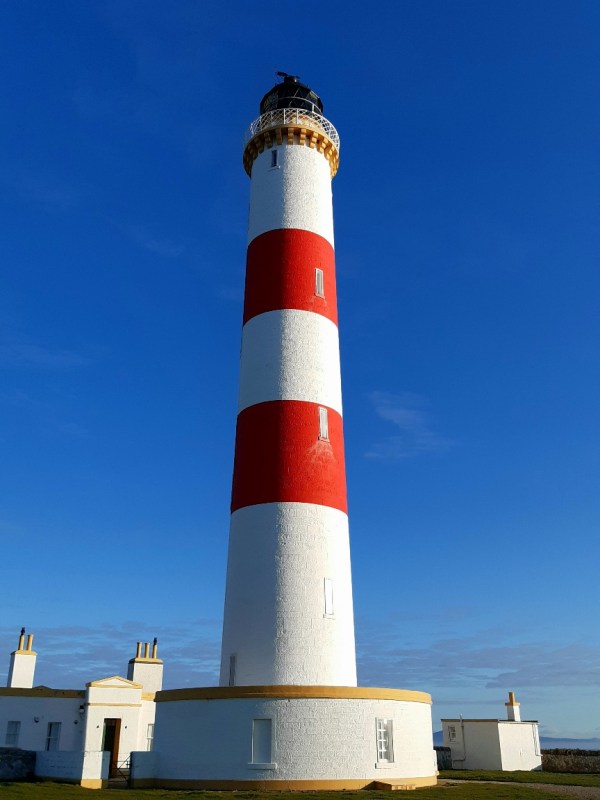
Tarbat Ness Lighthouse (Taigh-solais Rubha an Tairbeirt)-Portmahomack,Highland

Driving ever farther northward on my trip around Scotland, I reached the north west tip of Tarbat Ness peninsula, just outside the fishing village of Portmahomack on the east coast and parked for the night under the watch of this stunning lighthouse.

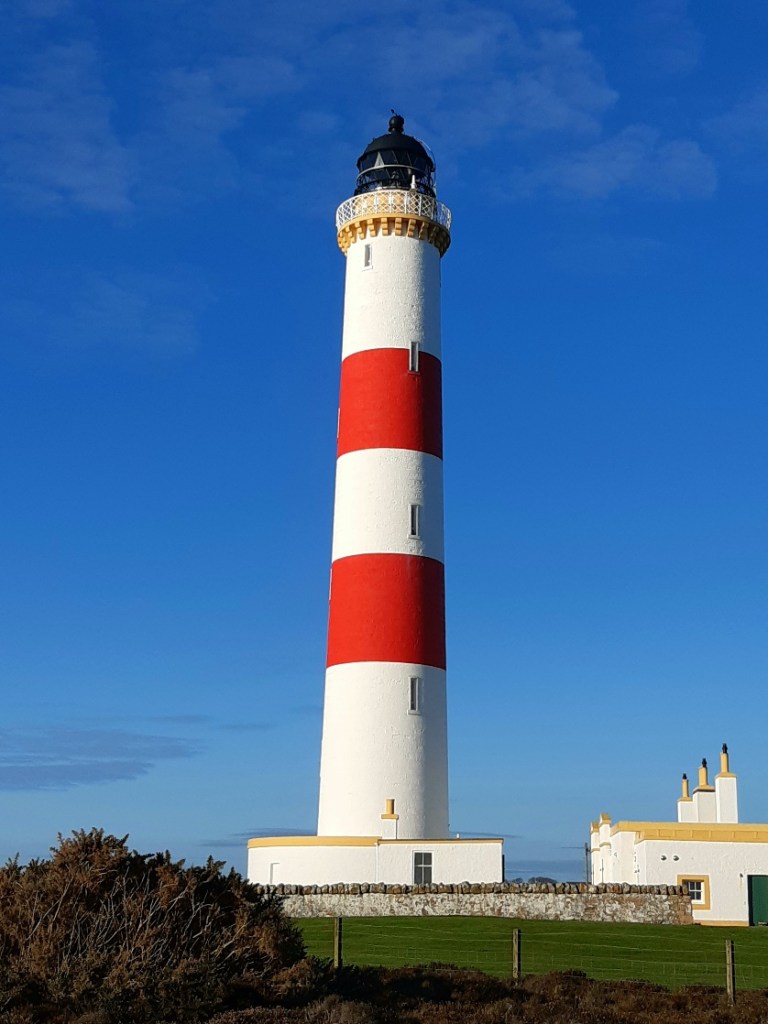
Tarbat Ness Lighthouse stands 41 meters high and is Scotland’s second tallest land-based lighthouse. It was designed by famous Scottish engineer, Robert Stevenson and was first exhibited on 26 January 1830. Its two red bands were added in 1915 to make it easily distinguishable from other lighthouses as a day marker.
A principal lightkeeper, an assistant and their families lived here at Tarbat Ness until is was automated in 1985. The Keeper and Assistant would take shifts in keeping watch in the lightroom, ensuring the light flashed correctly to character. During the day they’d be busily engaged in cleaning, keeping everything in order and painting when necessary. After automisation the cottages and outhouses were sold into private ownership.

The light is automatically operated when daylight falls and rises between set levels when a sensor switches the light on or off. The light is monitored 24 hours a day remotely and technicians visit annually to service the light and carry out maintenance.

The Light flashes white, 4 times every 30 seconds and has a range of 24 nautical miles. The tower has an elevation of 53 metres (174 ft) and 203 steps to the top.

Navigating Scotland’s more than 6000 mile shoreline has always been a hazardous undertaking and it’s one of the most beautiful but treacherous coasts in Europe. In 1786 a Commission was set up to build, initially, four lighthouses. Now known as the Northern Lighthouse Board, it is responsible for over 200 lighthouses.
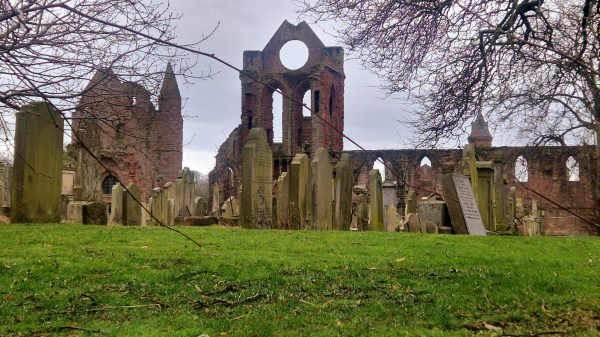
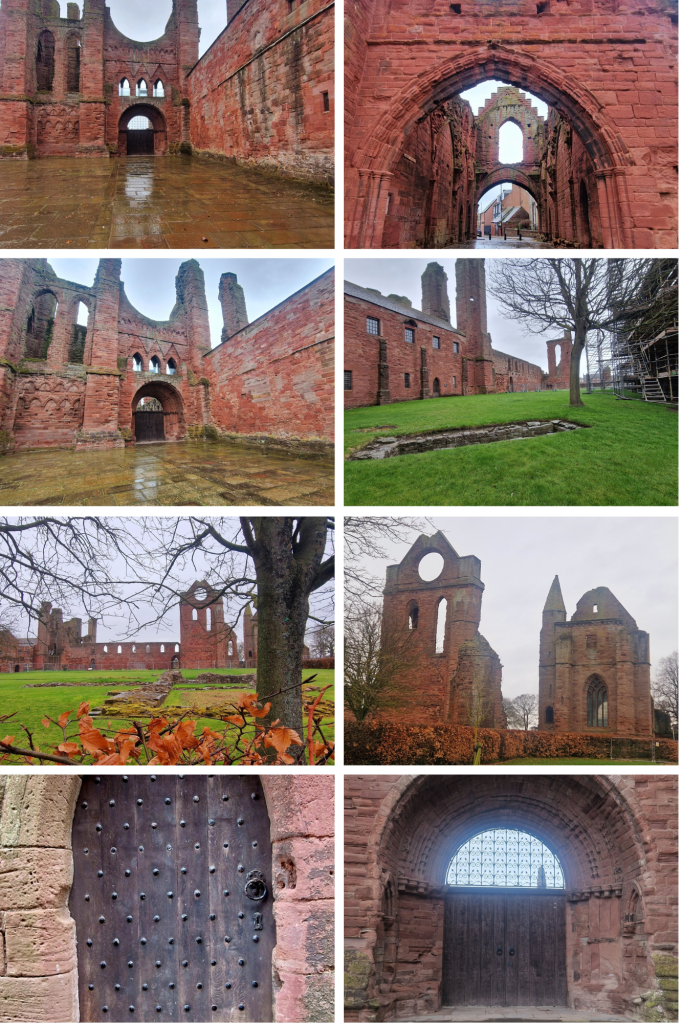
Arbroath Abbey, Arbroath – Angus

As you walk into the heart of the city of Arbroath, you get a feeling of the enormity that this Abbey once was. Impressive parts of this red sandstone cruciform Church still survive, the west end, south transept & sacristy, the gatehouse and the Abbot’s house which is now the museum. The cloister and other buildings are now ruinous but their foundations are still apparent and there’s also a large cemetery within the grounds.

Arbroath Abbey was founded in 1178 by King William (1st), the Lion, for the Tironensian Benedictin Monks from Kelso Abbey. King William bestowed considerable lands and great wealth upon the Abbey as well as custody of the Monymusk Reliquary, the casket believed to contain the relics of St Columba. It’s believed that he had the Abbey built in memory of his murdered dear friend, Thomas Becket (St Thomas the Martyr) and in the hope of currying favour with God for his own safety. William had been captured by English forces at the Battle of Alnwick in 1174 and only released by King Henry II a year later after being forced into signing the Treaty of Falaise which acknowledged Henry as William’s feudal superior. William was eventually buried here in 1214.

The Declaration of Arbroath, asserting Scottish independence over English aggression, was signed here in 1320. The original document is in the keeping of National Records of Scotland however a copy can been seen in the abbey’s museum. In 1951 a group of students stole back Scotland’s Stone of Destiny from Westminster Abbey. It had been seized in 1296 by Edward I of England from Scone Palace (nr Perth) where all Scottish Kings were crowned upon it. Edward took the stone to demonstrate his power over Scotland. It was used in the coronation of British monarchs thereafter however this was hugely resented by Scots. The students eventually placed it at the High Alter of Arbroath Abbey. The Stone of Destiny is now currently on display at Perth Museum.

In the 1800’s Arbroath’s huge fishing fleet would look for the massive round window of the Abbey’s south transept gable to guide them home from the open sea. A red beacon fire was lit at the iconic window and this practice gave the people from Arbroath the nickname of ‘Red Lichties’ (red lights).

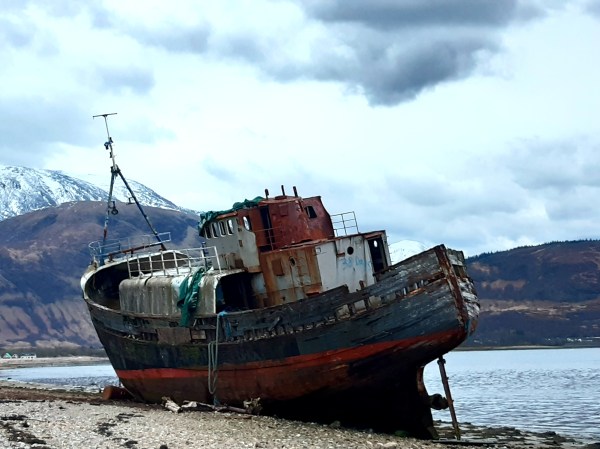
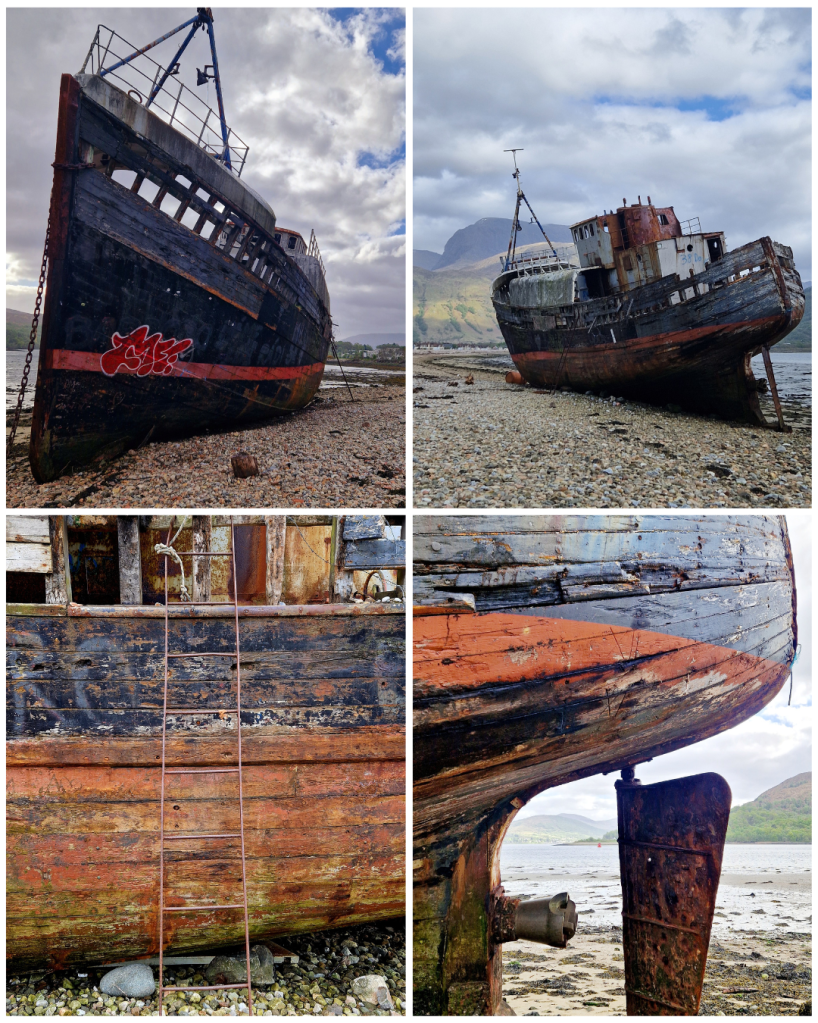
Old Boat of Caol

Abandoned on the stony beach between Caol and Corpach where Loch Linnhe meets Loch Eil, rests the ‘MV Dayspring’. Nicknamed ‘Golden Harvest’ she worked out of Kilheel in Northern Ireland as a trawler boat, fishing herring & mackerel until 2001. She was retired to Kinlochleven Pier in 2009 with plans to transform her into a floating restaurant. During a violent storm in 2011, Golden Harvest broke free from yet new moorings at Camusnagaul Bay, when the coast guard was required to rescue then guide her to her pebbly repose in the shadow Ben Nevis. She remains there, a photogenic and beloved celebrity.

Blog at WordPress.com.

Up ↑