STILL – Loch Earn, Perthshire

Made from over 800 hand-cut pieces of marine grade mirrored stainless steel, STILL was created by artist, Rob Mulholland. This solitary figure of the ‘mirror man’ as he is also known, stands partially submerged at the St Fillans end of the Loch. At 2.75m / 9ft tall, STILL is witness to the ever changing environment of this area, reflecting the surrounding landscape, sky and water.

Eight years since its removal in 2017, this enigmatic statue has returned to Loch Earn. The community here initiated a fundraising campaign to purchase, restore and reinstate this now beloved artwork. It certainly attracts lots of sightseers. I used to stop by with visitors to see this glimmering man of the Loch and he’s once again back on my list of points of interest.
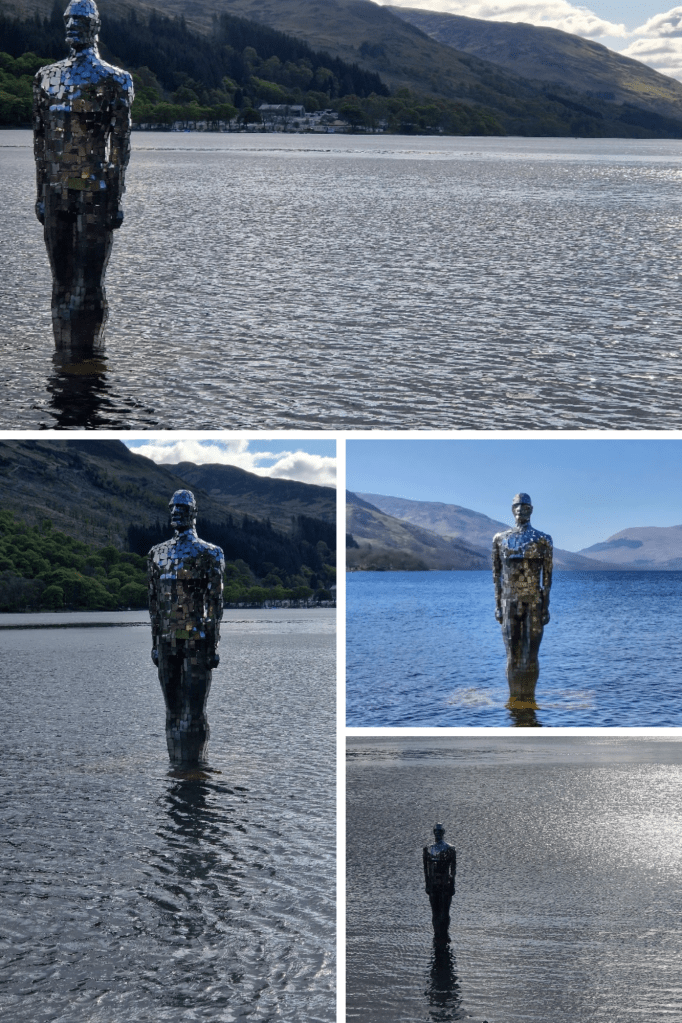
The artist has said – “The figure is purposefully passive, reflecting the awe and power of nature, and yet can be interpreted as standing stoically – symbolising the human struggle to interact with nature”
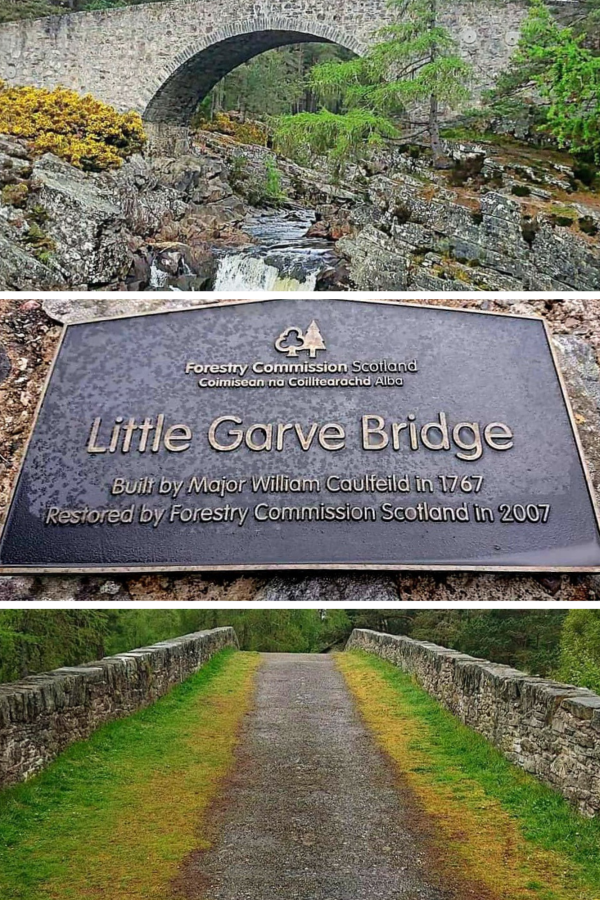
Little Garve Bridge, Garve – Ross & Cromarty

In the wake of the 1715 Jacobite Rebellion, General George Wade oversaw the building of a massive road infrastructure to support the movement of the British Army in the Highlands for the purpose of maintaining suppression of the population. A network of over 250 miles of interconnecting roads and 40 bridges were built, predominantly determined by the location of forts and army barracks. There are areas of the road and some bridges still in use today and referred to these days as the ‘Old Military Road’.

Now a scheduled monument, Little Garve Bridge spans a deep chasm of the Black Water River and had been part of the military road between Contin & Poolewe on the West Coast. Although known as Wade’s Bridge, it was in fact commissioned by his successor, Major William Caulfield.

Mermaid of the North

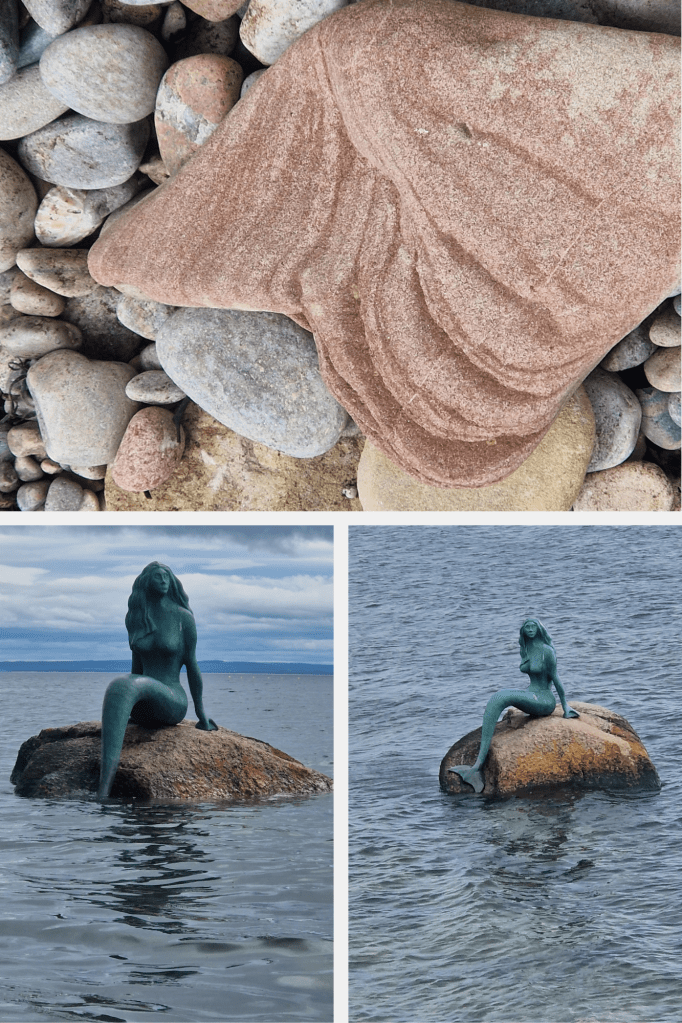
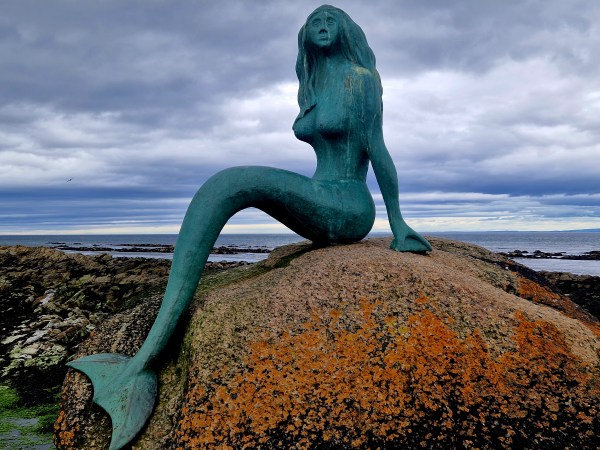
Capturing the imaginations of those who visit her, the alluring Mermaid of the North perches on ‘Clach Dubh’ (Black Rock) by the village of Balintore, Easter Ross. Coastal fables tell of a Mermaid who was captured by a cunning fisherman who hid her tail. Years later, after bearing his children, she found her tail and escaped back to sea, returning regularly to the shore, bringing fish for her hungry family.

Donal had left his boat to gather gulls’ eggs, up high on the cliff, when he noticed a beautiful, long haired woman sitting, singing on a rock below. He crept down for a closer look and upon realising she was a mermaid, grasped hold of her left hand, which it was said was the way to capture a mermaid as all of her strength is in her right hand. She begged him to let her go but being a lonely bachelor, he hid her tail so she couldn’t return to the sea and resolved to make her his wife. The Mermaid gradually settled into life with Donal, had several children with him and made a life for herself, caring for her family. One day though, while she was clearing away some dusty old things in the loft, she came upon her tail. She held it close and hurriedly ran back to the sea lest anyone stop her. Donal would often row out to sea, calling her, begging her to come home but she never returned to him. Everyday, however, her children would visit the shore where she would bring them fish to take home.

Millie & I always stop by, sometimes bringing friends, to visit The Mermaid of the North on our trips around the North Coast. She sits on her rock against the dramatic backdrop of the Moray Firth, where there are superb views of the coastline.

Packhorse Bridge, Carrbridge

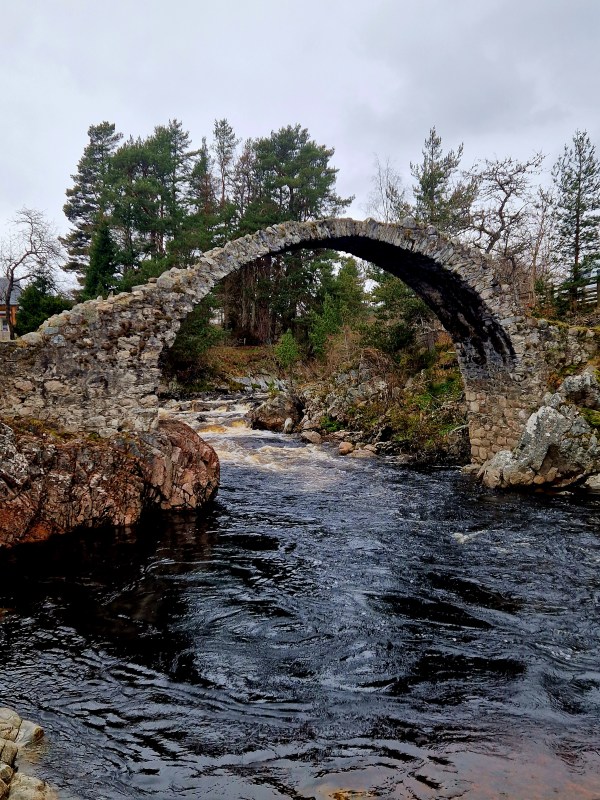
While passing through the Cairngorms we stopped to take a look at this iconic old bridge. Situated in the picturesque Highland village of Carrbridge and also known as ‘Coffin Bridge’, this bridge was built in 1717 to allow funeral processions to reach Duthil Church by crossing the River Dulnain. Notwithstanding, it was a welcome addition to the village, providing a way for tradesmen and locals to traverse the river. It’s a single span humpback arched bridge, now no longer in use and with its side rails missing, all that remains is a slender arch across the river. The viewpoint plaque reads:

“At the beginning of the eighteenth century, to the inconvenience of both travellers and local people, there was no point at which the River Dulnain could be crossed when it was in spate, and burials at the Church of Duthil were often delayed.

Brigadier-General Alexander Grant of Grant, Clan Chief, commissioned John Niccelsone, a mason from Ballindaloch, to build a bridge at Lynne of Dalrachney. Built between May and November 1717, the bridge was paid for out of stipends of the Parish of Duthill.

Its parapets and side walls were badly damaged in the 18th century and again in the famous flood of August 1829, giving the appearance it still has today. At the beginning of the eighteenth century, to the inconvenience of both travellers and local people, there was no point at which the River Dulnain could be crossed when it was in spate, and burials at the Church of Duthil were often delayed.

Brigadier-General Alexander Grant of Grant, Clan Chief, commissioned John Niccelsone, a mason from Ballindaloch, to build a bridge at Lynne of Dalrachney. Built between May and November 1717, the bridge was paid for out of stipends of the Parish of Duthill.

Its parapets and side walls were badly damaged in the 18th century and again in the famous flood of August 1829, giving the appearance it still has today.”

Guard of Honour

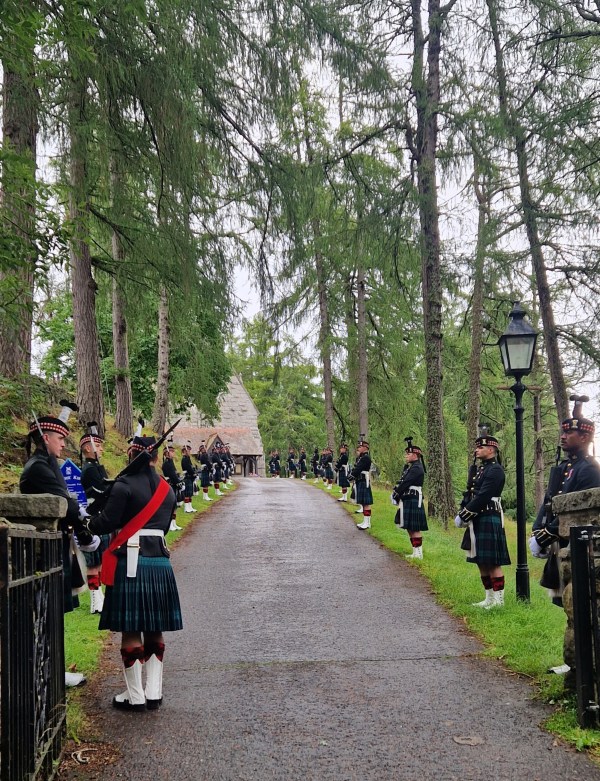
Fortuitously, I was in a café in Ballater when I heard this event would be taking place and as I was only a 15 minute drive away I thought I’d go along to watch the proceedings.

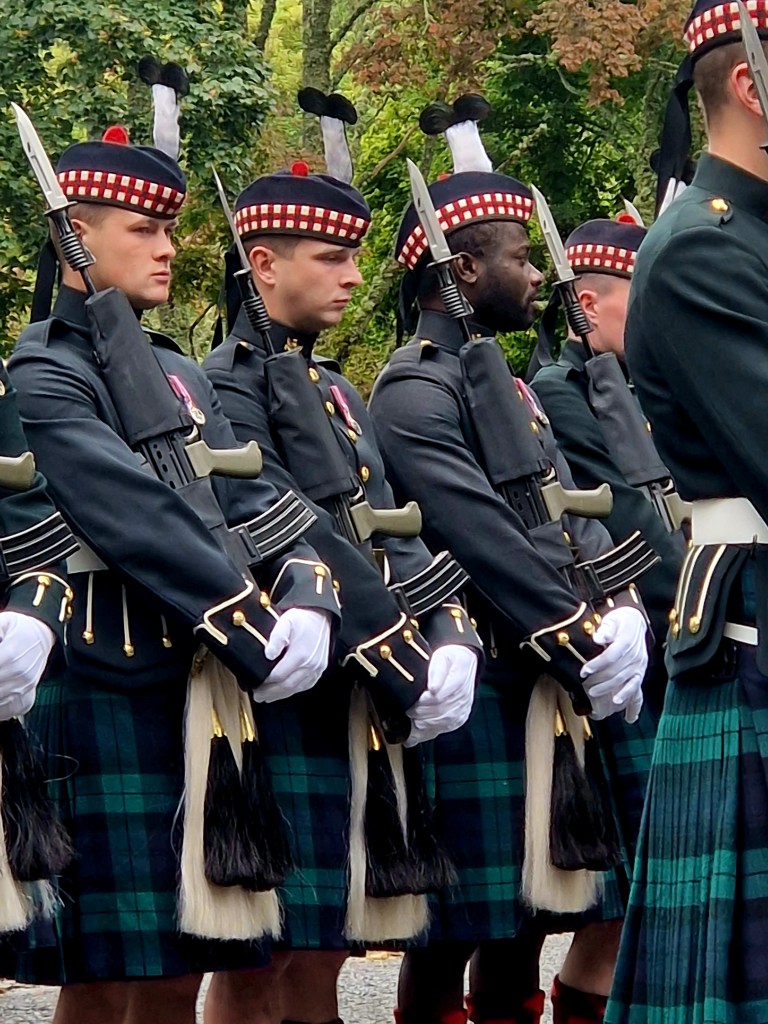
Balaklava Company, 5th Battalion of the Royal Regiment of Scotland, forms a Guard of Honour at Crathie Kirk to welcome members of the Royal Family. The British Royal Family have worshiped here at Crathie for over a century. While they are an independent rifle company, Balaklava Company are renowned for their ceremonial role in Scotland and remain on Royal Guard at Balmoral for the duration of the Monarch’s summer stay there.

Balaklava Company participated in ceremonies to escort the late Queen, Elizabeth II, in her coffin from Balmoral to Edinburgh then onward to London. They were also involved in her funeral. Lieutenant General, Nick Borton, said “It’s a deeply personal attachment for all the soldiers in the regiment to be involved in her funeral arrangements,” he said. “She was very fond of the regiment and all the soldiers in it. For us, it’s not just a military task, we’re saying goodbye to our Commander in Chief and our Colonel.”

Blog at WordPress.com.

Up ↑