Dunfallandy Stone – Pitlochry, Perthshire

I’d heard about this magnificent stone so finally took the time to stop off to search for it while heading to the Cairngorms. Once you get into Pitlochry it’s actually quite well signposted however there isn’t really much parking nearby so I left the van in town and Millie and I enjoyed a stroll (for the most part) out past the caravan park and along the road to get there. It’s quite a narrow road without pavement and the drivers of a couple of Range Rovers that passed me seemed to think they were in a formula 1 race so Millie and I were forced into the ditch a couple of times. Do take care.

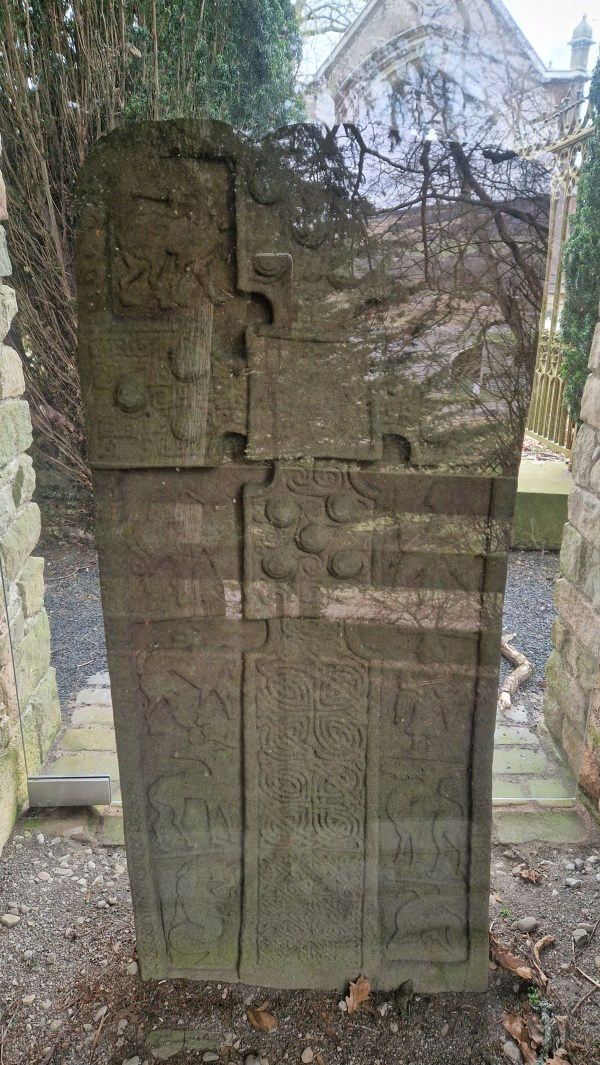
The Dunfallandy Stone is an elaborately carved Class II Pictish stone which is more than 1200 years old. To protect it from the elements, it has been enclosed in a shelter but disappointingly, reflections on the glass make it difficult to see and photograph. Non reflective glass would certainly have been a better option here.

Reminiscent of intricately decorated Pictish jewellery, this cross-slab once marked a place of prayer and is set in its original location, prominently on a mound known to have been topped by a chapel, where it would have been seen by all that passed by. The relief carvings show the sophistication of Pictish culture, mixing influences from across the British Isles and Europe with local traditions and belief. Typically, the body of the Cross is decorated with the familiar intricate Pictish knotwork.
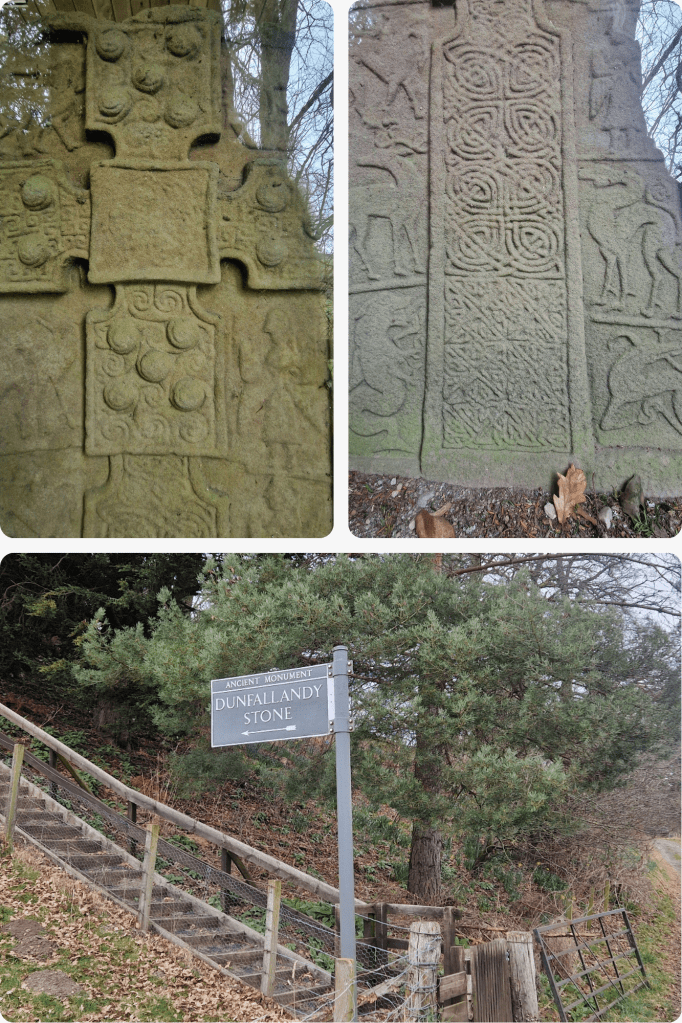
It’s thought that stones such as this one were once coloured, using mineral pigments such as yellow ochre, red lead and green verdigris, emulating the style of metalwork and religious manuscripts of the time. The images on the front depict Pictish monsters (considered agents of God’s wrath), a stag, Jonah being swallowed by a whale and angels. On the reverse side, depictions are of enthroned bishops or saints facing each other, a rider representing perhaps the patron who commissioned the stone then at the bottom are Iron-working tools (tongs, hammer, crucible). There are also several distinctively Pictish symbols on the reverse here, the Pictish monster, double disk and the crescent with v-rod however their true meaning is now lost to us.

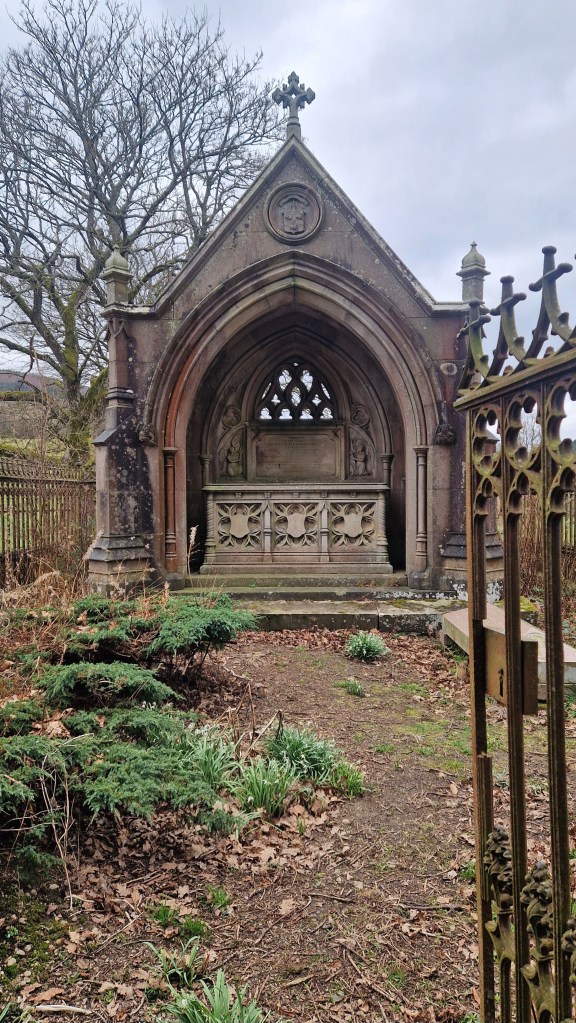
Dunfallandy Stone now shares the mound with burial enclosures surrounded by railings. One of these is the site of the impressive tomb of Lieutenant-General Archibald Fergusson of Dunfallandy who died in 1834. This, I assume would be why the location was referred to as Mausoleum Mound from the 1860’s.
The Eleanor Cross – Kenmore, Perthshire

I’d parked overnight in a layby at the east end of Loch Tay at Kenmore and took a swim in the morning sunshine alongside several other morning dippers. Slipping into the cool, clear water of the still loch was a refreshing way to wash away the remnants of sleep. Meanwhile, Millie danced around at the waters’ edge desperate for me to come out. She’s a paddler not a swimmer.

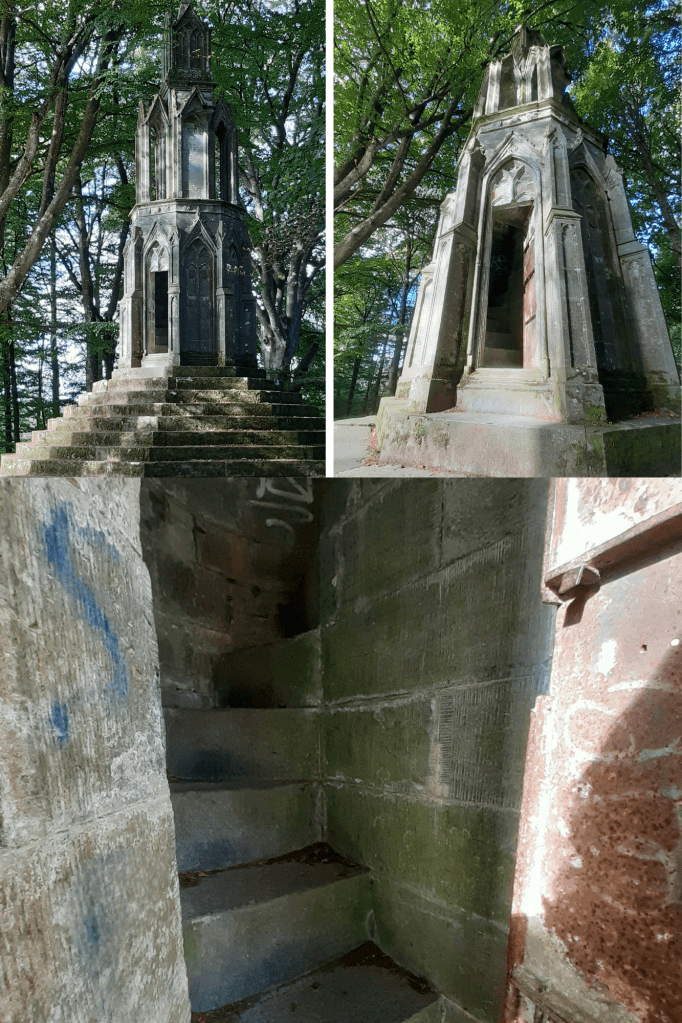
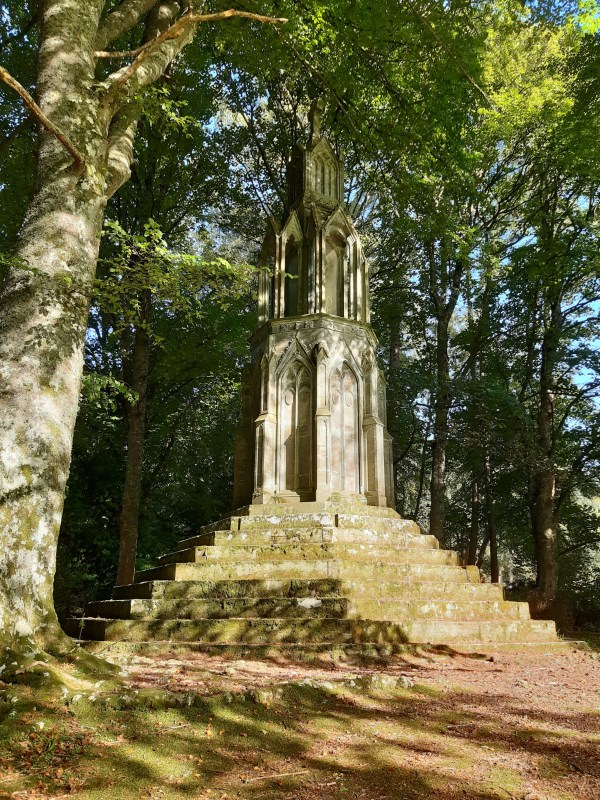
I’d brought my Children camping to Kenmore over the years so it evoked happy memories to be visiting again. There are lovely walks around this area and so Millie and I set off on a jaunt through the woods to take in the Eleanor Cross and onward towards Aberfeldy. The pathway starts by the bridge at the mouth of the Loch and meanders along the north side of the river for a while then heads up the hill through the woods. The Cross was commissioned in 1831 by Lord Breadalbane in tribute to his beloved wife Mary. At that time it would have had a view of the hills and down along the valley with beautiful vistas of the River & Loch Tay. In all these many years however the woodland has grown up high into beautiful mature trees with birdsong echoing through them.

Eleanor Cross is built on the site of an old summer house known as Maxwell’s House. It stands 30 feet tall with a 9 step octagonal base encircling it, a cruciform mid section and a square pinnacle top surmounted with a cross. Delightfully, a door on its south side opens to a spiral stairway. This leads to a small open-air arched gallery surrounding the structure. Climbing up the steps, it feels like a childhood adventure to reach the platform and look through the trees at height. Sadly the interior has been sprayed with graffiti: evidence of bored minds and idle hands.

A brass plaque acclaims – This Building is Dedicated to my Faithful Friend and Fellow-Labourer, MARY, COUNTESS OF BREADALBANE, whose maternal care has been extended to all around this place. anno domini, 1831.

I’ve been as yet unable to ascertain why this particular monument was named ‘Eleanor Cross’ so for the moment will surmise that the reason was purely a romantic gesture in keeping with Breadalbane’s status and the era. (The Victorians were fond of building ornamental ‘follies’ and they can be found throughout Scotland in beautiful rural settings.) NB: King Edward I of England had twelve Eleanor Crosses erected as markers built along the funeral route taken by his wife Queen Eleanor of Castile. They marked the nightly resting places of her coffin procession from Lincoln to Westminster Abbey in 1290.

Blog at WordPress.com.

Up ↑