Dogton Stone, Cluny – Fife

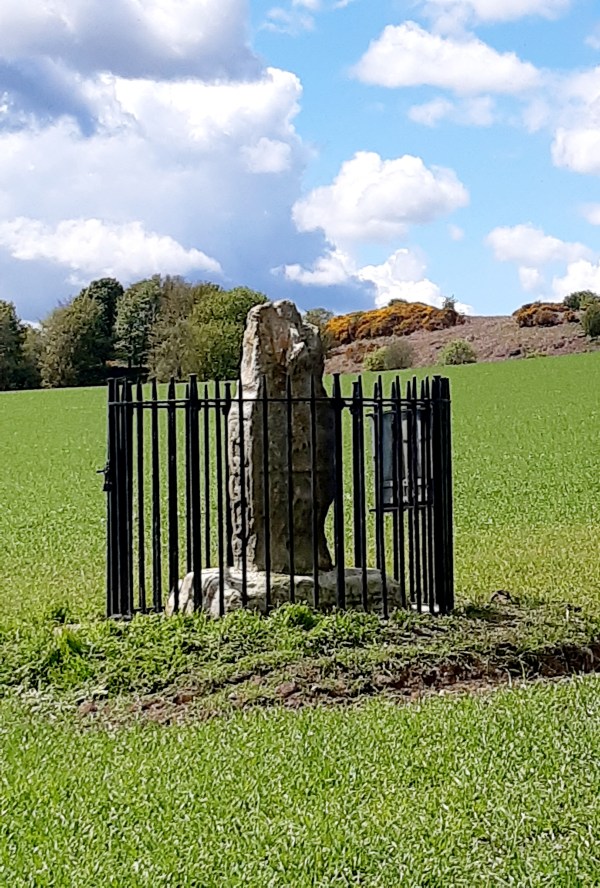
In a wheat field at Dogton Farm, there stands a long forgotten Pictish Stone. Enclosed in iron fencing for protection, it’s a 9th century Class III, free-standing Pictish Cross which seems to have lost its head and arms centuries ago. An etching of the stone was done in 1772 by Thomas Pennant (1726-1798, Welsh naturalist, traveller, writer & antiquarian). Then, another sketch from 1832 by James Skene (1775-1864, Scottish lawyer and amateur artist, best known as a close friend of Sir Walter Scott), mentions that the stone was “at Dogton, 4 miles from Kirkcaldy, erected where the Danes were defeated by Constantine 2 of Scotland in the year 874”. Both illustrate the Dogton stone in its damaged condition.
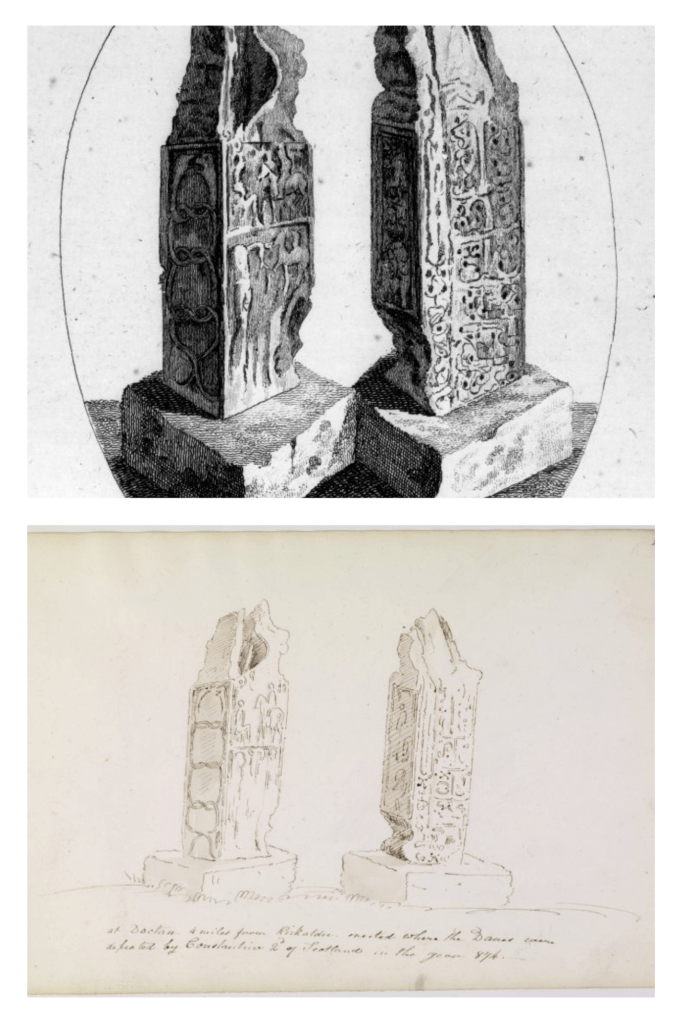
The stone stands around 4ft 10ins (1.5M) and had originally been sculpted in relief on all four sides, however, the weather over these many centuries has taken its toll. On the West facing side, intricate knotwork, typical of Celtic artistry can still be clearly seen. Stretching up the South side of the stone, two entwined, snapping serpents are depicted. It’s said that in Celtic culture, serpents were sacred to high-ranking members of society, associated with rebirth, eternal life and healing. The East face shows what once was a battle scene, with a horseman still quite visible. Unfortunately the North face of the Dogton stone is so very weathered, it’s not longer discernible.
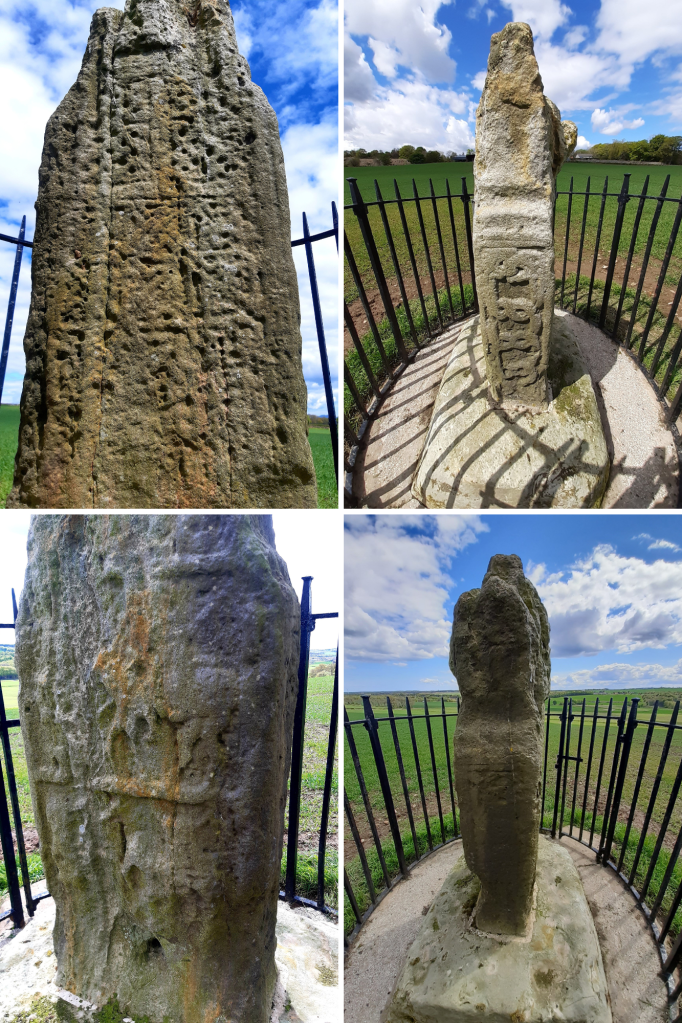
What an incredible sense of awe I felt, to have come across such a remarkable piece of ancient history and it set my mind rambling with thoughts of the people who created this and why it would have been erected here. It’s possible the stone could have been erected to specifically mark the victory in battle of Constantine 2nd over the Danes, or, perhaps, simply as a decorative way marker for pilgrims heading towards religious sites such as nearby Scotlandwell, Lindores Abbey, Balmerino Abbey, or St Andrews where holy relics of Saint Andrew were displayed in the Cathedral there. Oh to be a time traveller….

NB: Class III Pictish Stones – these originate from the 8th or 9th century and feature none of the unique Pitctish symbols of earlier stones, typically free-standing crosses which include Christian imagery.
Holy Well, Scotlandwell – Fife

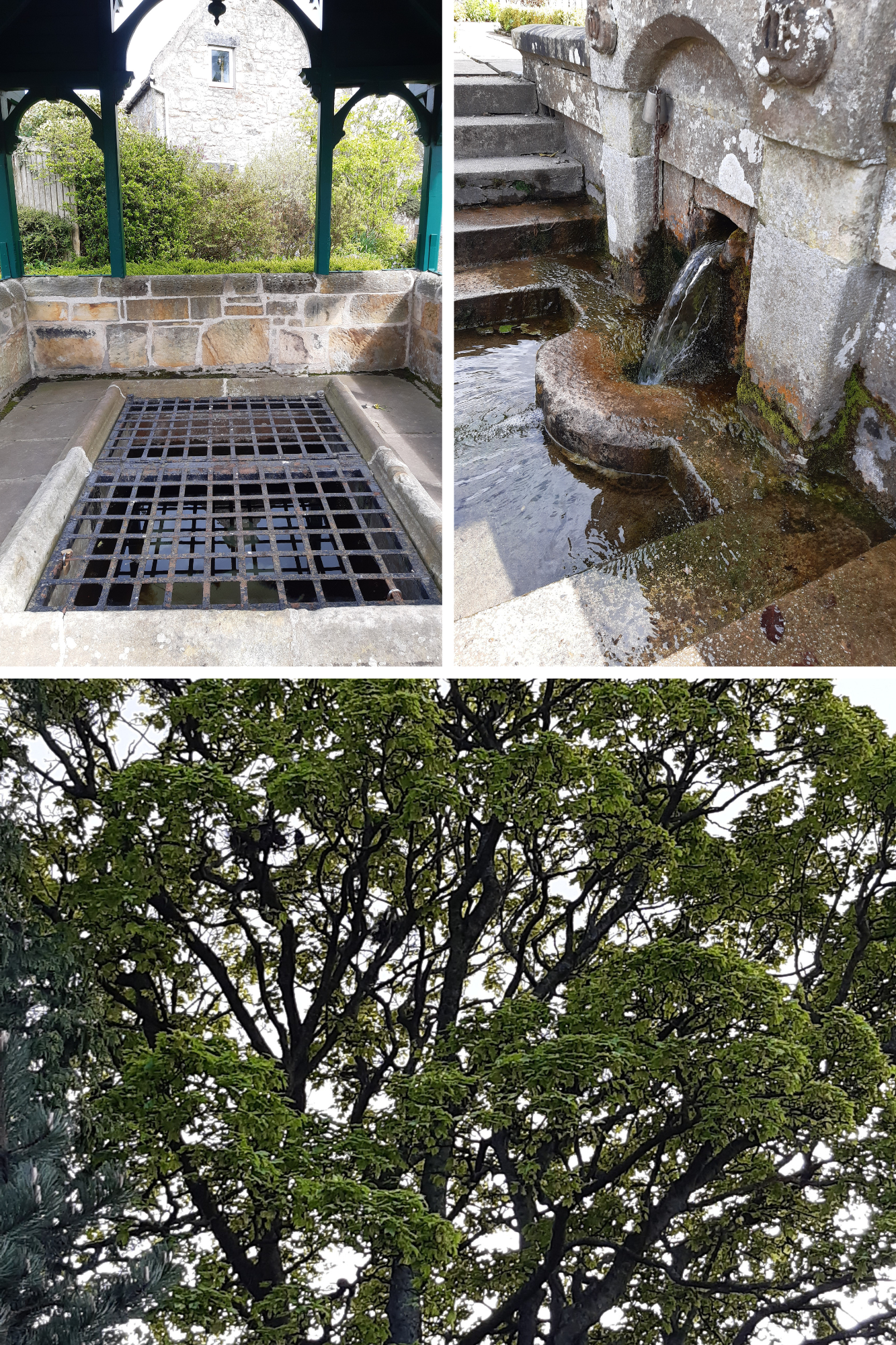
The natural spring water that bubbles up from deep underground and through the sand in the cistern of this well has a history mingled with folklore. It has been renowned for its curative properties for centuries and was first named ‘Fons Scotiae’ (Well of Scotland) by the Romans who passed through this area in 1st century AD. 

The widespread assertion that the water had healing powers meant that Scotlandwell became a significant place of pilgrimage throughout the Medieval period. 

Around 1250, the Trinitarian Friars (aka Red Friars) moved here to establish a hospice, using the healing waters from the holy well for patients in their new hospital of St Mary. It’s said that in the early 14th century, King Robert the Bruce came here in the hope of a cure for his leprosy and records show that Charles II travelled from his Palace in Dunfermline to take the ‘curative’. Mary Queen of Scots is also known to have visited the well to partake of its exquisite water.

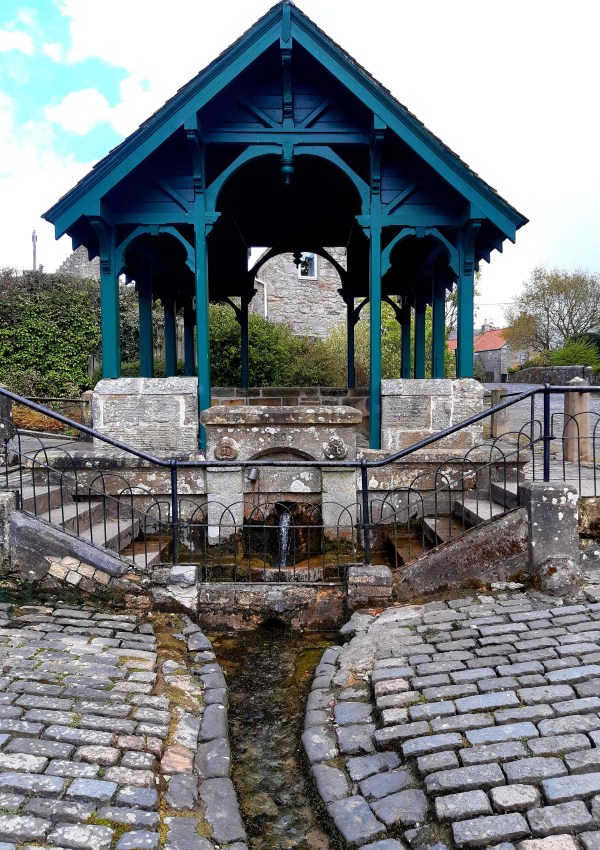
The lovely, ornamental structure which now houses this ancient well is built from local sandstone, put in place and completed in 1858 by mason, Thomas Hay, and the wooden canopy constructed by joiner, Alexander Kelloch of Lindores.  The reconstruction of the well, building of an adjacent wash house and drying green was benefacted to the local community by landowner, Thomas Bruce of Arnot and his wife Henrietta Dorin, at a cost of £154. Quite a tidy sum at the time. 

I stop by here often to sit in the peacefulness of this place, drink the water and listen to the cascading of the water as it streams out of the well spout….if it’s not drowned out by the squawking of hundreds of crows that live in nearby sycamore trees.

Cult Of St Andrew, Patron Saint Of Scotland

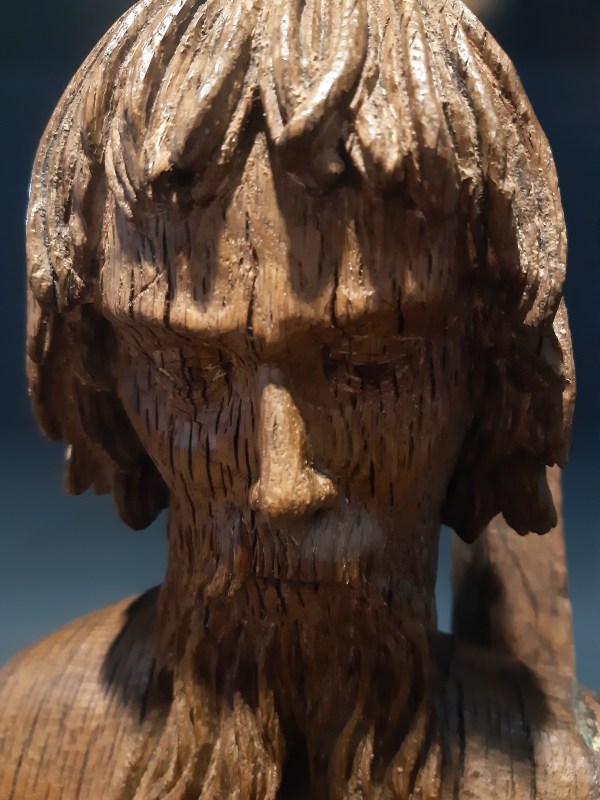
This oak carving of St Andrew is thought to have come to Scotland from a church in Northern Europe. Legend says that the bones of St Andrew, disciple of Jesus, were brought from Greece in the 350’s by Bishop Regulus. Objects associated with holy people were the focus of Christian devotion in medieval Europe hence the town (originally Kilrimund) became a major pilgrimage site and the centre of the cult of St Andrew. Pilgrims made long journeys to visit his relics and in the 1100’s, Queen Margaret of Scotland established a free ferry across the Firth of Forth to enable an easier journey north to St Andrews. When pilgrims arrived, the town’s street layout directed them to the Cathedral where the relics were richly housed.

By around 1200, the town was named after St Andrew and in 1320 he was officially adopted as Scotland’s patron saint and explicitly mentioned in the Declaration of Arbroath. St Andrew’s symbol of the saltire, an X-shaped cross, became a national emblem and later was assumed as our National Flag.

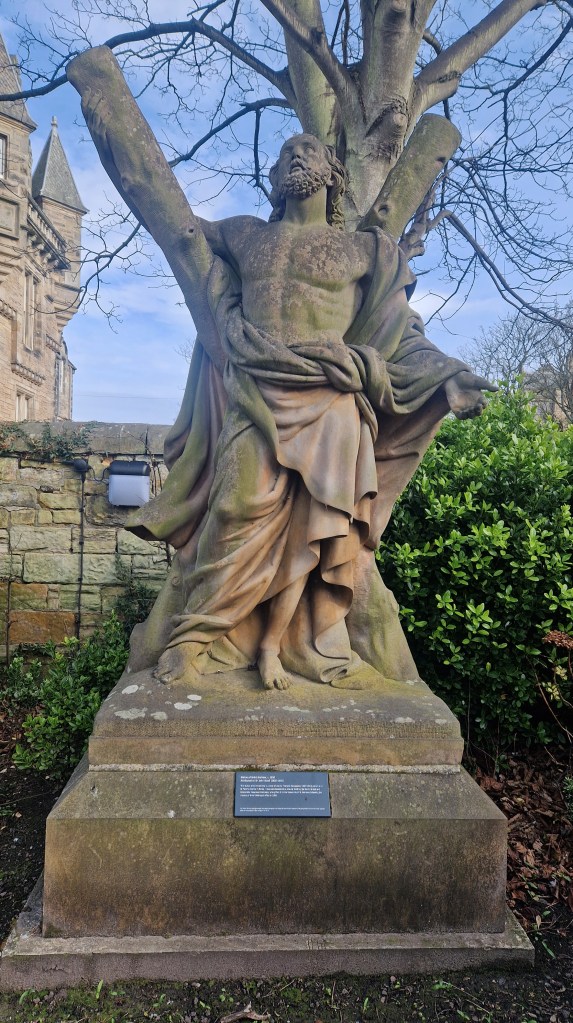
The above Statue of St Andrew, which is in the grounds of Wardlaw Museum in St Andrews, is attributed to Sir John Steell (1804-1891) and is a copy of one sculpted by Francios Duquesnoy (1597-1643) which sits in St Peter’s Basilica in Rome.

Blog at WordPress.com.

Up ↑