
Now ruinous, Ravenscraig Castle belonged to one of the most powerful women in Scottish history, Queen Mary of Guelders, wife of James II. Mary was descended from one of Europe’s most prominent families and had been raised at the court of her great-uncle, The Duke of Burgundy. She arrived in Scotland in June 1449, first visiting the Isle of May to pray at the shrine of St Adrian before making her way to Leith and staying at the Convent of St Anthony. On her wedding day, on 3 July 1449, crowds of commoners and nobles lined the streets of Edinburgh to watch her make her way to Holyrood Abbey for her marriage to King James II of Scotland. She was 14 and he was 18.
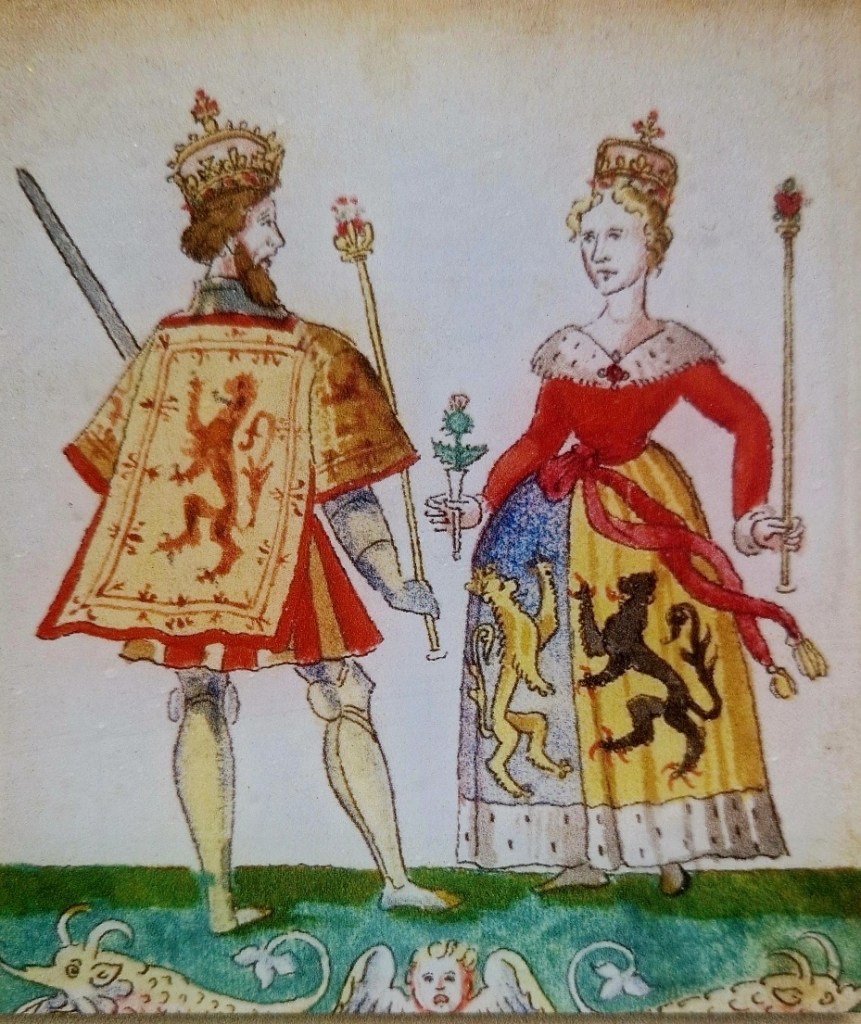
In 1460 King James gave his wife the land here at Dysart to build a castle but he was killed just a few months later. James had witness the introduction of gunpowder and was fascinated with artillery so the Duke Of Burgundy gifted him Mons Meg (this still sits on the parapet of Edinburgh Castle to this day). Mons Meg is a massive, iron cannon which took a team of oxen to move, constantly became stuck because of its enormous weight and could travel no farther than 5km a day. As Roxburgh Castle had long been held by the English, King James ordered some special new cannons from Flanders to ensure success in his bid to retrieve Roxburgh. During the siege, he stood proudly beside one of his new cannons, The Lion, and ordered it to be fired. One of the cannons iron rings had worked loose during transportation and it exploded, sending a piece of iron slicing through the King’s thigh, cutting it in half. He bled out quickly and was dead within minutes. King James was 29 years old. Roxburgh castle fell to James’ forces a few days later.
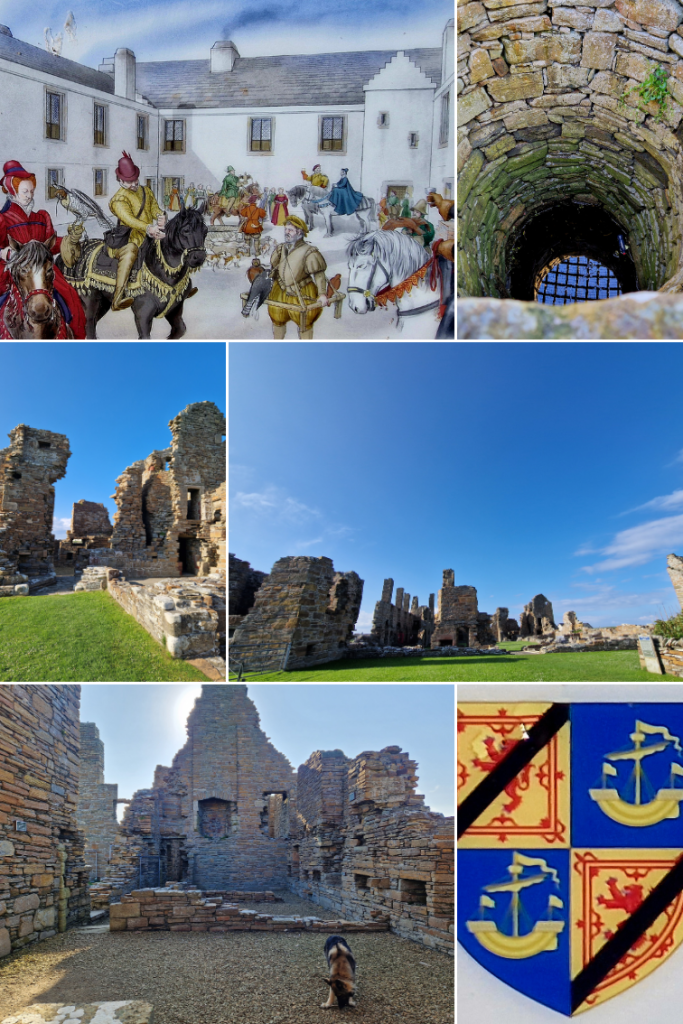
The death of King James left Mary to rule over the Kingdom as regent, on behalf of their young son James III. She was only in her mid-twenties when she took over governance of Scotland and ordered the construction of Ravenscraig Castle. Ravenscraig was built as a fortress to guard the Firth of Forth and the first in Scotland erected to withstand return artillery fire. The Castle consists of two D-plan towers with 3.5m thick walls, linked by a two-storey block with a broad parapet and gun loops for safely firing upon attackers. The courtyard is cut off from the surrounding area by a very deep ditch and could be reached only by drawbridge. Building this Castle was a huge undertaking and the Queen employed master of works, David Boys, to lead a team that included master carpenter, Andrew Lesouris, and master mason Henry Merlzioun. Between 1461 & 1462 more than £600 had been spent. The construction, however, was interrupted when Mary died at Ravenscraig, just three years after her husband in 1463.
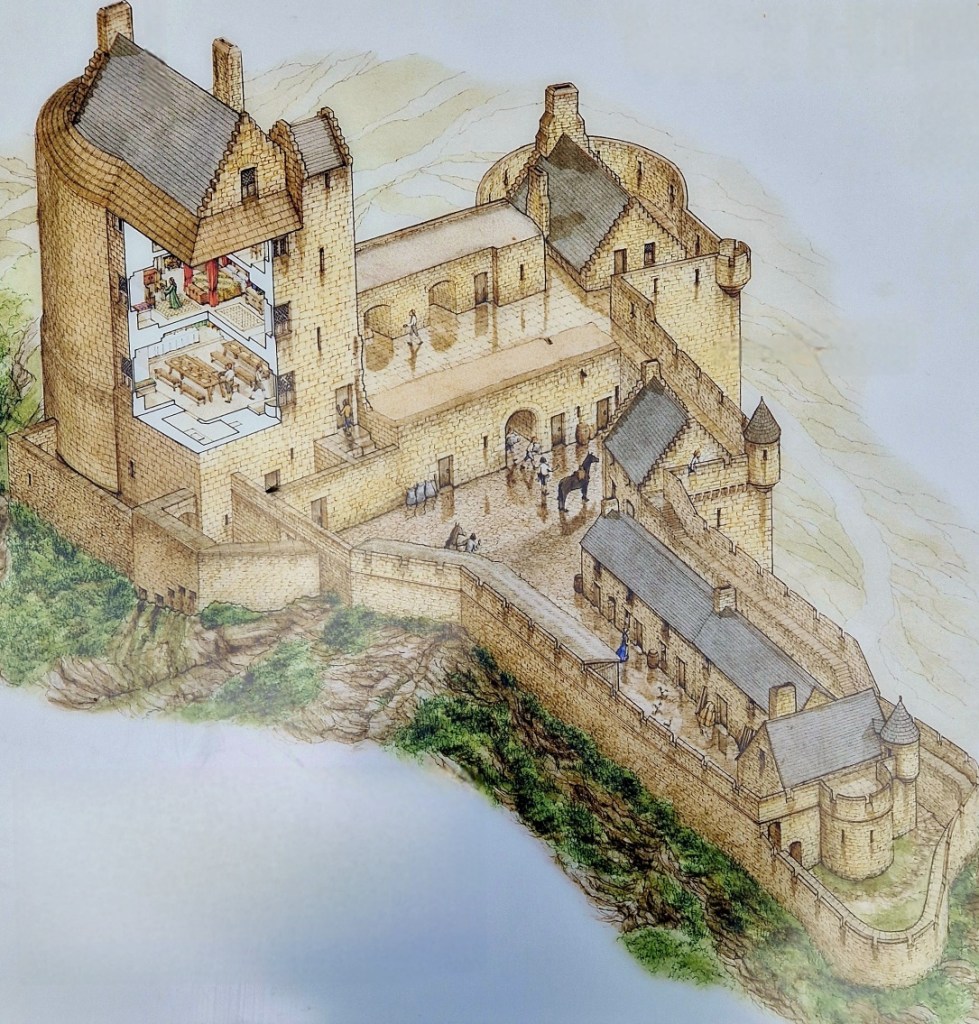
King James III wasn’t interested in Ravenscraig so made William Sinclair, who at the time was 1st Earl of Caithness and Norse Earl of Orkney, exchange his fiefdom of Kirkwall Castle on Orkney for Ravenscraig Castle in Dysart in 1470. At that time, only three storeys of the east tower and the foundations of the adjacent hall were complete. Sinclair continued the building, altering the original design and had a gun platform constructed where Queen Mary’s great hall had been planned. It was to be a self contained residence with a bedroom on the top floor, the great hall below, then public areas, a bakery and other outbuildings filled the promontory. The gun platform was located between the two towers with cellars underneath. Ravenscraig Castle is known to have protected Merchant Ships from pirates who were based on the Isle of May in the outer part of the Forth Estuary.
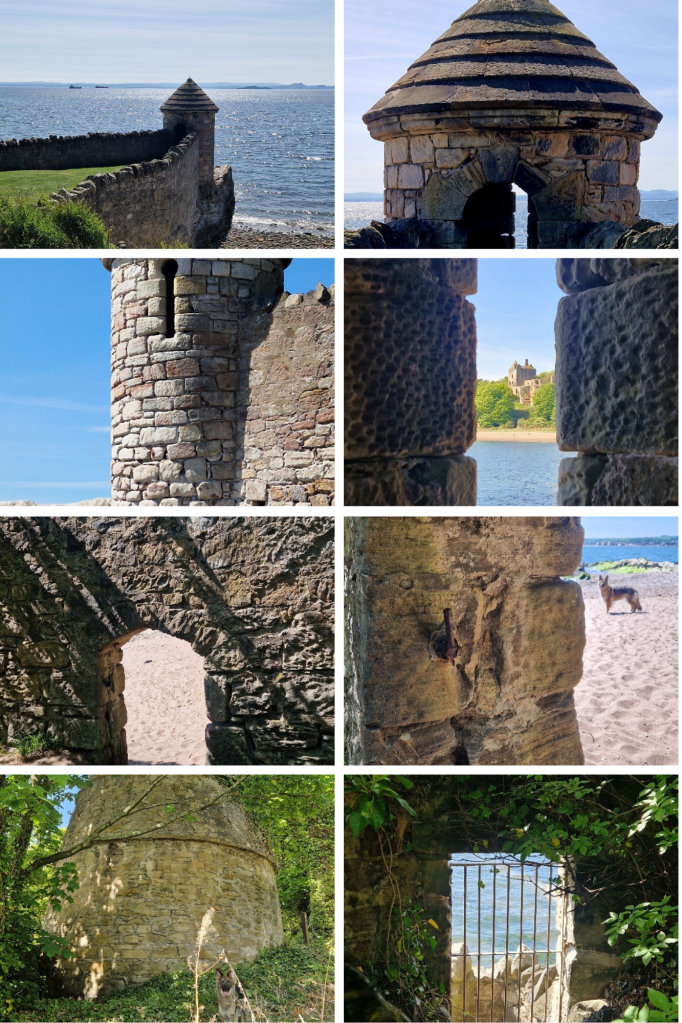
Built eastward along the shore from Ravenscraig, high walls protected against would-be invaders. A watchtower is built into the wall from which guards would have seen vessels coming & going from all directions. A gateway through the wall would have allowed for the delivery of goods, although this originally had a secure iron gate. A beehive dovecot from the 16th century also remains. The pigeons housed within would have been an important source of meat and eggs during tough winter months. The land around the castle is now parkland, ‘Ravenscraig Park’, once known as ‘Three Trees Park’. Legend tells that three brothers of the Sinclair family mistook each other as robbers one dark night and shot each other dead. Trees were planted over their graves.
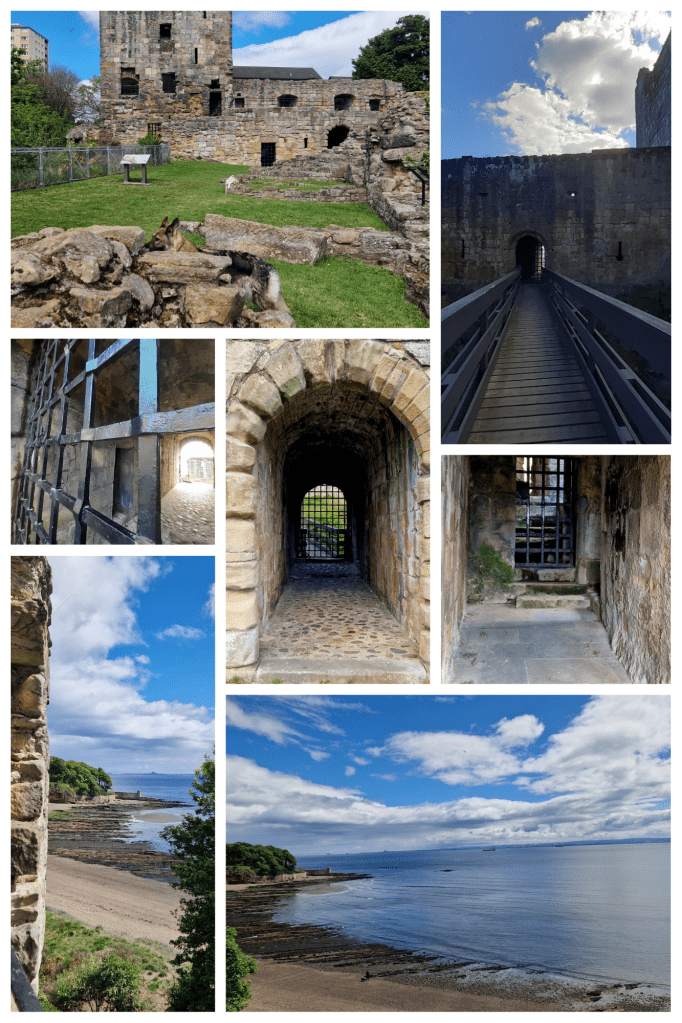
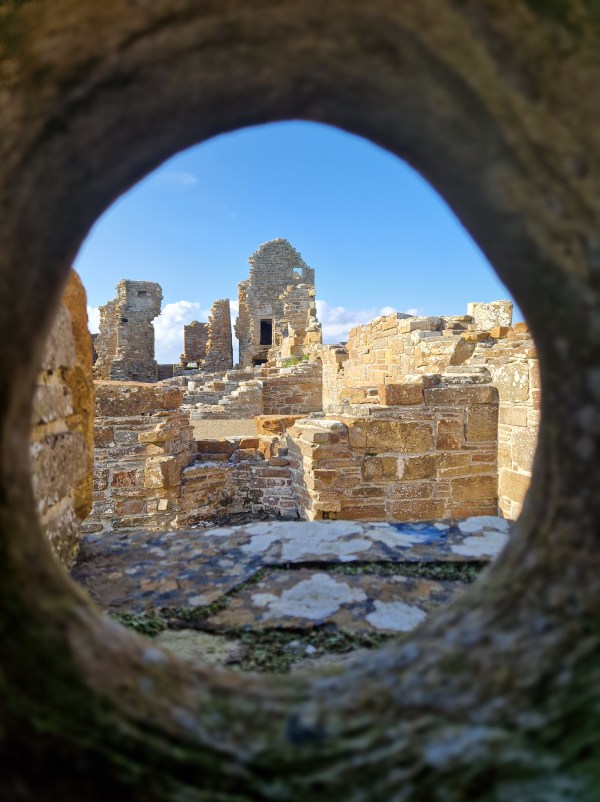
Ravenscraig Castle remained in the Sinclair family until 1898 when it was sold to local linoleum manufacturer, Sir Michael Nairn, then finally taken into State care in 1955 due to its decayed and dangerous condition. Some parts of the Castle are still accessible to visitors but, disappointingly, the stairway to the remaining upper level is now locked behind an iron gate. Millie & I scrambled around trying to take photos but they don’t do justice to the size and might of this once proud Castle, built here in this prominent position overlooking the Firth of Forth.
NB: Notably, William Sinclair also had Rosslyn Chapel built.
 Scottish Adventures - in a van