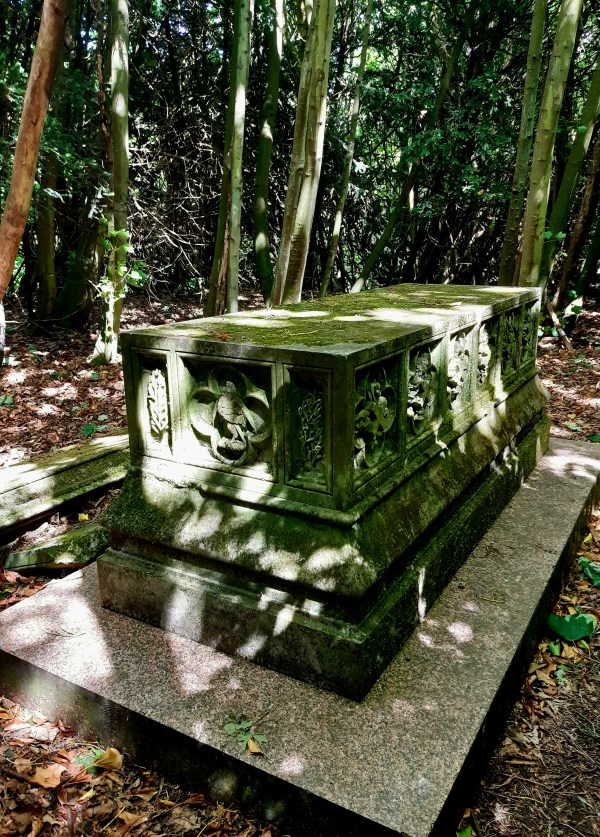
Tomb of Robert Munro Ferguson – Kirkcaldy, Fife

In an overgrown tangle of trees on a hill in the Raith Estate, on the outskirts of Kirkcaldy, there’s a long forgotten tomb. This is a place only visited by the occasional dog walker and teenagers searching for a bit of woodland adventure. Millie didn’t care that it took a while to find the location and what a magnificent resting place this would have been, once upon a time, when it overlooked Raith Lake and the surrounding rolling hills.

This is the Tomb of Lieutenant Robert Munro Ferguson, an officer of the 79th Regiment of Foot who became Colonel of his Regiment, commanding from 1835 to 1841. He was born on 20th August 1802, grew up in Muirton in Fife then went on to study in Edinburgh. Robert was the son of Ronald Craufurd Ferguson (also Colonel of the 79th from 1821 to 1841) and was appointed commanding officer with the rank of lieutenant-colonel on 13 March 1835, thus commanding in the regiment under his Father. The regiment had been serving in Canada but returned to Scotland in 1836.

On retiring from the army, Robert got into politics and became Liberal MP for Kirkcaldy Burghs from 1841 to 1862. He wholeheartedly supported the Liberal agenda, wanted electoral reform, male suffrage and the secret ballot, supported triennial fixed parliaments, voted for revision of Corn Laws and income tax. He also voted for universal, free schooling. Robert was re-elected unopposed at 4 consecutive general elections.

On 17th May 1859 he married Emma Elizabeth Mandeville at Westminster in London and they went on to have six children together: Ronald Craufurd, Alice Edwina, Emma Valentine, Hector, Robert Harry & Edith Isabel. In 1864 Robert inherited the baronies of Novar in Ross and Muirton on condition of adding ‘Munro’ to his surname. He died on 28 November 1868 and was laid to rest here.
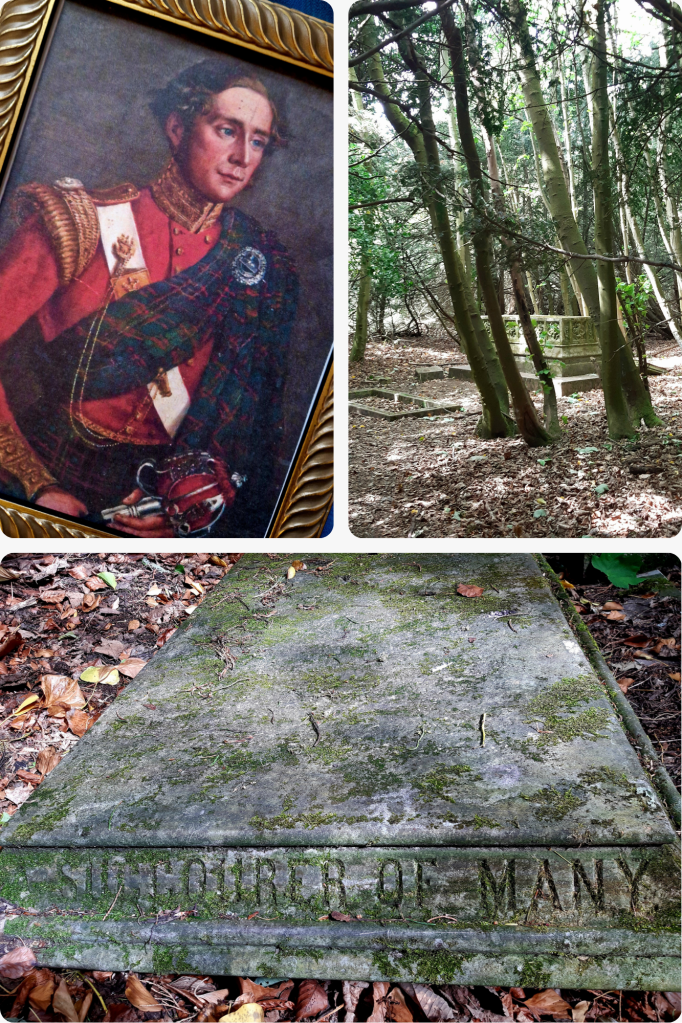
The slab from the top of his tomb now lies unceremoniously, toppled to one side and the inscription around its rim reads: Robert Munro Ferguson of Raith & Novar. Lieutenant Colonel of the 79th Highlanders. Born 20th Aug 1802, Died 27th November 1868, Succourer Of Many.

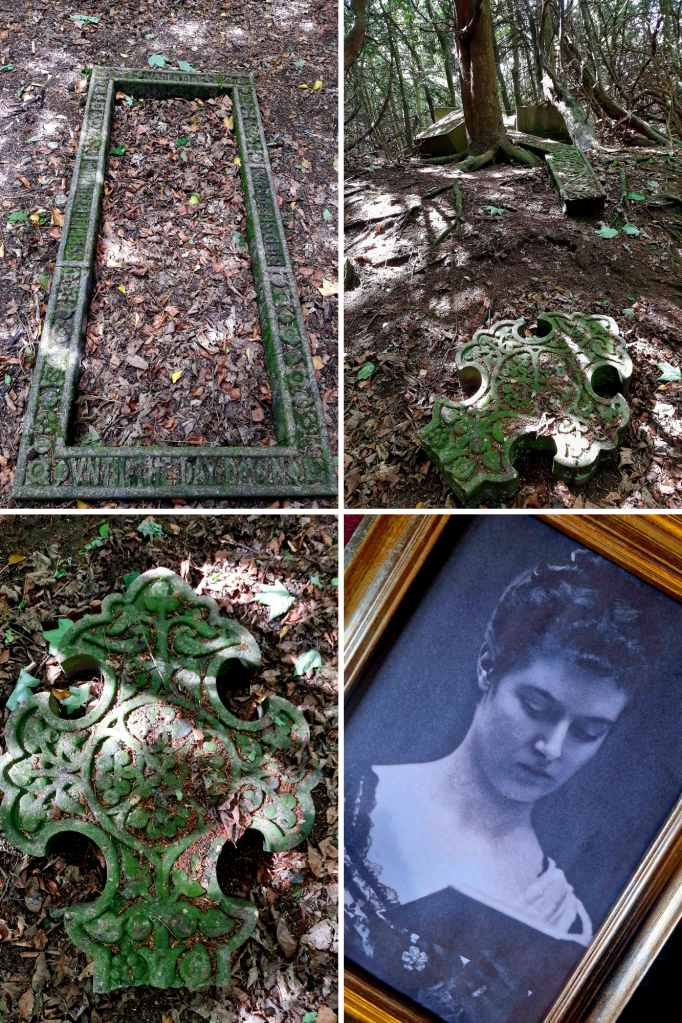
His daughter, Emma Valentine, also held her father’s liberal views, was in favour of women’s suffrage and is known to have created a leaflet entitled ‘Union of Practical Suffragists within the the Women’s Liberal Federation’. In 1890 she became engaged to Scottish born politician, Richard Burdon, Viscount Haldane, but for reasons I haven’t been able to ascertain, she broke off the engagement. Sadly, Emma died at the age of 34 years and was laid to rest here alongside her Father. The beautifully intricate, now broken cross lying in pieces on the slope was in memoriam of her as the base bears her name. The inscription around her grave is still legible and says: Valentine. Born Feb 14 1863. Died Sep 14 1897. Until The Day Dawn.
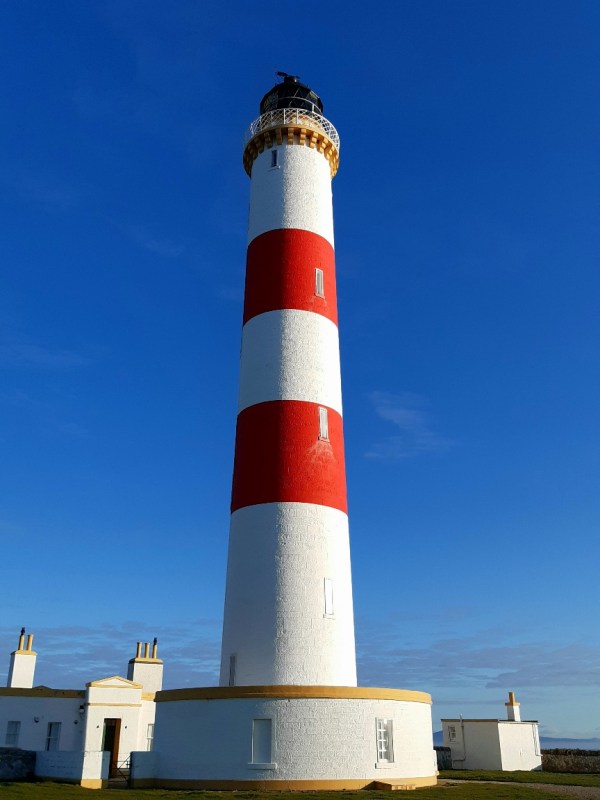
Tarbat Ness Lighthouse (Taigh-solais Rubha an Tairbeirt)-Portmahomack,Highland

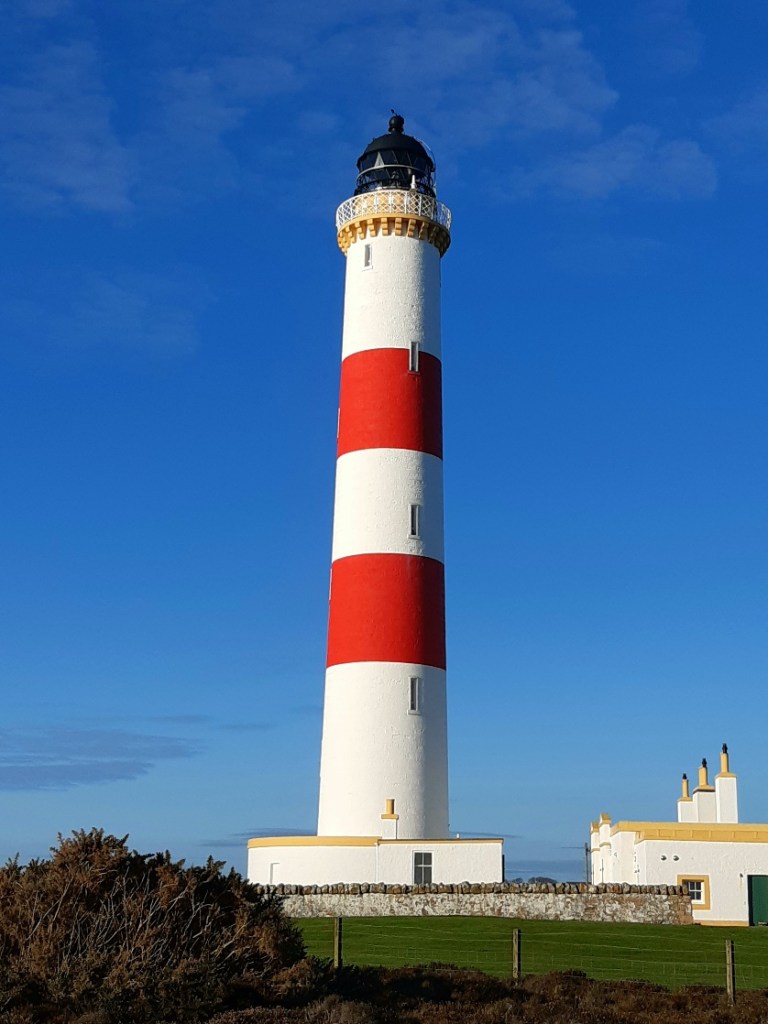
Driving ever farther northward on my trip around Scotland, I reached the north west tip of Tarbat Ness peninsula, just outside the fishing village of Portmahomack on the east coast and parked for the night under the watch of this stunning lighthouse.

Tarbat Ness Lighthouse stands 41 meters high and is Scotland’s second tallest land-based lighthouse. It was designed by famous Scottish engineer, Robert Stevenson and was first exhibited on 26 January 1830. Its two red bands were added in 1915 to make it easily distinguishable from other lighthouses as a day marker.

A principal lightkeeper, an assistant and their families lived here at Tarbat Ness until is was automated in 1985. The Keeper and Assistant would take shifts in keeping watch in the lightroom, ensuring the light flashed correctly to character. During the day they’d be busily engaged in cleaning, keeping everything in order and painting when necessary. After automisation the cottages and outhouses were sold into private ownership.

The light is automatically operated when daylight falls and rises between set levels when a sensor switches the light on or off. The light is monitored 24 hours a day remotely and technicians visit annually to service the light and carry out maintenance.

The Light flashes white, 4 times every 30 seconds and has a range of 24 nautical miles. The tower has an elevation of 53 metres (174 ft) and 203 steps to the top.

Navigating Scotland’s more than 6000 mile shoreline has always been a hazardous undertaking and it’s one of the most beautiful but treacherous coasts in Europe. In 1786 a Commission was set up to build, initially, four lighthouses. Now known as the Northern Lighthouse Board, it is responsible for over 200 lighthouses.

Chanonry Point Lighthouse (Rubha na Cananaich) – Black Isle

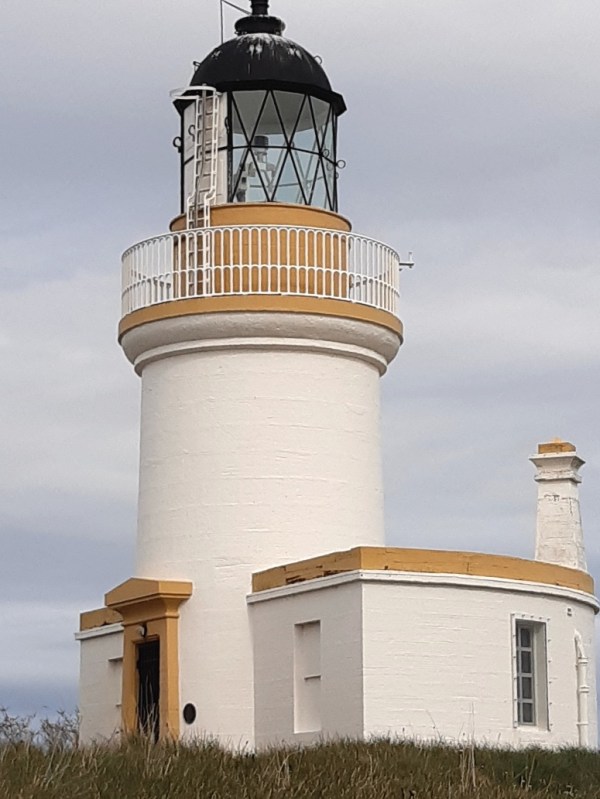
On my first trip around Scotland’s North Coast in the van, the first lighthouse on my itinerary was here at Chanonry Point. It’s one of over 200 that are located around Scotland’s wild and sometimes unforgiving coastline. Operated and maintained by the Northern Lighthouse Board they warn ships of dangerous waters and provide safe passage.

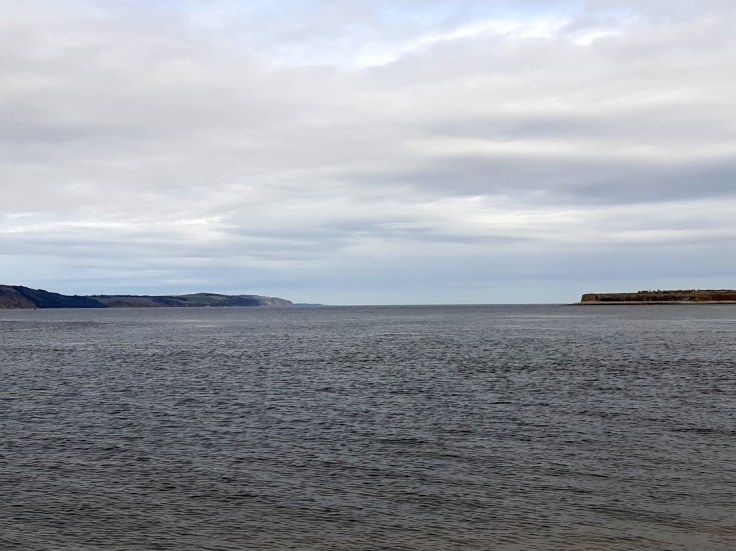
Chanonry Lighthouse is situated on the Black Isle, south of Rosemarkie, where the Moray Firth narrows between Chanonry Point and Fort George. Standing only 13 meters high, this lighthouse was designed by Alan Stevenson (1807-1865), who was also the engineer responsible for the building of the Scotland’s tallest lighthouse in the Herbrides, Skerryvore Lighthouse, in 1844, where it marks an extensive rocky reef. The establishment of a lighthouse here at Chanonry Point was first proposed in 1834 but not approved by the Commissioners of Lighthouses until 1843. It cost £3,570 (quite a handsome amount at that time) and the light first shone out to sea on 15th May 1846.

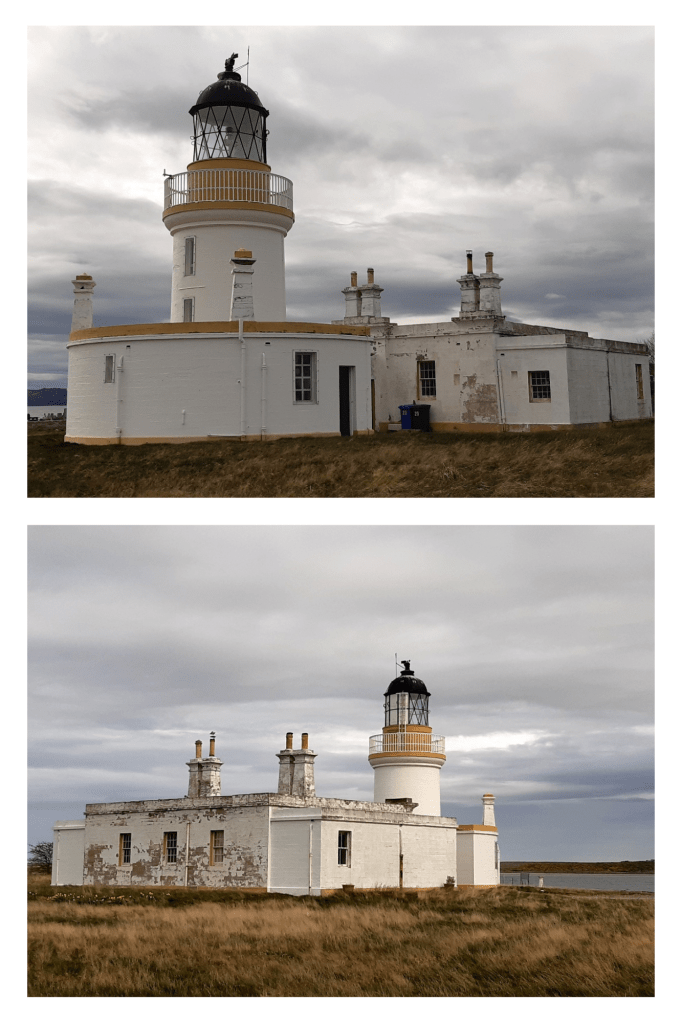
This was originally a ‘one man station’, a remote, lonely and hard existence. The keeper was required to keep a night-time watch in the lightroom to ensure the light flashed correctly, while during the day, he was expected to clean, paint (if necessary) and keep the premises tidy. The light here was eventually automated in 1984 and the former keeper’s cottages and outbuildings were sold and are now privately owned. They certainly could do with a lick of paint now!

The Lighhouse Stevensons Legacy – for over a hundred and fifty years, Robert Stevenson and his descendants designed most of Scotland’s lighthouses. The Stevenson family constructed wonders of engineering which have withstood time and the harsh Scottish elements. It’s said that Robert Stevenson’s talented literary grandson, Robert Louis Stevenson, took inspiration for his books ‘Kidnapped’ and ‘Treasure Island’ from visits to remote lighthouses with his Father and Grandfather.

Holy Well, Scotlandwell – Fife

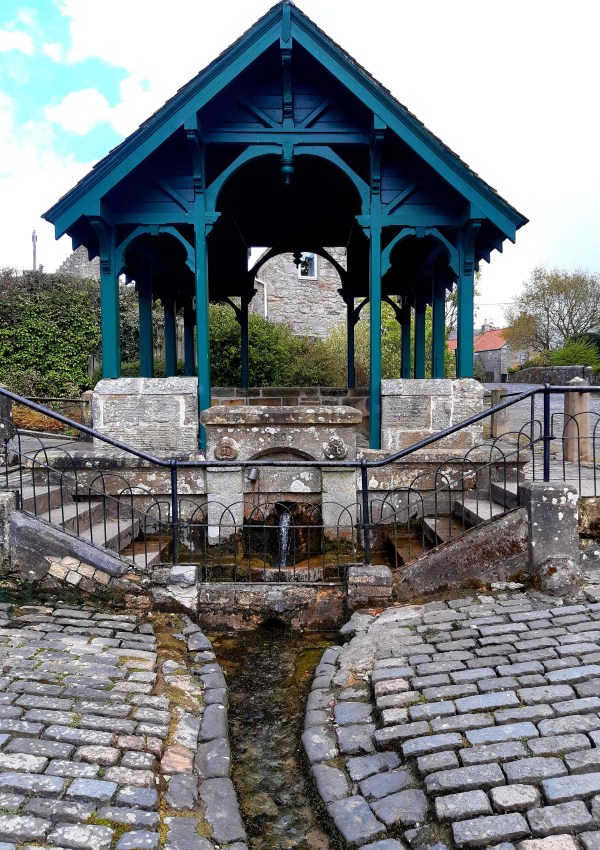
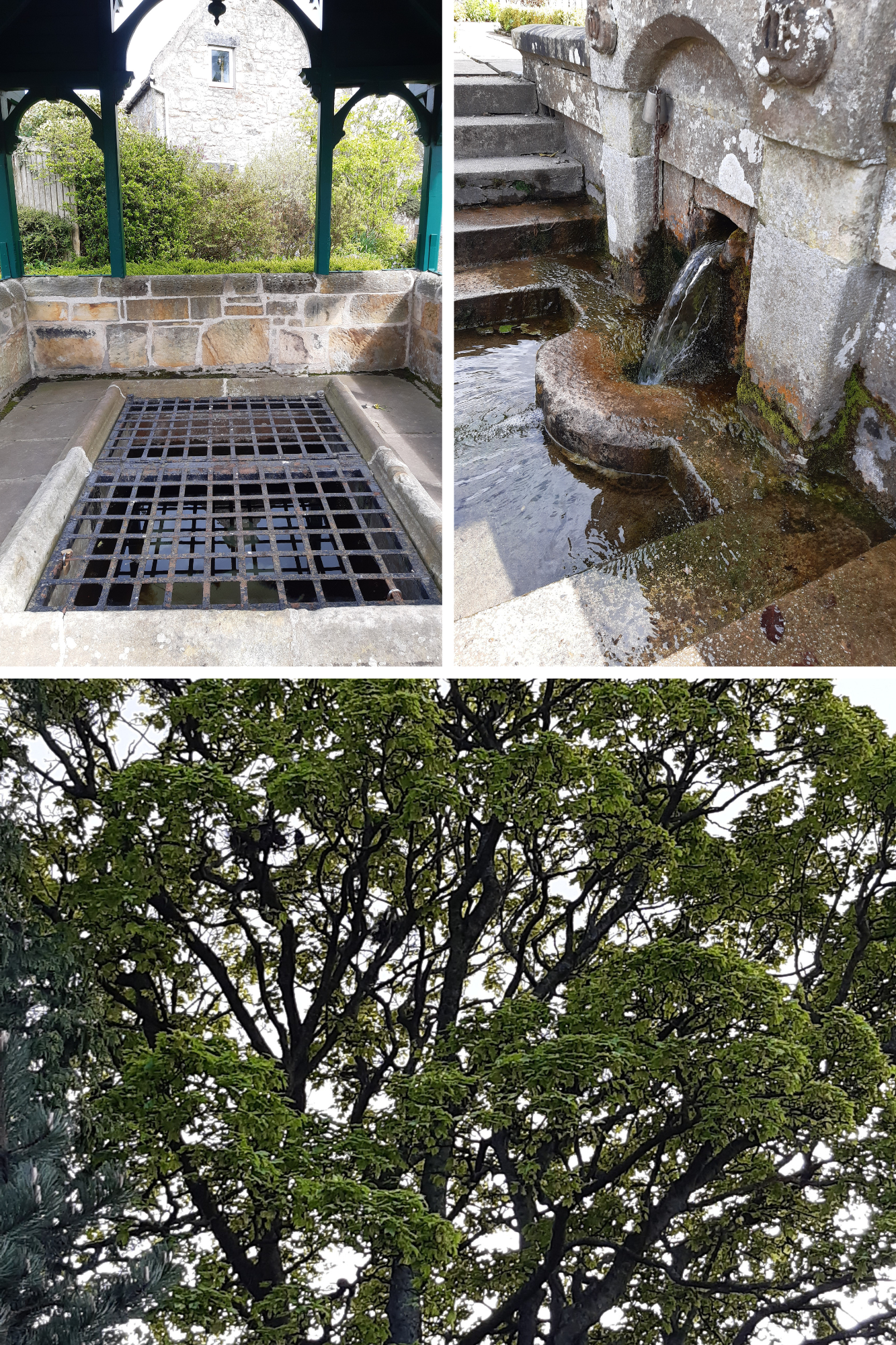
The natural spring water that bubbles up from deep underground and through the sand in the cistern of this well has a history mingled with folklore. It has been renowned for its curative properties for centuries and was first named ‘Fons Scotiae’ (Well of Scotland) by the Romans who passed through this area in 1st century AD. 

The widespread assertion that the water had healing powers meant that Scotlandwell became a significant place of pilgrimage throughout the Medieval period. 

Around 1250, the Trinitarian Friars (aka Red Friars) moved here to establish a hospice, using the healing waters from the holy well for patients in their new hospital of St Mary. It’s said that in the early 14th century, King Robert the Bruce came here in the hope of a cure for his leprosy and records show that Charles II travelled from his Palace in Dunfermline to take the ‘curative’. Mary Queen of Scots is also known to have visited the well to partake of its exquisite water.

The lovely, ornamental structure which now houses this ancient well is built from local sandstone, put in place and completed in 1858 by mason, Thomas Hay, and the wooden canopy constructed by joiner, Alexander Kelloch of Lindores.  The reconstruction of the well, building of an adjacent wash house and drying green was benefacted to the local community by landowner, Thomas Bruce of Arnot and his wife Henrietta Dorin, at a cost of £154. Quite a tidy sum at the time. 

I stop by here often to sit in the peacefulness of this place, drink the water and listen to the cascading of the water as it streams out of the well spout….if it’s not drowned out by the squawking of hundreds of crows that live in nearby sycamore trees.

Earl’s Palace, Birsay – Orkney

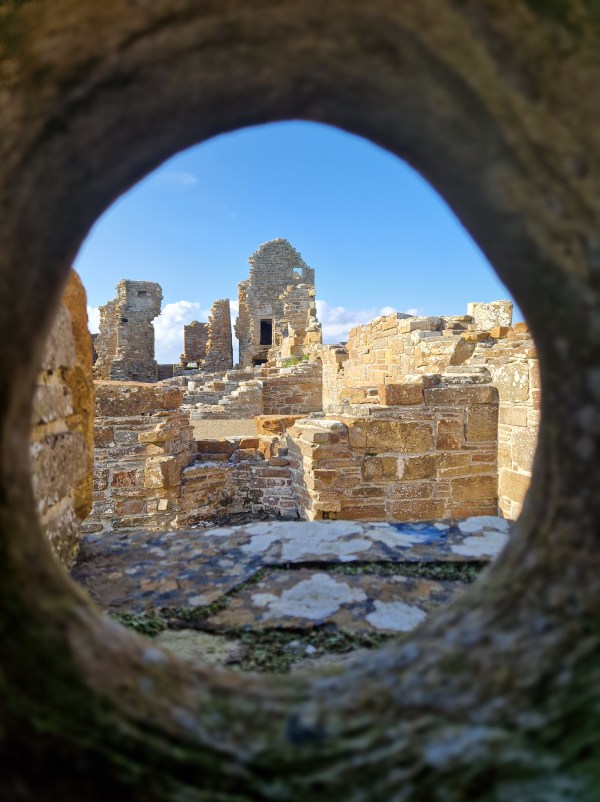
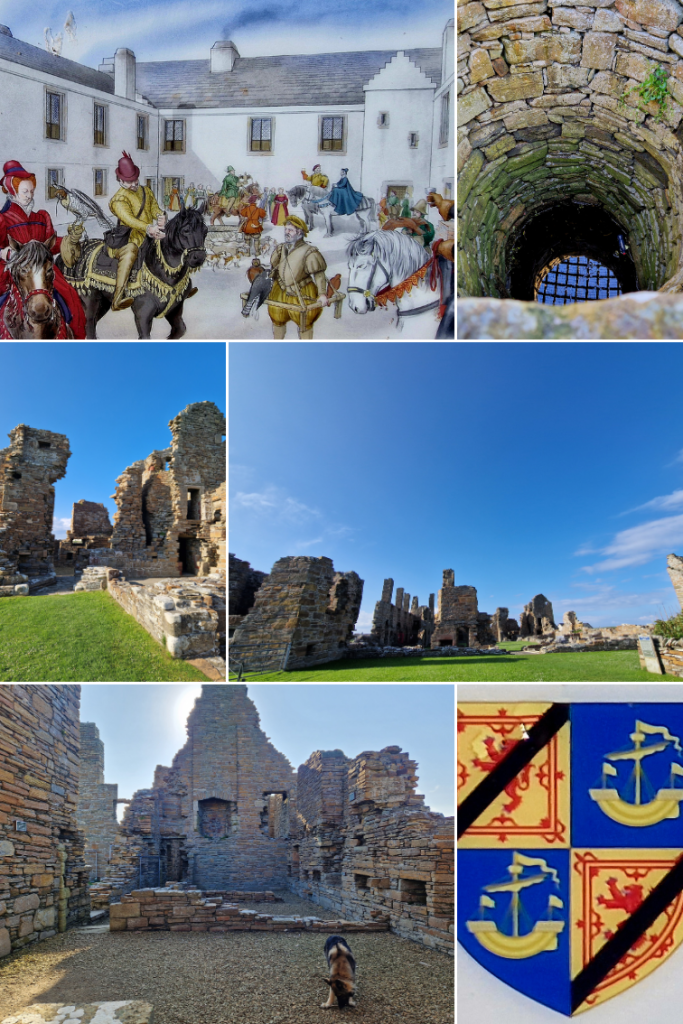
The Palace was built in the 1570’s – 1580’s for the notorious Earl Robert Steward, half brother of Mary Queen of Scots. Mary had 13 siblings and Robert was an illegitimate son of King James V and noblewoman Euphimia Elphinstone. After Mary’s forced abdication, Robert remained in the good graces of her son, the young James VI so that in 1581, he was elevated to Earl (Sheriff) of Orkney. Robert considered himself absolute ruler of Orkney and Shetland and this Renaissance style palace was a bold statement of his wealth and power. An inscription in Latin above the palace’s main entrance read – ‘Lord Robert Stewart, son of King James V, King of Scots, commissioned this building’. While Robert clung to his Royal connection, his coat of arms required the Scottish Royal Arms to bear a ribbon through the middle, a symbol of his illegitimacy, while the 2nd and 3rd quarters show the arms of the Earldom of Orkney.

Despite being a luxurious home, defence was still a major consideration. The palace was built around three sides of a courtyard with projecting towers at 3 of its 4 corners and a wall enclosing the north side. There were entrances to the south and west. To mitigate any security risk, only the upper floors had large windows while the ground floors had small openings and an array of gun loops from which artillerymen could cover every side of the building. Despite the many gun holes, the palace was still a place of grandeur and elegance. A single long gallery with views out to sea ran along the west wing and the building had fine panelling and painted ceilings in all the rooms that were needed to keep the Earl living in style. There were kitchens, a ‘girnel’ (granary), brewhouse and ample cellars for supplies. The palace was also equipped for sport and exercise, having archery butts, and a bowling green.

Earl Robert died in 1593 and his son Patrick succeeded him to also become Earl. Patrick was known as ‘Black Patie’ with a reputation for violence and a taste for luxury he couldn’t afford. In 1609 Patrick was imprisoned for ‘monyfauld wrongis’, including theft of lands and funds, oppression of local people, kidnapping, torture and murder. While incarcerated in Dumbarton, Patrick orchestrated a rising in Orkney however it failed and he was summarily beheaded for treason. By the time the Palace was taken over for use by Cromwell’s troops in 1653, most traces of Earl Robert’s extravagant lifestyle were gone and the kitchen contained ‘nothing, but mukk and filth!’ Thereafter the palace was used occasionally by later earls of Orkney but by 1700 it had fallen into decay.

It was such a beautiful, sunny day when we visited and although now in ruin, the palace still exudes an air of its previous magnificence. Definitely worth taking the time stop by.

Blog at WordPress.com.

Up ↑