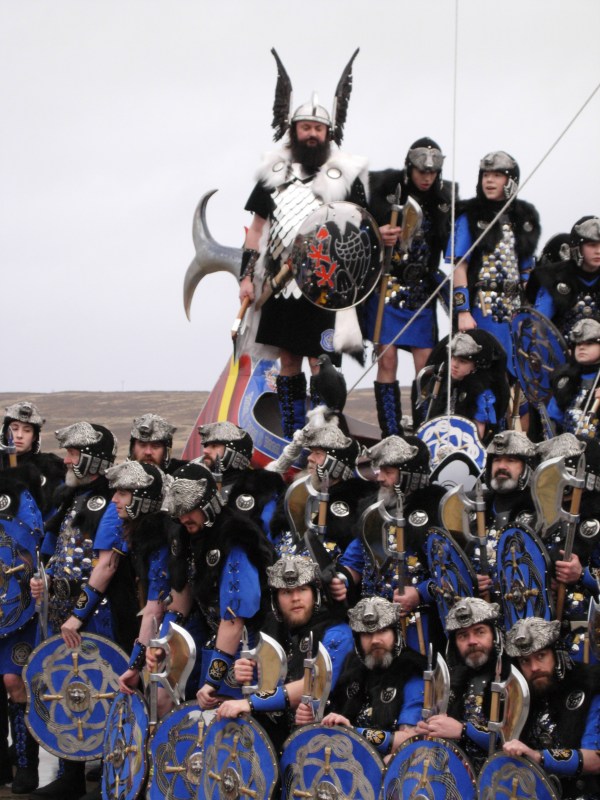
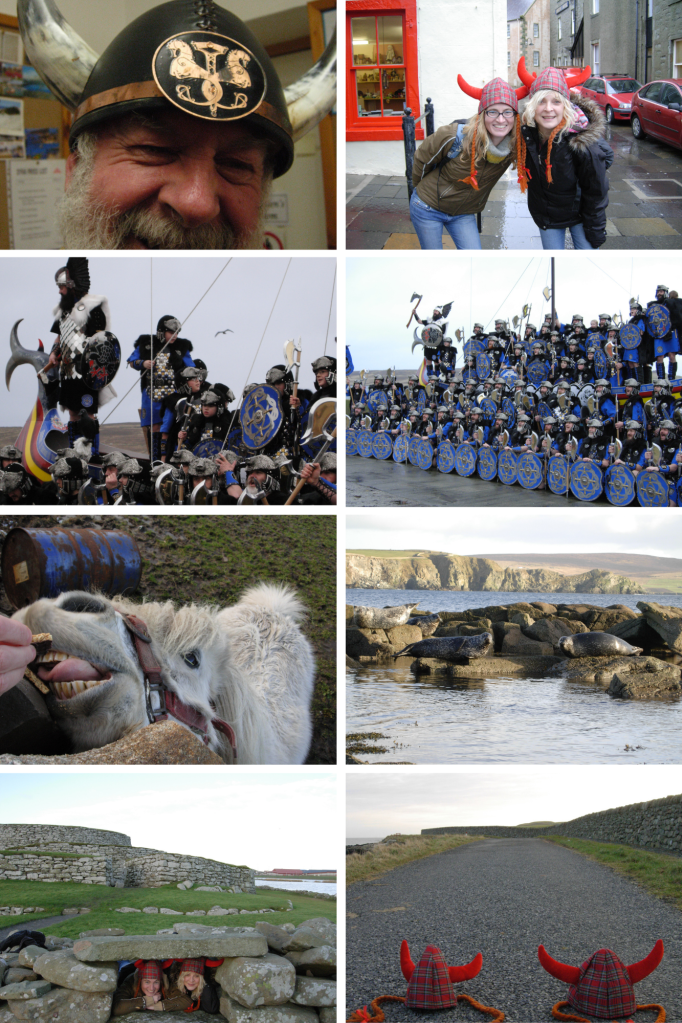
Shetland and Orkney had been domain of the Vikings from around 850 AD. In 1469 however, Princess Margaret, the 13 year old daughter of King Christian I of Denmark & Norway, was betrothed to King James III of Scotland. Her dowry was set at 6000 Guilders yet King Christian could only come up with 2000 Guilders therefore Shetland & Orkney were offered as security for the rest. The outstanding amount was never realised, so, on 20th February 1472 via an act of Parliament, both Orkney and Shetland officially became part of Scotland. Gradually Scottish culture spread throughout the islands but Norse customs and the Old Norse language have remained routed in the identity of the islanders over these many centuries. While Norse words and names are still evident the most discernible characteristic of Viking heritage are the Up Helly Aa events held throughout the Shetland archipelago from January to March every year.
The Up Helly Aa tradition began in the mid 19th century and gradually evolved into the annual festival we witness today, with many aspects still echoing the Viking celebrations of 150 years ago. Islanders are very much involved in the event and need to have been resident in Shetland for at least five years before they can even participate in a squad and the procession. To be Guizer Jarl, a member must have served at least 16 years on the committee.
The building of the Viking Galley, making Viking costumes and the thousands of torches are done by volunteers and the Jarl Squad, working tirelessly throughout the winter until everything is ready. The reveal of the Galley and the Jarl Squad is kept a secret until the big day when they step out for the first time to start the Up Helly Aa morning parades.
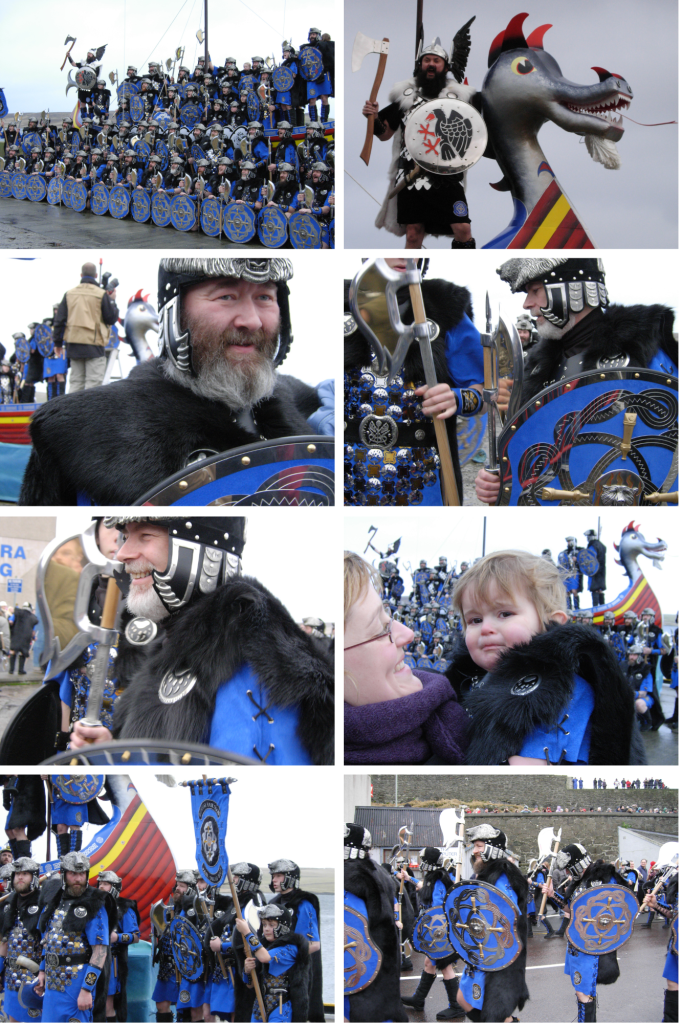
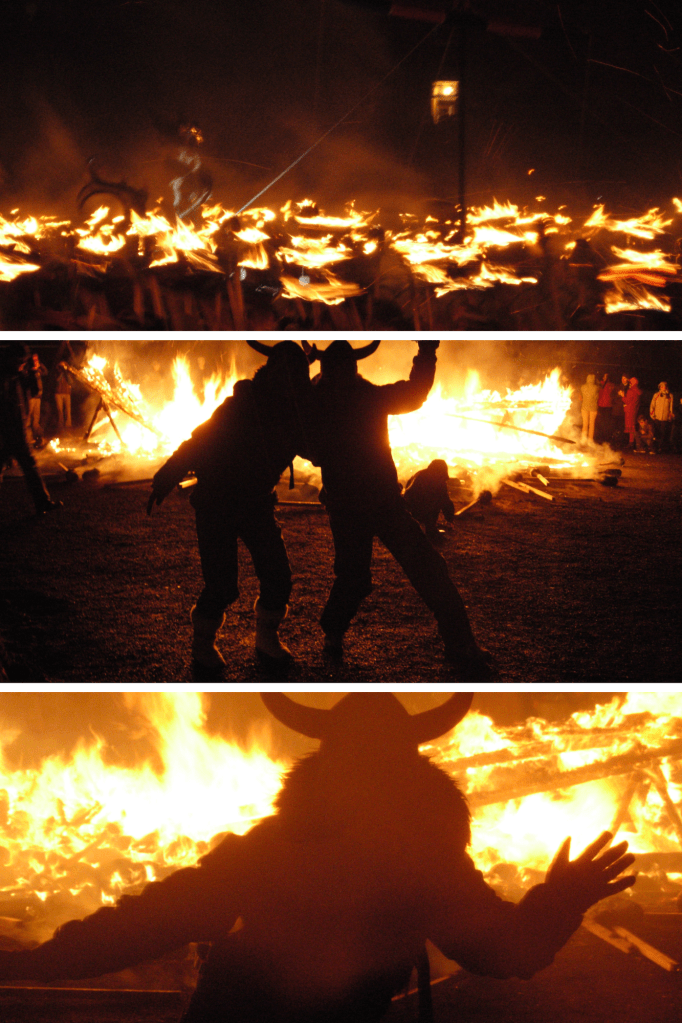
The evening procession incorporates 46 additional squads dressed in a variety of themes with performances choreographed in preparation for the after event parties. When darkness has descended, the squads assemble at 7pm to the sound of a Pipe Band after which the Guizer Jarl and his squad are ushered forward to the head of the parade with their Viking Longboat in tow, accompanied by the local Brass Band. All other squads then follow, marching behind them and through the town until finally reaching the Playing Field, circling the perimeter before heading to the Burning Site where the magnificent replica longboat is torched. This burning of the Galley signifies the end of the Yule period, in legendary Viking style, of course!
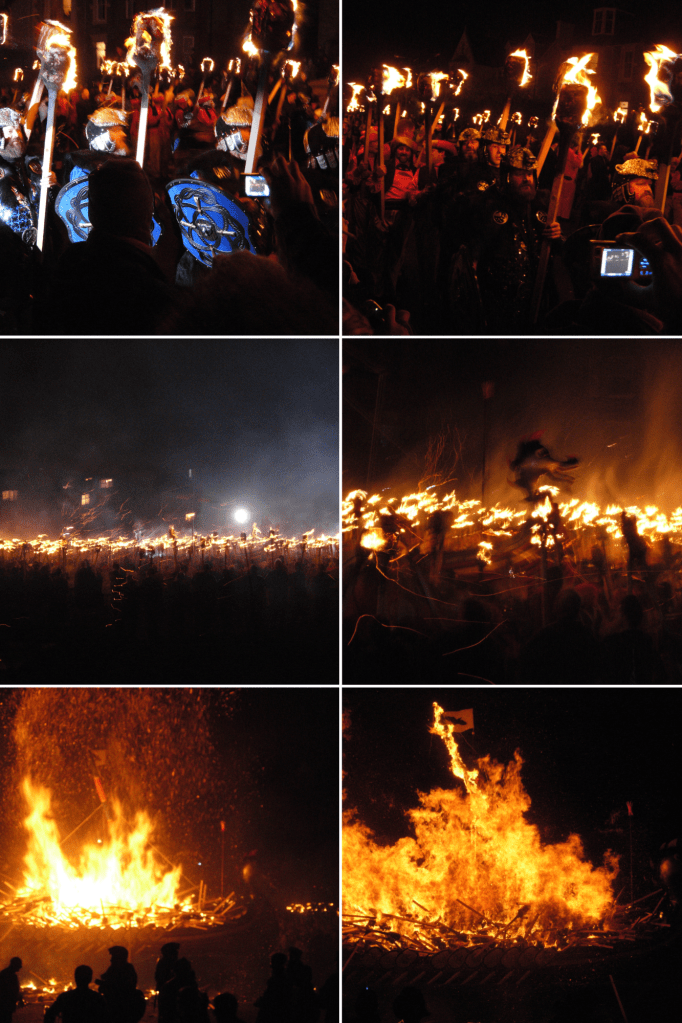
The festivities then move to many community halls where locals and visitors party through the night, dancing to Scottish Country Music and lapping up the entertainment provided by the guizer squads.
This celebration of Shetland’s Viking heritage is a festival unlike any other in the World. It truly is a community event with Lerwegians exuding immense pride in their uniquely special day and we found everyone to be incredibly welcoming and friendly. If you have a list of adventures you’d like to fulfil, I can highly recommend Up Helly Aa is on it!

 Scottish Adventures - in a van