Tullibody Old Kirk & Maiden’s Grave Stone – Tullibody, Clackmannanshire

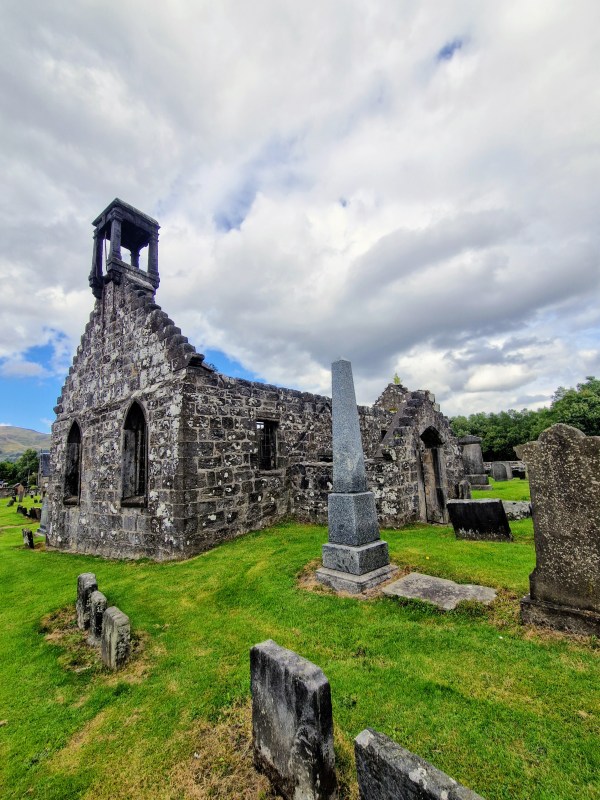
The roofless ruin of this Old Kirk in Tullibody, Clackmannanshire, is now a scheduled monument. It was founded in 1149, however, various sources note there were earlier churches on this site and it’s thought that there was a Kirk here from the end of the fourth century. This existing structure has been rebuilt a couple of times, first in the 16th century then again in 1760.

French troops removed the roof of the Kirk to build a bridge over the River Devon after Sir William Kirkcaldy of Grange destroyed the Tullibody Bridge to prevent them from retreating to Stirling at the end of 1560. Sir William was a Scottish Politician and Soldier who initially fought for the Scottish Reformation. He eventually vowed his allegiance to Mary Queen of Scots, became her champion during times of need and held Edinburgh Castle on her behalf from 1568 to 1573. Following the abdication of the Queen, the Marian Civil War ensued and Edinburgh Castle was eventually surrendered by the ‘Queens Men’ on May 28th 1573 when Kirkcaldy was taken prisoner and held at Holyroodhouse. Great efforts were made to save him from reprisal of his enemies, but they were all in vain. John Knox had prophesied that he would be hanged and so Sir William was taken and hanged at the Cross in Edinburgh on 3rd August 1573.
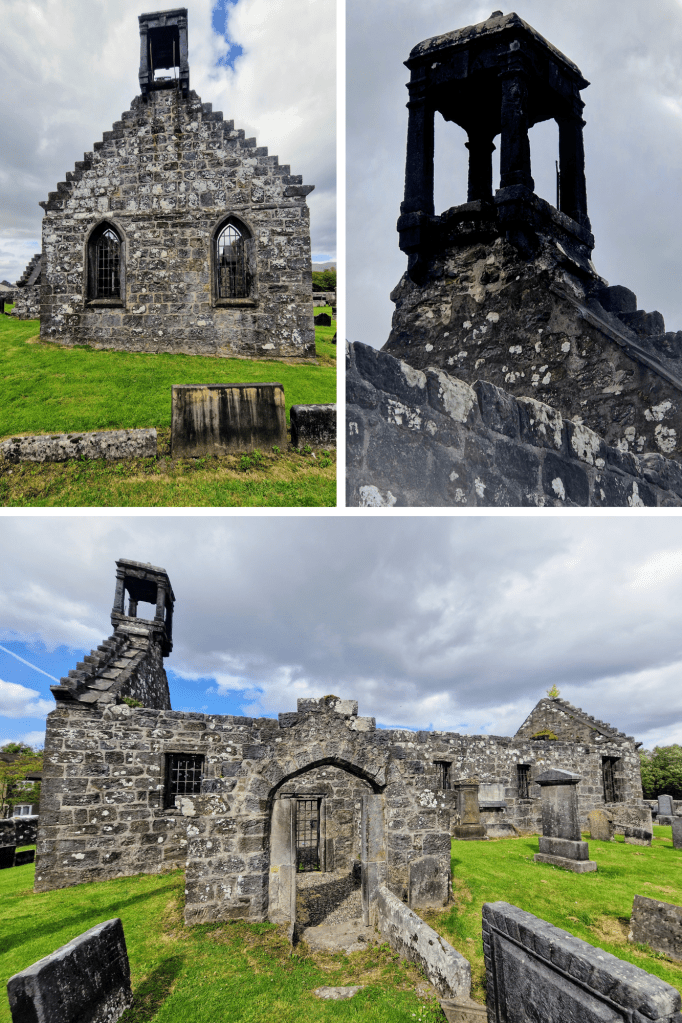
As it had become dilapidated, the Old Kirk was again renovated in 1760 with the bellcote being added in 1772, then latterly, the western windows and a south porch in the 1800’s. In 1904, St Serf’s Parish Church was built to the north of the Old Kirk which sadly thereafter, became disused.

There are many interesting grave stones and slabs to look at and ponder within the grounds of Tullibody Old Kirk but none more so than the ‘Maiden’s Stone’ and the story of forbidden love and tragedy woven around it.
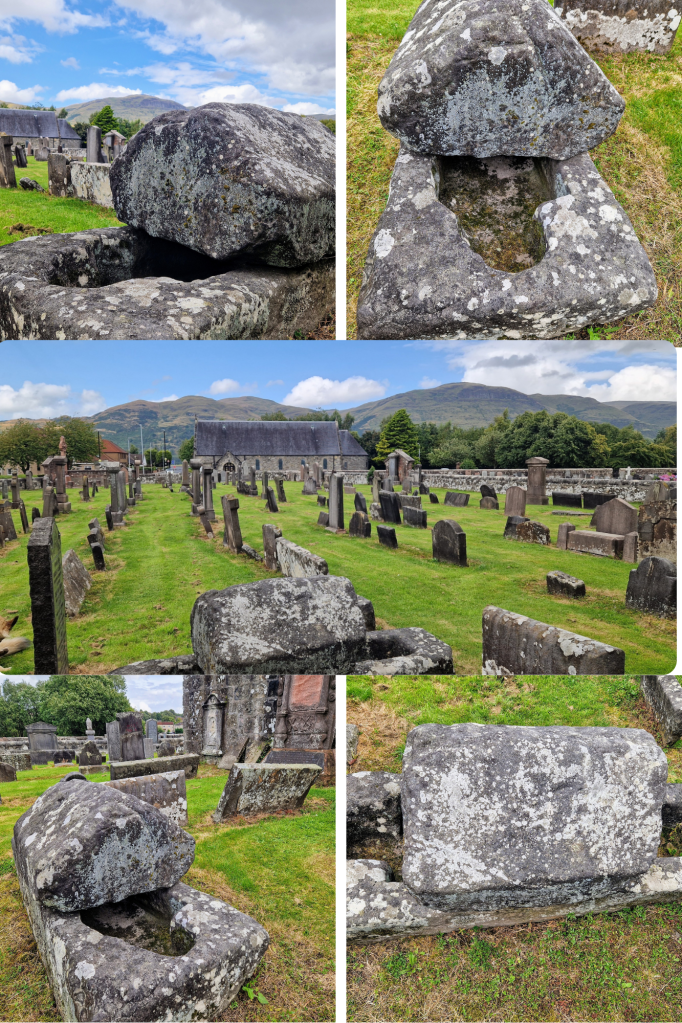
The ‘Stone’ is an ancient sarcophagus, topped with what remains of a coping stone lid. It’s said that this is was the coffin of Martha Wishart, the maid of Myretoun. In 1450, Martha, a beautiful maiden and only daughter of wealthy landowner, the Laird of Myretoun, fell prey to the young and very handsome local priest, Peter Beaton. He seduced her while she fell in love with him. On hearing the news she was pregnant, Beaton abandoned her to her shame. The unscrupulous and ambitious priest had toyed with her heart for access to her family connections. His sights were on rising through the ranks of the community and the church. Martha kept her pregnancy secret from those outside the family, languishing and dying of a broken heart before her child was born. On her deathbed, she requested her parents place her grave by the door of the Kirk so each time the priest entered he would be required to walk past her. Beaton blocked up the Kirk’s north door following Martha’s internment, establishing a new entryway through a south door in order to avoid passing her grave. Soon, the locals knew the truth and Beaton was shunned by the community he’d contrived to become such a lofty member off. The Abbot of Cambuskenneth heard of Beaton’s transgressions and it’s said that the news of his errant behaviour reached as far as the Vatican. One day however, Beaton simply disappeared, a story circulating that he had wandered off, a madman. Or, had he instead met vengeance in the form of a grieving Father?
Holy Well, Scotlandwell – Fife

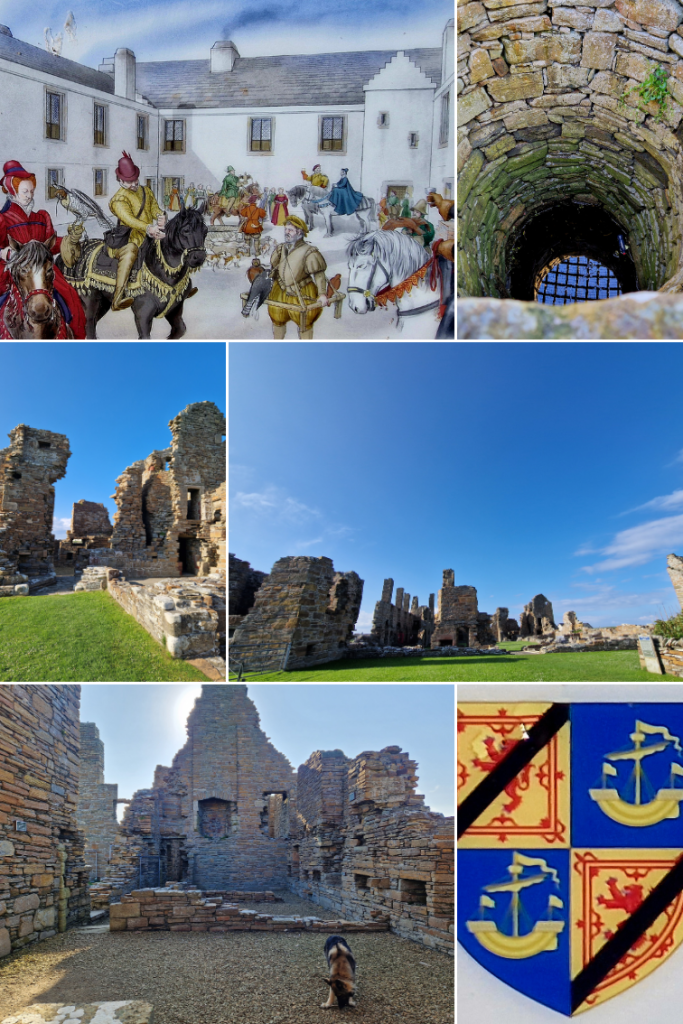
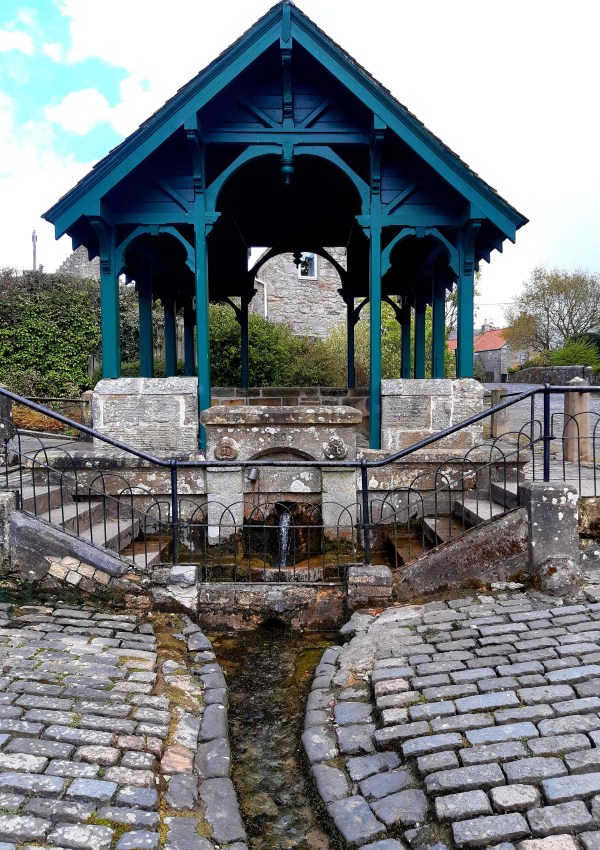
The natural spring water that bubbles up from deep underground and through the sand in the cistern of this well has a history mingled with folklore. It has been renowned for its curative properties for centuries and was first named ‘Fons Scotiae’ (Well of Scotland) by the Romans who passed through this area in 1st century AD. 

The widespread assertion that the water had healing powers meant that Scotlandwell became a significant place of pilgrimage throughout the Medieval period. 

Around 1250, the Trinitarian Friars (aka Red Friars) moved here to establish a hospice, using the healing waters from the holy well for patients in their new hospital of St Mary. It’s said that in the early 14th century, King Robert the Bruce came here in the hope of a cure for his leprosy and records show that Charles II travelled from his Palace in Dunfermline to take the ‘curative’. Mary Queen of Scots is also known to have visited the well to partake of its exquisite water.

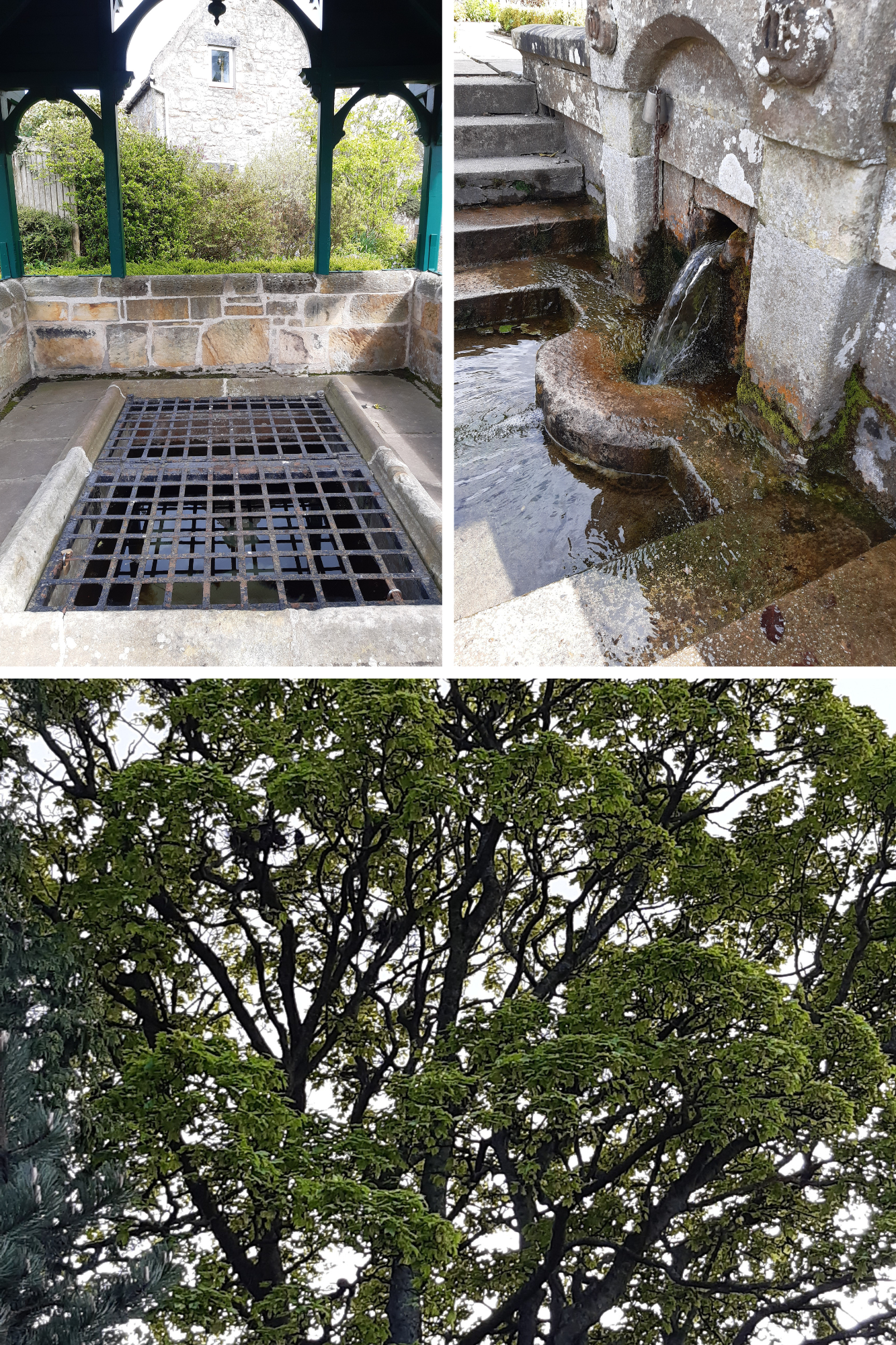
The lovely, ornamental structure which now houses this ancient well is built from local sandstone, put in place and completed in 1858 by mason, Thomas Hay, and the wooden canopy constructed by joiner, Alexander Kelloch of Lindores.  The reconstruction of the well, building of an adjacent wash house and drying green was benefacted to the local community by landowner, Thomas Bruce of Arnot and his wife Henrietta Dorin, at a cost of £154. Quite a tidy sum at the time. 

I stop by here often to sit in the peacefulness of this place, drink the water and listen to the cascading of the water as it streams out of the well spout….if it’s not drowned out by the squawking of hundreds of crows that live in nearby sycamore trees.

Earl’s Palace, Birsay – Orkney

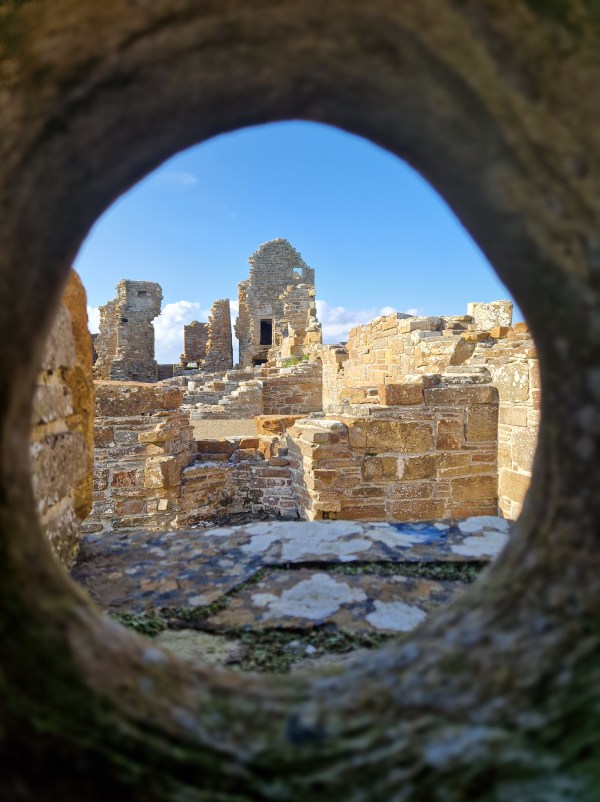
The Palace was built in the 1570’s – 1580’s for the notorious Earl Robert Steward, half brother of Mary Queen of Scots. Mary had 13 siblings and Robert was an illegitimate son of King James V and noblewoman Euphimia Elphinstone. After Mary’s forced abdication, Robert remained in the good graces of her son, the young James VI so that in 1581, he was elevated to Earl (Sheriff) of Orkney. Robert considered himself absolute ruler of Orkney and Shetland and this Renaissance style palace was a bold statement of his wealth and power. An inscription in Latin above the palace’s main entrance read – ‘Lord Robert Stewart, son of King James V, King of Scots, commissioned this building’. While Robert clung to his Royal connection, his coat of arms required the Scottish Royal Arms to bear a ribbon through the middle, a symbol of his illegitimacy, while the 2nd and 3rd quarters show the arms of the Earldom of Orkney.

Despite being a luxurious home, defence was still a major consideration. The palace was built around three sides of a courtyard with projecting towers at 3 of its 4 corners and a wall enclosing the north side. There were entrances to the south and west. To mitigate any security risk, only the upper floors had large windows while the ground floors had small openings and an array of gun loops from which artillerymen could cover every side of the building. Despite the many gun holes, the palace was still a place of grandeur and elegance. A single long gallery with views out to sea ran along the west wing and the building had fine panelling and painted ceilings in all the rooms that were needed to keep the Earl living in style. There were kitchens, a ‘girnel’ (granary), brewhouse and ample cellars for supplies. The palace was also equipped for sport and exercise, having archery butts, and a bowling green.

Earl Robert died in 1593 and his son Patrick succeeded him to also become Earl. Patrick was known as ‘Black Patie’ with a reputation for violence and a taste for luxury he couldn’t afford. In 1609 Patrick was imprisoned for ‘monyfauld wrongis’, including theft of lands and funds, oppression of local people, kidnapping, torture and murder. While incarcerated in Dumbarton, Patrick orchestrated a rising in Orkney however it failed and he was summarily beheaded for treason. By the time the Palace was taken over for use by Cromwell’s troops in 1653, most traces of Earl Robert’s extravagant lifestyle were gone and the kitchen contained ‘nothing, but mukk and filth!’ Thereafter the palace was used occasionally by later earls of Orkney but by 1700 it had fallen into decay.

It was such a beautiful, sunny day when we visited and although now in ruin, the palace still exudes an air of its previous magnificence. Definitely worth taking the time stop by.

Blog at WordPress.com.

Up ↑