Up Helly Aa, Lerwick – Shetland

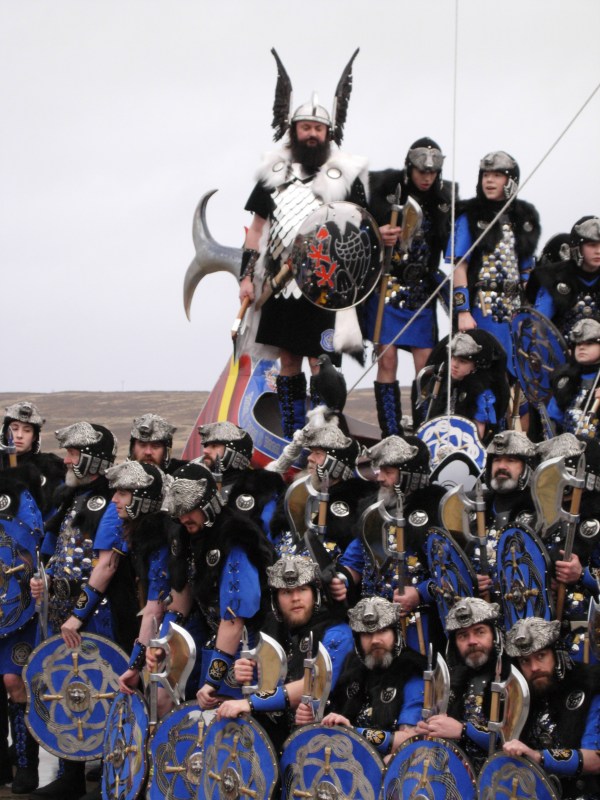
Shetland and Orkney had been domain of the Vikings from around 850 AD. In 1469 however, Princess Margaret, the 13 year old daughter of King Christian I of Denmark & Norway, was betrothed to King James III of Scotland. Her dowry was set at 6000 Guilders yet King Christian could only come up with 2000 Guilders therefore Shetland & Orkney were offered as security for the rest. The outstanding amount was never realised, so, on 20th February 1472 via an act of Parliament, both Orkney and Shetland officially became part of Scotland. Gradually Scottish culture spread throughout the islands but Norse customs and the Old Norse language have remained routed in the identity of the islanders over these many centuries. While Norse words and names are still evident the most discernible characteristic of Viking heritage are the Up Helly Aa events held throughout the Shetland archipelago from January to March every year.

The Up Helly Aa tradition began in the mid 19th century and gradually evolved into the annual festival we witness today, with many aspects still echoing the Viking celebrations of 150 years ago. Islanders are very much involved in the event and need to have been resident in Shetland for at least five years before they can even participate in a squad and the procession. To be Guizer Jarl, a member must have served at least 16 years on the committee.

The building of the Viking Galley, making Viking costumes and the thousands of torches are done by volunteers and the Jarl Squad, working tirelessly throughout the winter until everything is ready. The reveal of the Galley and the Jarl Squad is kept a secret until the big day when they step out for the first time to start the Up Helly Aa morning parades.
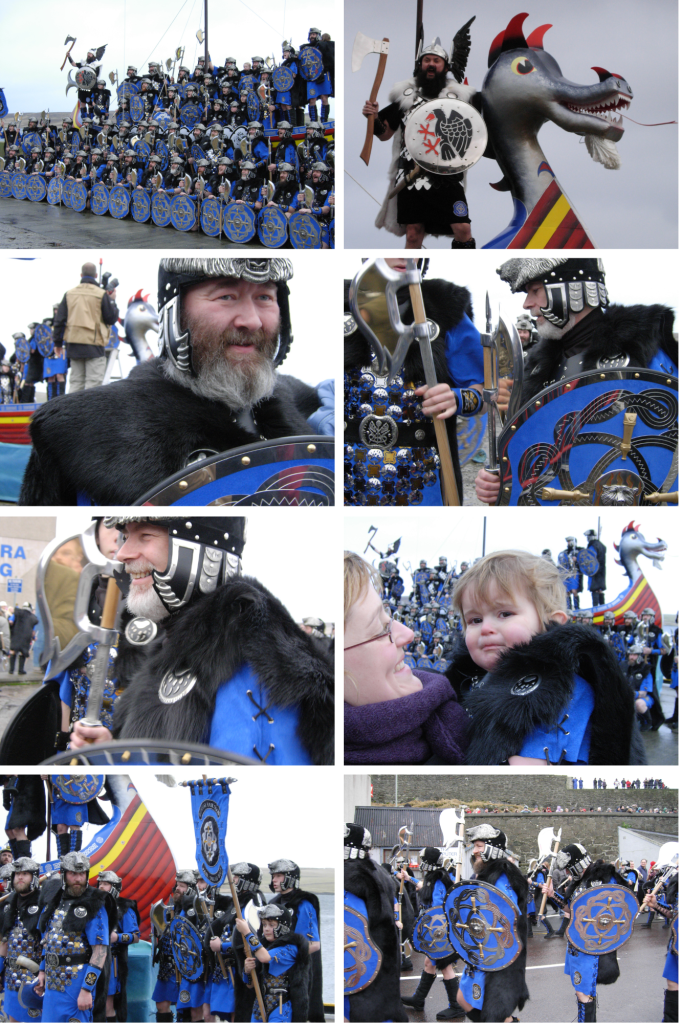
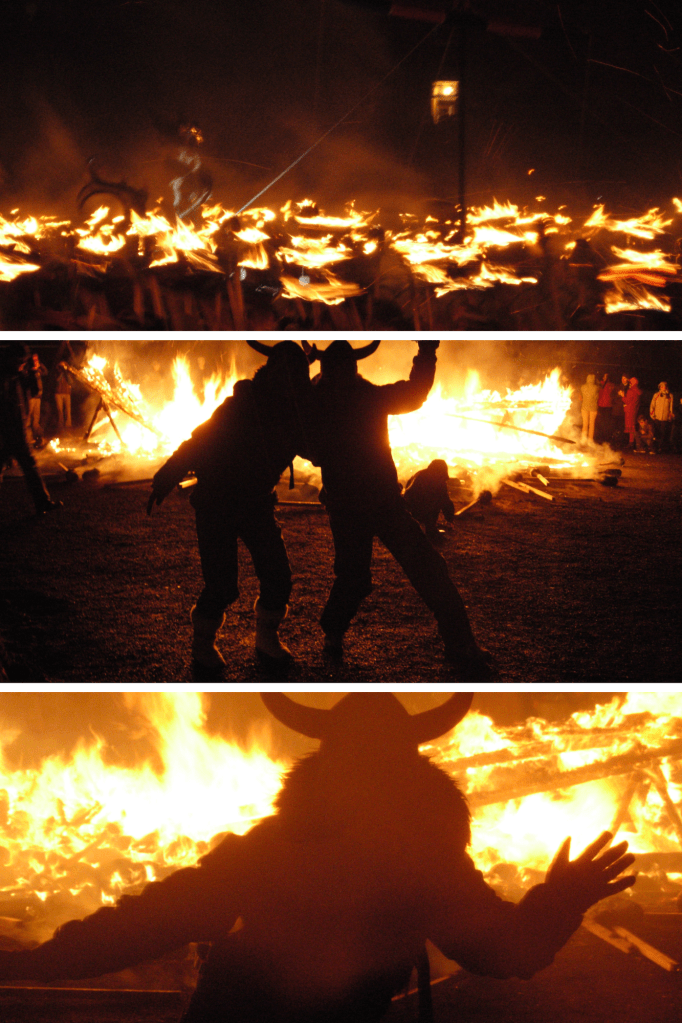
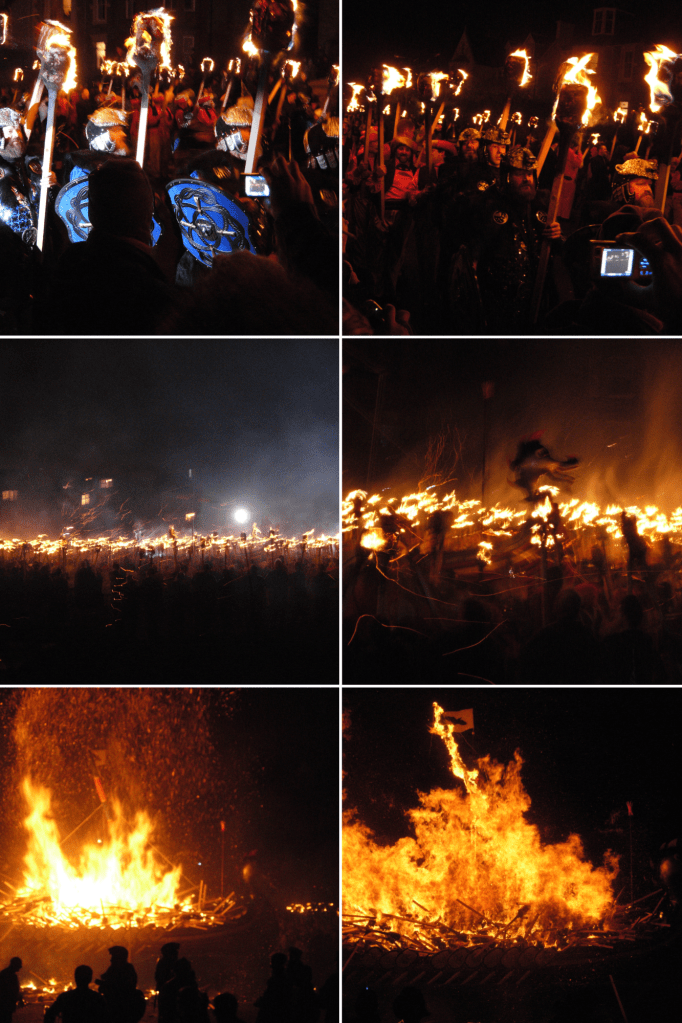
The evening procession incorporates 46 additional squads dressed in a variety of themes with performances choreographed in preparation for the after event parties. When darkness has descended, the squads assemble at 7pm to the sound of a Pipe Band after which the Guizer Jarl and his squad are ushered forward to the head of the parade with their Viking Longboat in tow, accompanied by the local Brass Band. All other squads then follow, marching behind them and through the town until finally reaching the Playing Field, circling the perimeter before heading to the Burning Site where the magnificent replica longboat is torched. This burning of the Galley signifies the end of the Yule period, in legendary Viking style, of course!
The festivities then move to many community halls where locals and visitors party through the night, dancing to Scottish Country Music and lapping up the entertainment provided by the guizer squads.

This celebration of Shetland’s Viking heritage is a festival unlike any other in the World. It truly is a community event with Lerwegians exuding immense pride in their uniquely special day and we found everyone to be incredibly welcoming and friendly. If you have a list of adventures you’d like to fulfil, I can highly recommend Up Helly Aa is on it!
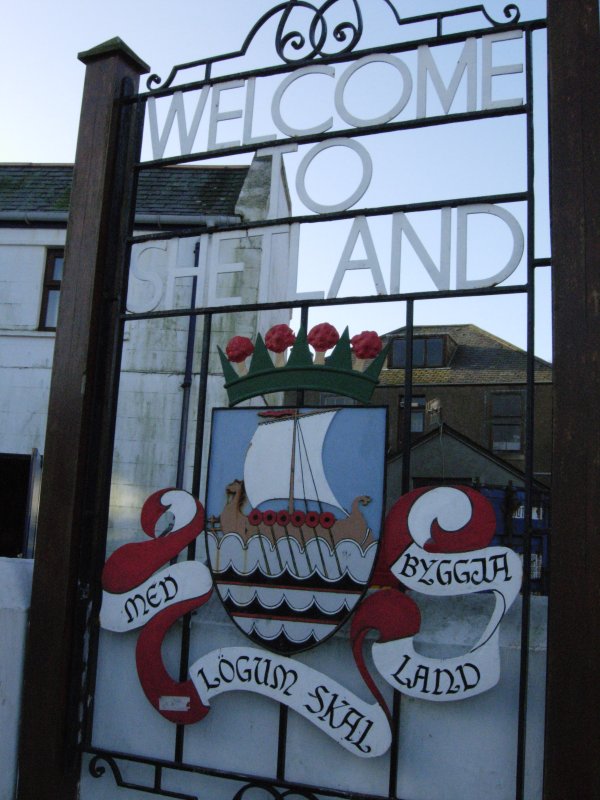
Flying Trip to Lerwick for Up Helly Aa – Shetland

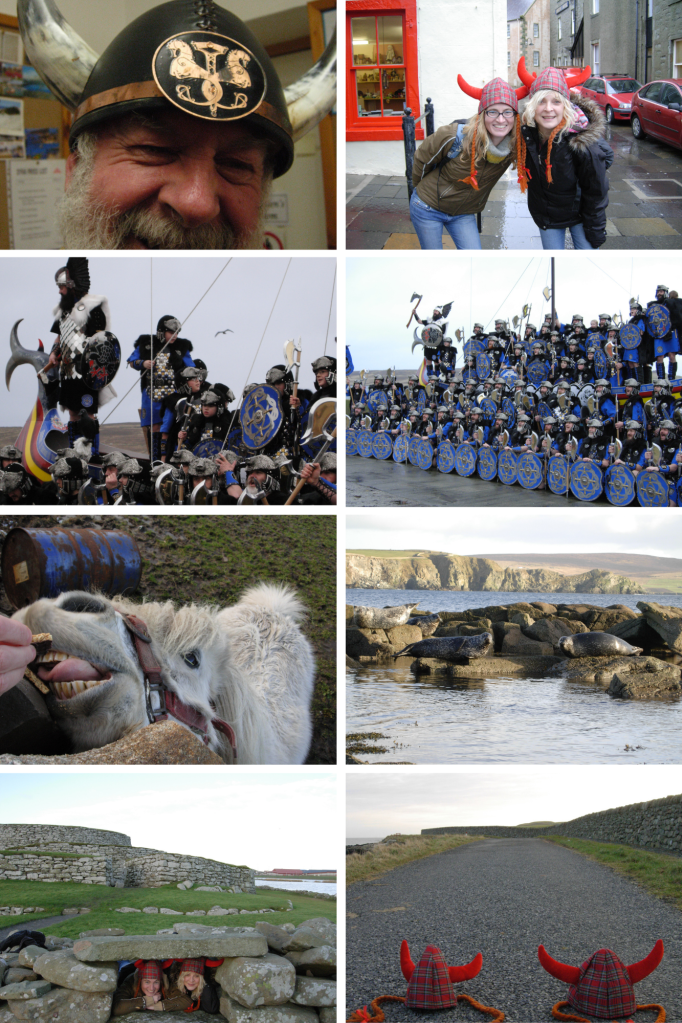
When your long-time buddy is a modern day Viking and you have some Viking blood flowing through your own veins, the best way to blow away the winter blues, of course, is by attending an ancient Viking festival. I’d listened to stories of Up Helly Aa as I was growing up and was excited to finally be going to this legendary event. Anne Lise arrived in Aberdeen from Oslo and we flew together, onward to Lerwick in Shetland, on an outstandingly beautiful day for a bucket list adventure.

We’d booked into Lerwick hostel and on arrival, were greeted enthusiastically by the Manager, who showed us to our communal accommodation. He was a mine of information, providing us with details of where we needed to be and when, to make the most of our experience. He also, very kindly, insisted on driving us into town where we could find a bite to eat. Within moments of having ordered some food and sitting at our table we were surrounded by curious locals, enquiring who we were, where we were from and inviting us to a week of celebratory Up Helly Aa parties. They probably were fascinated with our mad hats! Next stop, a crowded bar that was full to bursting with good-humoured, Shetlanders, drinking and taking turns in the band that played traditional Shetland music into the early hours. Our trip couldn’t have gotten off to a more enjoyable start. What absolutely lovely folk! Back at the hostel that night, we bunked up along side fellow festival goers, two of whom were somewhat more ‘mature’ ladies. The pair seemed to have boundless energy, had been out walking all day, gone out for dinner, enjoyed the local music scene and were last to bed…and not very quiet about it either.

Up Helly Aa day and by 9.30am we were at Alexander Warf, waiting to see the Guizer Jarl and his Squad march into position for an iconic photo opportunity with their hard-wrought, beautifully crafted galley. And what a handsome band of Vikings they were. The mood was jovial and everyone was filled with elation for the day ahead. When eventually the Squad marched off to attend their community events, Anne Lise and I wandered along the Esplanade to the Market Cross then into town to browse around Lerwick’s old, narrow streets and quaint little shops. With plenty of time to spare, we also decided on exploration of the shore area, seal watching and making a fuss over loveable Shetland ponies, all the way out to Clickmin Broch (a bronze age settlement dating back to circa 400BC). The weather was wild and windy, exhilarating as we walked, filling us with anticipation for the upcoming festival to celebrate the end of Yuletide in this Viking world.

Darkness fell, the wind howled and the rain lashed but regardless, by 7pm the streets surrounding King Harald Playpark were lined with throngs of locals and visitors alike, waiting in suspense for the torchlit procession to begin. A strong smell of paraffin from hundreds of flaming torches filled the air as Guizers from 46 other squads mustered into place. The Jarl Squad was ushered through the ranks, towing the Galley with the Guizer Jarl standing magnificently at the prow while a brass band blared renditions of the ‘Up Helly Aa Song’, the ‘Galley Song’ and ‘The Norseman’s Home’. The spectacle of hundreds of Guizers with their flaring torches parading the around the streets, all singing proudly, was an unforgettable sight. Eventually, the Galley was lead into the Playground to its final repose, the Guizers spiralled around until an ultimate rendition of ‘The Norseman’s Home’, when Guizer Jarl stepped down at the very last moment and was first to hurl his torch into the longboat. With complex manoeuvring, hundreds of torches arched their way into the Galley, both an achingly sad yet breath-taking moment in this fiery comital and dispatch to Valhall. The heat was intense no matter where we were standing, everyone waiting with baited breath for the mast and then the dragon figure-head to collapse into the inferno.

With the ceremony at an end, the crowds gradually dispersed to ready themselves for whichever of the Up Helly Aa parties they were attending while the members of each squad made final preparations for their performances for the evenings attendees. Anne Lise and I had pre-arranged tickets for a ceilidh at the community centre so were thrilled to spend the rest of this incredible day being entertained by the squads and asked to dance by affable Shetlanders, into the wee small hours….

Dogton Stone, Cluny – Fife

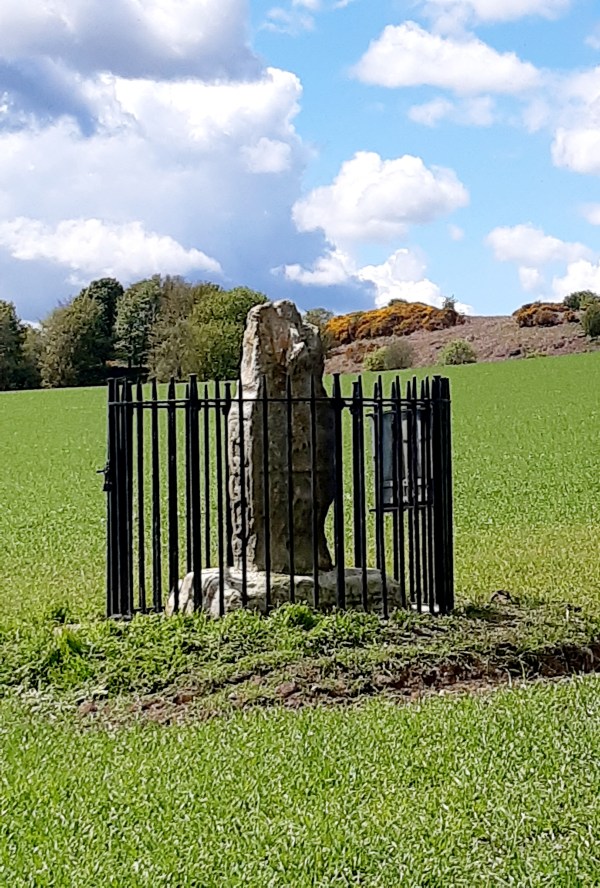
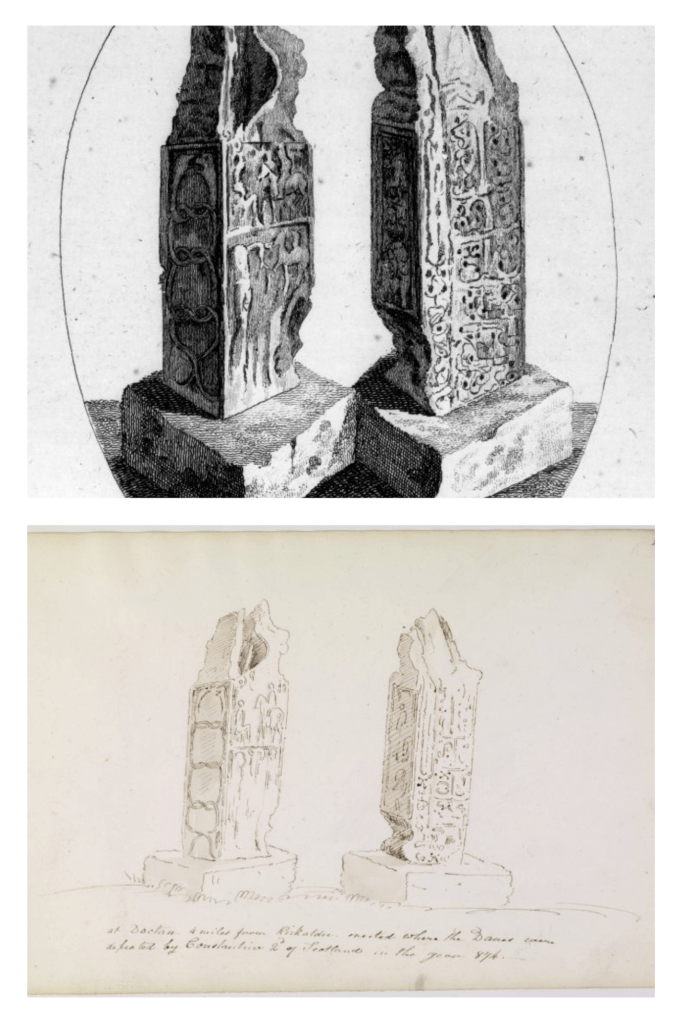
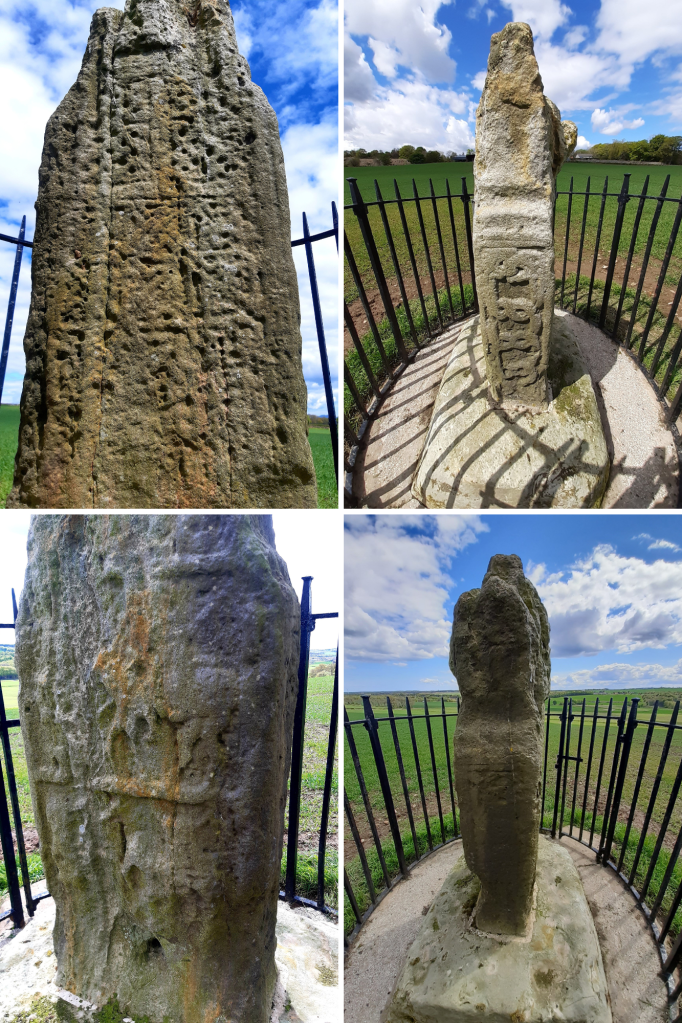
In a wheat field at Dogton Farm, there stands a long forgotten Pictish Stone. Enclosed in iron fencing for protection, it’s a 9th century Class III, free-standing Pictish Cross which seems to have lost its head and arms centuries ago. An etching of the stone was done in 1772 by Thomas Pennant (1726-1798, Welsh naturalist, traveller, writer & antiquarian). Then, another sketch from 1832 by James Skene (1775-1864, Scottish lawyer and amateur artist, best known as a close friend of Sir Walter Scott), mentions that the stone was “at Dogton, 4 miles from Kirkcaldy, erected where the Danes were defeated by Constantine 2 of Scotland in the year 874”. Both illustrate the Dogton stone in its damaged condition.

The stone stands around 4ft 10ins (1.5M) and had originally been sculpted in relief on all four sides, however, the weather over these many centuries has taken its toll. On the West facing side, intricate knotwork, typical of Celtic artistry can still be clearly seen. Stretching up the South side of the stone, two entwined, snapping serpents are depicted. It’s said that in Celtic culture, serpents were sacred to high-ranking members of society, associated with rebirth, eternal life and healing. The East face shows what once was a battle scene, with a horseman still quite visible. Unfortunately the North face of the Dogton stone is so very weathered, it’s not longer discernible.

What an incredible sense of awe I felt, to have come across such a remarkable piece of ancient history and it set my mind rambling with thoughts of the people who created this and why it would have been erected here. It’s possible the stone could have been erected to specifically mark the victory in battle of Constantine 2nd over the Danes, or, perhaps, simply as a decorative way marker for pilgrims heading towards religious sites such as nearby Scotlandwell, Lindores Abbey, Balmerino Abbey, or St Andrews where holy relics of Saint Andrew were displayed in the Cathedral there. Oh to be a time traveller….

NB: Class III Pictish Stones – these originate from the 8th or 9th century and feature none of the unique Pitctish symbols of earlier stones, typically free-standing crosses which include Christian imagery.

Standing Stones of Lundin, Lundin Links – Fife

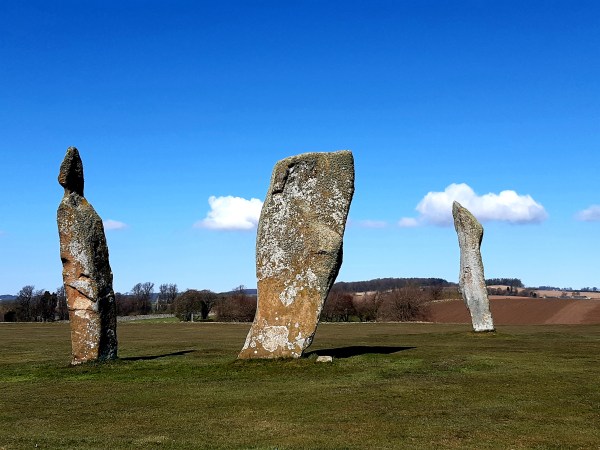
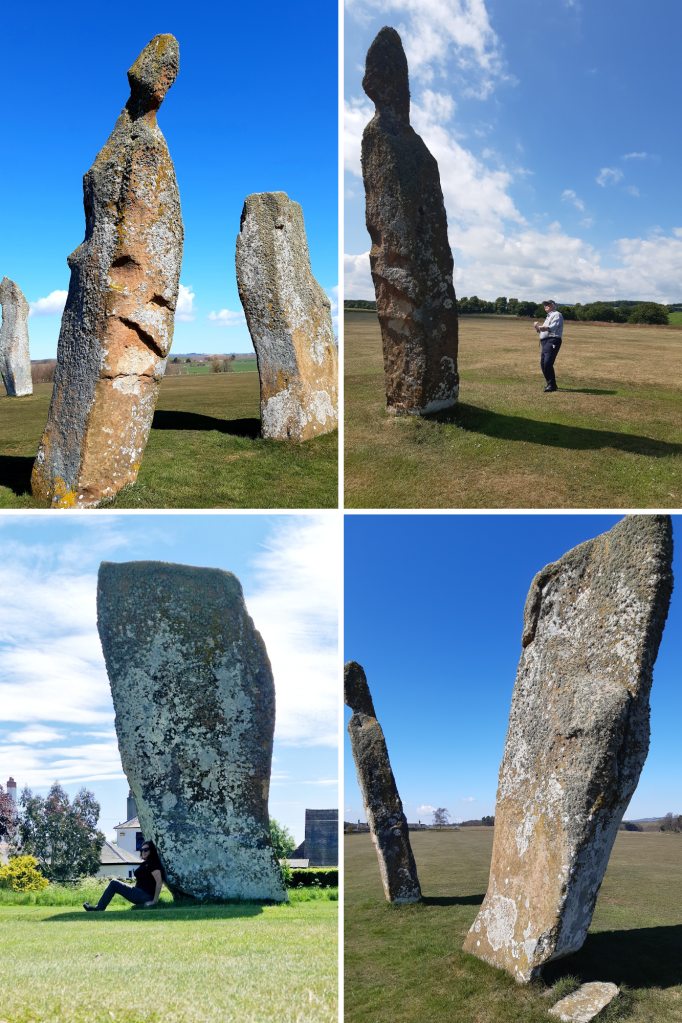
Where once where there were four, now there remains three very impressive, irregularly shaped, red sandstone megaliths. They are thought to have originally been part of the 16M circumference of a complete stone circle from the bronze age, 2000 – 1500BC. It’s said that the missing fourth stone had been broken by treasure hunters, the base remaining with the broken upper lying nearby until 1792. It was then moved by a farmer to allow for better ploughing of the field and was subsequently lost to memory.

A stone lined grave (cist) containing a skull was discovered near the Lundin stones in 1844. The skull, was given to Prof of Anatomy at Edinburgh University, Sir William Turner, who reported it had a metal arrowhead imbedded within a fracture but this crumbled to rust when it was touched. The discovery of the ‘ancient sepulchre’ draws parallels with other standing stone sites in Fife where human remains were also found. 

Local folklore tells that the Lundin stones were memorials to Danish Chiefs who had been slain during a great battle here. However, these days the stones are witness to nothing more belligerent than golfing competitions as they present a magnificent feature on the second fairway of Lundin Links Ladies Golf Course.

The stone sitting south east, has a height of 4.2M with a slight northward incline. This one is heavily weathered, pitted with a large crack that has developed on its east side. The south stone is 4.6M in height and decidedly inclined southward. Lastly, the north stone is the tallest at 5.1M, having a slight incline westward. Bear in mind that in order for these stones to remain standing they will need be seated into the ground to equivalent lengths

I’ve come here many times with family or friends who’ve had an interest in Scotland’s ancient history and they’ve all been impressed with the magnitude of the Lundin Stones and the fact that they still remain after all this time. If you decide to visit, please be polite by asking at the Club House if it’s safe to walk to the stones as there may be golfers about to tee off. Be sure to also skirt the course on your way to and from the site. A blow to the head with a golf ball could mean your skull might be the next to leave here with a fracture!

Holy Well, Scotlandwell – Fife

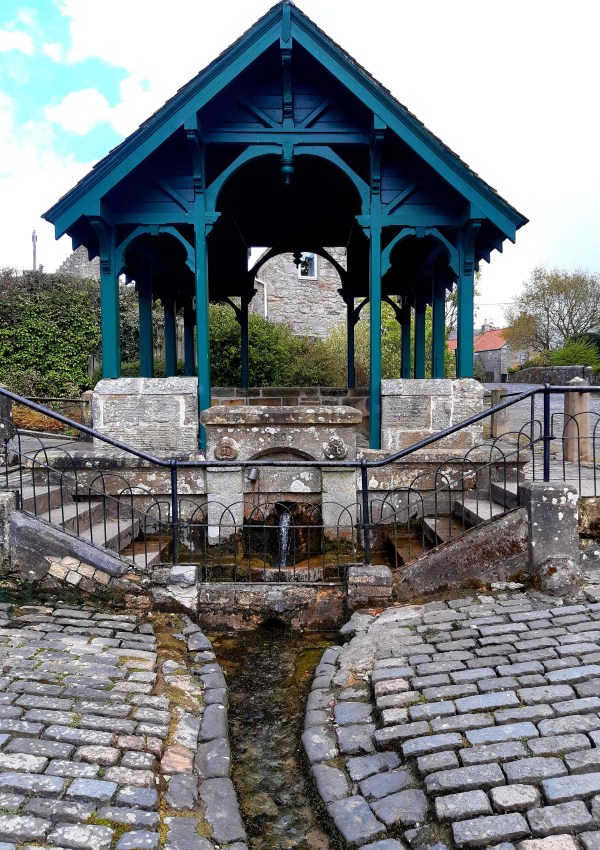
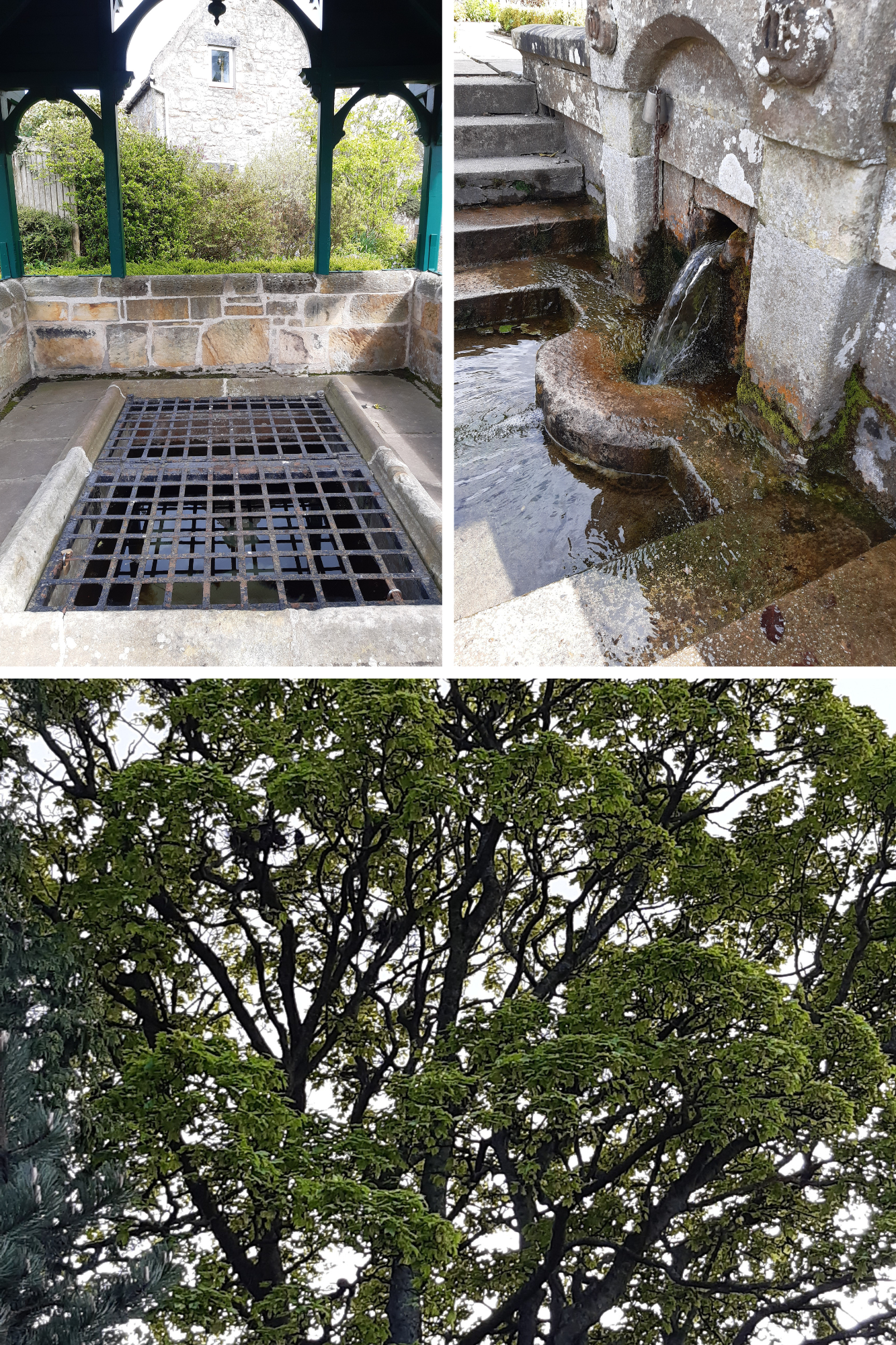
The natural spring water that bubbles up from deep underground and through the sand in the cistern of this well has a history mingled with folklore. It has been renowned for its curative properties for centuries and was first named ‘Fons Scotiae’ (Well of Scotland) by the Romans who passed through this area in 1st century AD. 

The widespread assertion that the water had healing powers meant that Scotlandwell became a significant place of pilgrimage throughout the Medieval period. 

Around 1250, the Trinitarian Friars (aka Red Friars) moved here to establish a hospice, using the healing waters from the holy well for patients in their new hospital of St Mary. It’s said that in the early 14th century, King Robert the Bruce came here in the hope of a cure for his leprosy and records show that Charles II travelled from his Palace in Dunfermline to take the ‘curative’. Mary Queen of Scots is also known to have visited the well to partake of its exquisite water.

The lovely, ornamental structure which now houses this ancient well is built from local sandstone, put in place and completed in 1858 by mason, Thomas Hay, and the wooden canopy constructed by joiner, Alexander Kelloch of Lindores.  The reconstruction of the well, building of an adjacent wash house and drying green was benefacted to the local community by landowner, Thomas Bruce of Arnot and his wife Henrietta Dorin, at a cost of £154. Quite a tidy sum at the time. 

I stop by here often to sit in the peacefulness of this place, drink the water and listen to the cascading of the water as it streams out of the well spout….if it’s not drowned out by the squawking of hundreds of crows that live in nearby sycamore trees.

Lady’s Tower, Elie – Fife

Driving through Elie in the East Neuk of Fife, I was attracted to the window display of a little pop-up clothing shop on the High Street. I stopped to take a peek inside. There, I joined in conversation with the friendly staff and a gaggle of other ladies who had also been tempted to browse. An hour later, I walked out with a pink gift bag on my arm containing several lovely items I hadn’t even known I needed! 

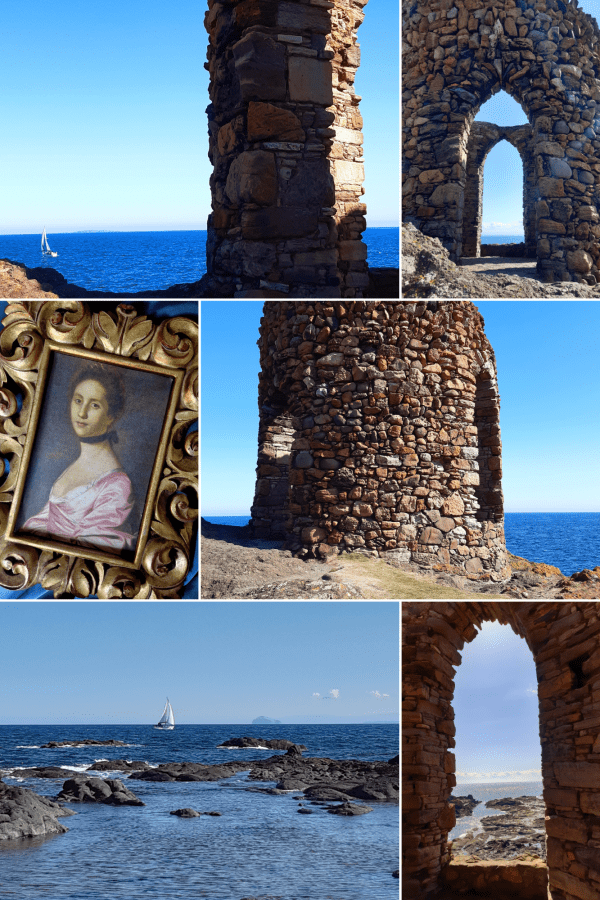
The purpose of my journey here, however, wasn’t to go shopping but to visit Lady’s Tower.  The Tower sits on a rocky promontory at Ruby Bay, just outside Elie.  Tiny garnets can be found in the reddish coloured sand here, hence the name, ‘Ruby Bay’. The tower itself is a red sandstone landmark which is set against the expanse of the Forth Estuary and like so many 18th century buildings it‘s now in ruin but, nevertheless, a very attractive and fascinating one to visit.

The tower comprises three massive arched window apertures which afford stunning views of the Forth. On the day I visited I could see as far as the Bass Rock and North Berwick Law. There had been two levels in the tower; a fireplace on the east wall of the ground floor with a staircase built against the west wall leading to an upper viewing platform.

Sir John Anstruther had the tower built in the 1770’s for the pleasure of his much doted upon wife, Lady Janet. Sir John was a Baronet, Scottish politician, local entrepreneur and industrialist who married Janet in 1750. She was the daughter of wealthy businessman and Scottish MP, Captain James Fall.  It was alleged the Fall family were of gypsy heritage and much to her displeasure, Janet was nicknamed ‘Queen of the Gypsies’.  She was a renowned beauty and most shockingly for the time, had a reputation amongst the men in their social circles for being an outrageous flirt! She was famously described by Thomas Carlisle, Scottish essayist, historian, and philosopher, as ‘a coquette and a beauty’.

Lady Anstruther loved sea-swimming and the health benefits she felt from it. As her habit was to swim naked, she insisted upon absolute privacy and so before bathing a servant would be sent into Elie, ringing a bell, to ensure locals stayed away. To enable Janet to dress discretely after her swim, her husband also had a vaulted changing room built down at shore level. The Tower was a place where she could relax and take in the views, watch the world go by and unwind from the exertions of her swim. There was, however, something which marred Janet’s overall pleasure of this wonderful setting and that was the tiny hamlet of Balclevie, a collection of dilapidated dwellings where some of the poorest people in the community lived.

Revealing her arrogant and cold-hearted nature, Janet felt Balclevie was offending to her eyes therefore had the entire village razed to improve her view. It is thought that, in truth, the tinker inhabitants of the hamlet reminded her too much of her own family origins. Flattening Balclevie did nothing, however, to abate the taunts about Janet’s gypsy background being made in the streets of Elie. She was determined to be recognised as a member of the landed gentry, her dress and deportment contrived to express her aristocratic rank. It’s said an old woman who had been evicted when her home at Balclevie was demolished upon Janet’s instructions, placed a curse on the family in retribution. Legend tells that the curse would see only six generations of the Anstruther family live in the grand ‘Elie House’. This foretelling did come to pass, when the cash-strapped sixth generation of Anstruther’s sold Elie House to the Baird family in 1853.

Lady Janet died in 1802, aged 77. I was able to ascertain that she is buried in the Elie Churchyard and although I spent time looking for the grave, I was unable to find it. It could be that hers was a burial slab, now overgrown with moss or perhaps, as the Anstruther family had commissioned the building of the church tower, she had been afforded an internment within the church itself.  Finding her is a quest for another day.

Modifying the Van

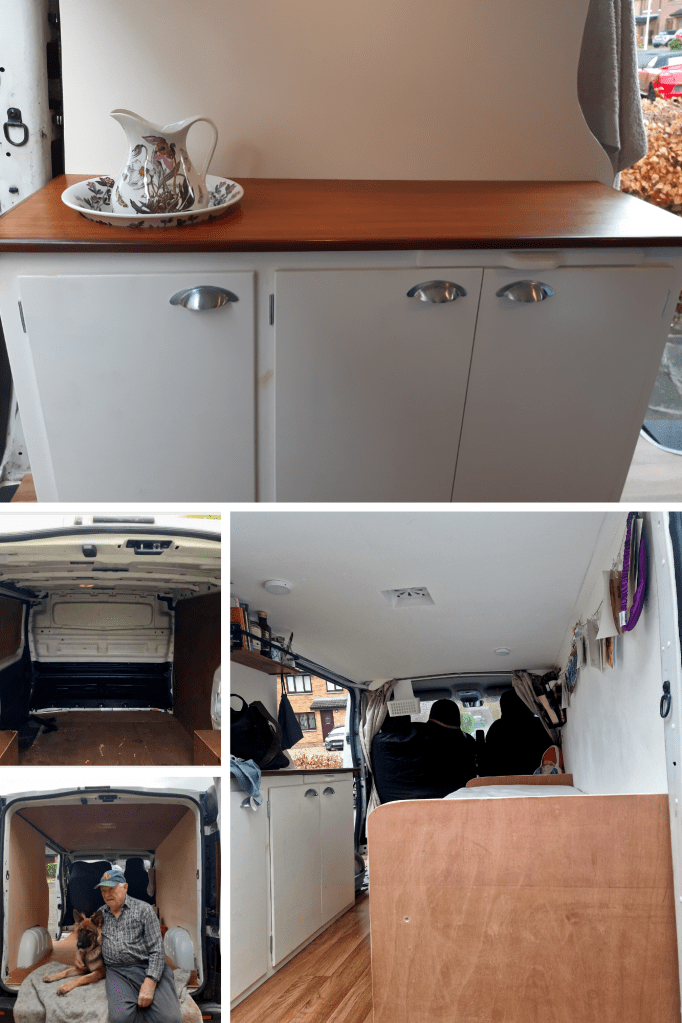
My car was becoming much too cramped for a rapidly growing Millie so I decided that a van would be the perfect alternative, not just for Millie, but something that I’d always wanted and better suited for my outdoor activities. I looked at several vans and settled on a Renault Trafic then got to work adapting it to suit. My Dad was 91 at the time and as a retired carpenter, relished having a new project to get his hands on, albeit at a much slower pace in keeping with his age and hampered mobility.

1st steps – after removing the bulkhead and ripping out the filthy and broken 5mm plywood lining, I gave the van a thorough cleaning. As ventilation is paramount, fitting an air vent was the first item to be addressed. I have to say, it was probably the most stressful part of the whole exercise. Cutting a hole in a perfectly good, solid roof was nerve-wracking and absolutely had to be done right first time. After much ‘debate’ and a wee bit of swearing about measurements my Dad and I settled on drilling numerous small holes around the circumference of the area to be removed. Fortunately, the perforated area popped out easily with a quick thump from a hammer. A heavy duty file and the sander removed and smoothed the rough edges then the area was primed with rustproof paint. The vent fitted perfectly, was screwed into place and the rim, inside & out sealed with silicone to make it watertight.

Insulation – I fitted sound deadening mats which were stuck to all flat areas around the interior to reduce vibration and noise. Then, all the cavities, recesses on the walls and ceiling were filled with loft insulation, the whole lot covered over with insulating foil and fastened into place with foil tape. Ridges on the floor were filled with strips of insulating bubble foil then covered over with radiator reflective foil. (I found that using carpet adhesive spray to hold everything in place as you work, keeps all in situ as you go along).

Strapping and fitting the new ply lining – The ply flooring went down first (10mm thick, cut to shape plywood, using self tapping screws – countersunk). Then, as luck would have it my brother arrived from NZ, got his sleeves rolled up and with my Dad, set about installing the strapping for fixing the plywood lining to the inside of the van. The strapping is made up of cut to size, 40mm x 20mm battens. Using truss head, self tapping screws for better hold, 5mm ply for the ceiling was fitted into place. Lastly the walls went in (10mm cut to shape ply, fastened with countersunk self tapping screws) also acting as additional support for the ceiling. Once checked to ensure they were tight, all countersunk screws were covered over with wood filler then sanded for a good finish.

Flooring – PVA glue was painted all over the floor to seal the wood, then once dry, flock-backed vinyl flooring was cut and fitted using, again, carpet adhesive spray.

The Fixtures – my Dad made a 1950’s style mini kitchen unit using leftover wood from the battens for its frame and plywood off-cuts for the facing. It has inner shelving so affords plenty of space to store groceries, cooking equipment , utensils, plates & mugs, etc. There’s also a pull-out chopping board. The counter top of the unit had been the top of my Great Aunt’s teak dressing table which I’d been storing in my loft for a very long time and in reality, was a piece of furniture I was never going to use. I think it looks superb and I hope she wouldn’t have minded. A circular hole was cut in the left end of the counter top which my Portmerion bowl and ewer fits into nicely. The pull out sofa bed, I made using battens and 10mm x 70mm cut to length wood for the interlocking slats. The bed ends were done with more plywood. There’s ample space underneath the bed for storage where I use laundry baskets for some sort of semblance. A double foam mattress was cut to size (I found that a serrated bread knife worked best for this job) and I used 2 x king size mattress protectors as covering for the pieces needed. The bed is super comfortable, by the way!

Electrics – I studied several tutorial videos with the intention of installing leisure batteries. While I’m confident in my woodworking abilities, I cannot say the same when it comes to anything to do with electricity. In the end I shelved the idea of fitting leisure batteries and went with a much more simple option. My lighting, magnetic touch lights, is rechargeable and this can be done from the van’s 12V socket. To be honest that’s all that’s required. I have a rechargeable lamp which is only ever used as back-up and I cook with a portable gas stove. I did invest in a portable power station, however, it’s only required if I need to use my hairdryer, to perhaps recharge my in-car DVD player or charge up my mobile phone if I’ve forgotten to plug it into the 12V socket while driving. For me, keeping it simple works best.

Other Items – The most useful item I purchased was a Porta Potti. Not having to desperately find a place ‘to go’ or not having to trudge to campsite toilets during the night (especially if it’s raining) is nothing short of bliss. If you have space for it, definitely buy one. A rechargeable camping shower was a gift from my Son, so if I haven’t been for a cold water swim or need to wash my hair, then it’s certainly a great little item.

Reading this back, it all sounds so incredibly straight forward. However, if you’re going to modify your own van, bear in mind there are always going to be challenges in a project like this so be sure to plan everything out and take your time, especially in making sure your measurements are correct. Mistakes can be costly.

Little Garve Bridge, Garve – Ross & Cromarty

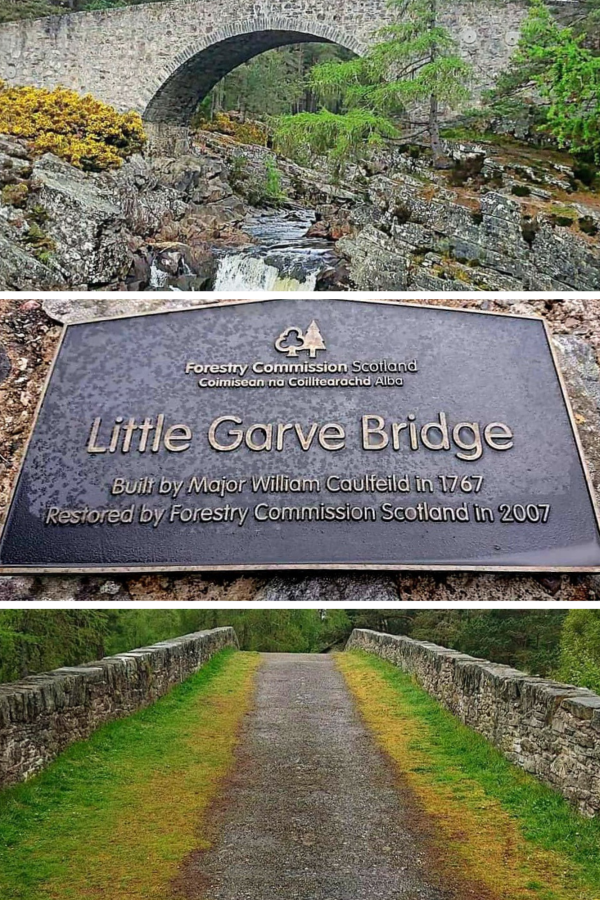
In the wake of the 1715 Jacobite Rebellion, General George Wade oversaw the building of a massive road infrastructure to support the movement of the British Army in the Highlands for the purpose of maintaining suppression of the population. A network of over 250 miles of interconnecting roads and 40 bridges were built, predominantly determined by the location of forts and army barracks. There are areas of the road and some bridges still in use today and referred to these days as the ‘Old Military Road’.

Now a scheduled monument, Little Garve Bridge spans a deep chasm of the Black Water River and had been part of the military road between Contin & Poolewe on the West Coast. Although known as Wade’s Bridge, it was in fact commissioned by his successor, Major William Caulfield.

Balfarg Henge & Balbirnie Stone Circle, Fife

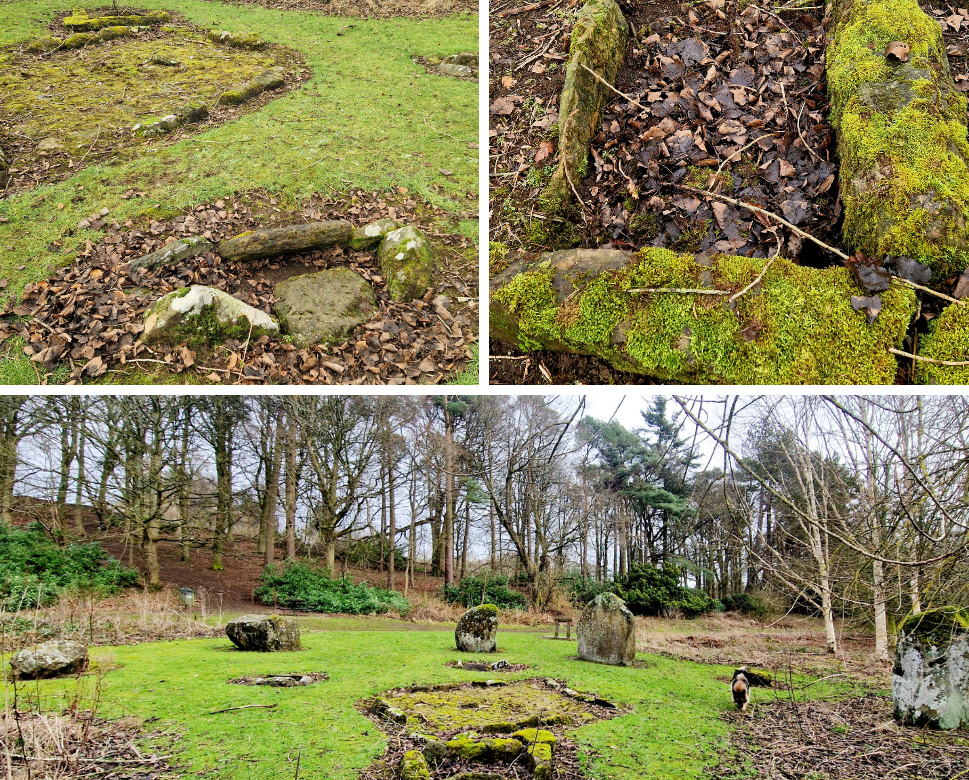
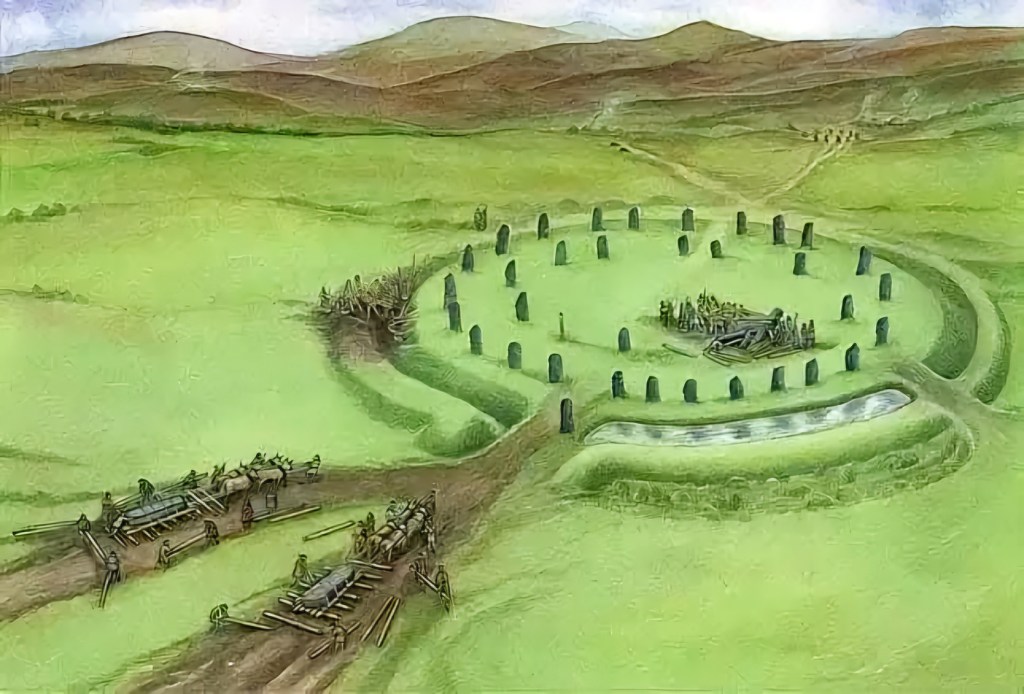
Located on the outskirts of Glenrothes in Fife, Balfarg Henge is now incongruously surrounded by a modern housing estate. Encircled by hills, this was once a revered landscape and main centre of ritual, sacred to generations of prehistoric people. While there are only two of its original stones remaining and sadly, a rather underwhelming place to visit these days than other Neolithic monuments in Scotland, (such as Calanais in Lewis or Ring of Brogdar in Orkney) 4,000 years ago Balfarg Henge would have been equally as evocative.  The ceremonial, circular enclosure, measuring 60 metres across (known as a ‘henge’), was formed by a bank with an internal ditch and encompassed temples for the living and graves for the dead.  Evidence of ritual feasting, sacrifice, smashed pottery and human burial were found here and at the centre of the henge, lying level with the grass, is a massive stone slab which covers a stone cist, containing the remains of a teenage boy from that period.

The nearby Balbirnie Stone Circle was excavated then moved when the current main road was widened.  It originally had been only 300 metres from Balfarg Henge, in a much more prominent position with the circle facing the midsummer sun rising over Clatto Hill.  It had a hearth at its centre, perhaps for lighting up night-time ceremonies. Communities would have gathered here to celebrate seasonal festivals and to honour their ancestors. Balbirnie became a place of burial where the cremated bones of women and children were placed in stone cists, along with precious objects.

Neolithic peoples cleared woodland and introduced agriculture to Fife around 6,000 years ago.  They were also hunter-gatherers, moving from place to place throughout the year as seasons changed. The efforts made by these people to build shared sacred sites like Balfarg and Balbirnie affirms that their society was sophisticated and organised.

Earl’s Palace, Birsay – Orkney

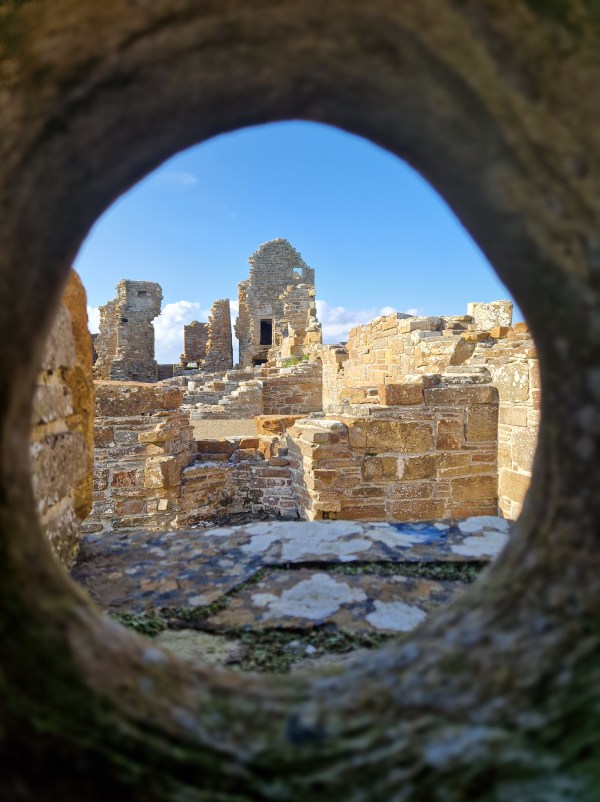
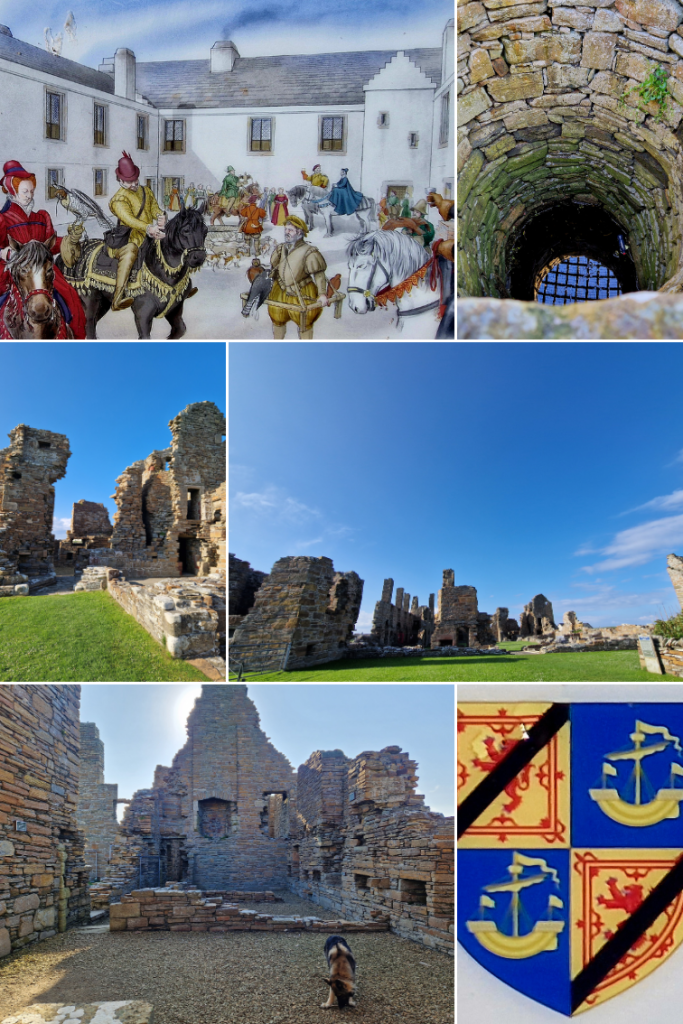
The Palace was built in the 1570’s – 1580’s for the notorious Earl Robert Steward, half brother of Mary Queen of Scots. Mary had 13 siblings and Robert was an illegitimate son of King James V and noblewoman Euphimia Elphinstone. After Mary’s forced abdication, Robert remained in the good graces of her son, the young James VI so that in 1581, he was elevated to Earl (Sheriff) of Orkney. Robert considered himself absolute ruler of Orkney and Shetland and this Renaissance style palace was a bold statement of his wealth and power. An inscription in Latin above the palace’s main entrance read – ‘Lord Robert Stewart, son of King James V, King of Scots, commissioned this building’. While Robert clung to his Royal connection, his coat of arms required the Scottish Royal Arms to bear a ribbon through the middle, a symbol of his illegitimacy, while the 2nd and 3rd quarters show the arms of the Earldom of Orkney.

Despite being a luxurious home, defence was still a major consideration. The palace was built around three sides of a courtyard with projecting towers at 3 of its 4 corners and a wall enclosing the north side. There were entrances to the south and west. To mitigate any security risk, only the upper floors had large windows while the ground floors had small openings and an array of gun loops from which artillerymen could cover every side of the building. Despite the many gun holes, the palace was still a place of grandeur and elegance. A single long gallery with views out to sea ran along the west wing and the building had fine panelling and painted ceilings in all the rooms that were needed to keep the Earl living in style. There were kitchens, a ‘girnel’ (granary), brewhouse and ample cellars for supplies. The palace was also equipped for sport and exercise, having archery butts, and a bowling green.

Earl Robert died in 1593 and his son Patrick succeeded him to also become Earl. Patrick was known as ‘Black Patie’ with a reputation for violence and a taste for luxury he couldn’t afford. In 1609 Patrick was imprisoned for ‘monyfauld wrongis’, including theft of lands and funds, oppression of local people, kidnapping, torture and murder. While incarcerated in Dumbarton, Patrick orchestrated a rising in Orkney however it failed and he was summarily beheaded for treason. By the time the Palace was taken over for use by Cromwell’s troops in 1653, most traces of Earl Robert’s extravagant lifestyle were gone and the kitchen contained ‘nothing, but mukk and filth!’ Thereafter the palace was used occasionally by later earls of Orkney but by 1700 it had fallen into decay.

It was such a beautiful, sunny day when we visited and although now in ruin, the palace still exudes an air of its previous magnificence. Definitely worth taking the time stop by.

Blog at WordPress.com.

Up ↑