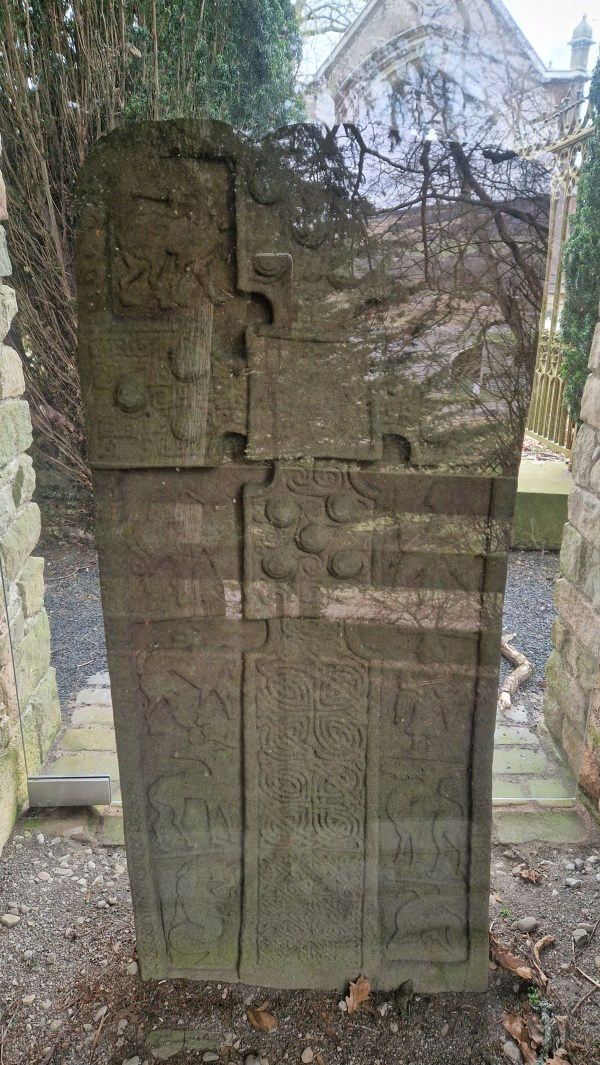
I’d heard about this magnificent stone so finally took the time to stop off to search for it while heading to the Cairngorms. Once you get into Pitlochry it’s actually quite well signposted however there isn’t really much parking nearby so I left the van in town and Millie and I enjoyed a stroll (for the most part) out past the caravan park and along the road to get there. It’s quite a narrow road without pavement and the drivers of a couple of Range Rovers that passed me seemed to think they were in a formula 1 race so Millie and I were forced into the ditch a couple of times. Do take care.
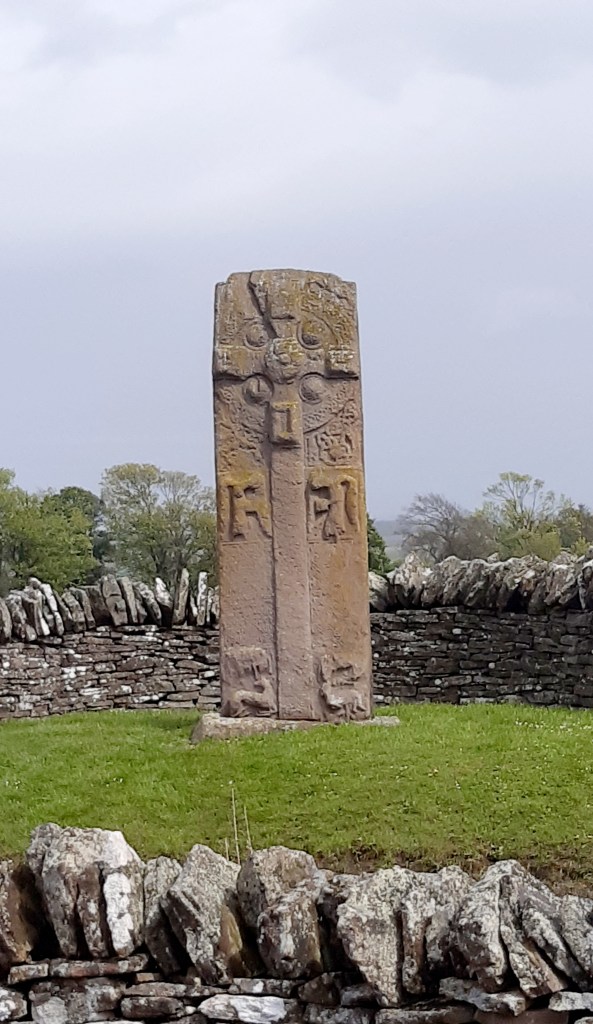
The Dunfallandy Stone is an elaborately carved Class II Pictish stone which is more than 1200 years old. To protect it from the elements, it has been enclosed in a shelter but disappointingly, reflections on the glass make it difficult to see and photograph. Non reflective glass would certainly have been a better option here.
Reminiscent of intricately decorated Pictish jewellery, this cross-slab once marked a place of prayer and is set in its original location, prominently on a mound known to have been topped by a chapel, where it would have been seen by all that passed by. The relief carvings show the sophistication of Pictish culture, mixing influences from across the British Isles and Europe with local traditions and belief. Typically, the body of the Cross is decorated with the familiar intricate Pictish knotwork.
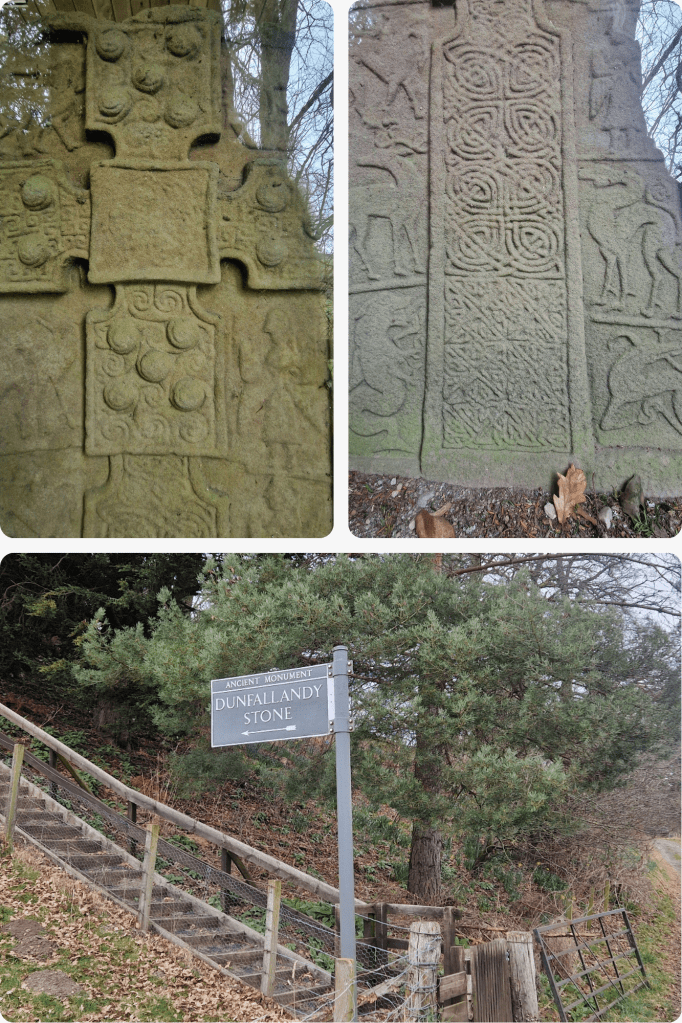
It’s thought that stones such as this one were once coloured, using mineral pigments such as yellow ochre, red lead and green verdigris, emulating the style of metalwork and religious manuscripts of the time. The images on the front depict Pictish monsters (considered agents of God’s wrath), a stag, Jonah being swallowed by a whale and angels. On the reverse side, depictions are of enthroned bishops or saints facing each other, a rider representing perhaps the patron who commissioned the stone then at the bottom are Iron-working tools (tongs, hammer, crucible). There are also several distinctively Pictish symbols on the reverse here, the Pictish monster, double disk and the crescent with v-rod however their true meaning is now lost to us.

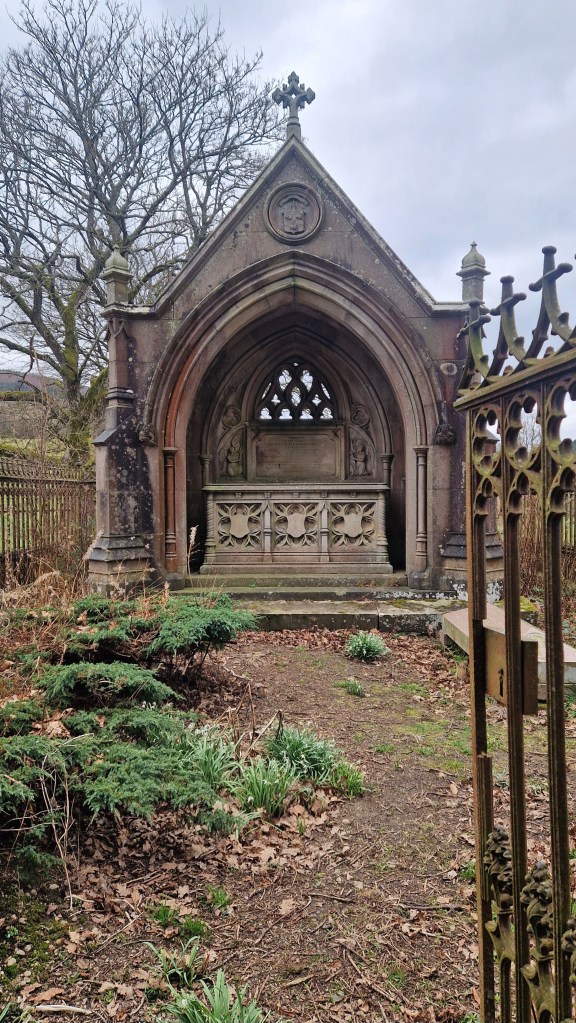
Dunfallandy Stone now shares the mound with burial enclosures surrounded by railings. One of these is the site of the impressive tomb of Lieutenant-General Archibald Fergusson of Dunfallandy who died in 1834. This, I assume would be why the location was referred to as Mausoleum Mound from the 1860’s.



 Scottish Adventures - in a van