Tullibody Old Kirk & Maiden’s Grave Stone – Tullibody, Clackmannanshire

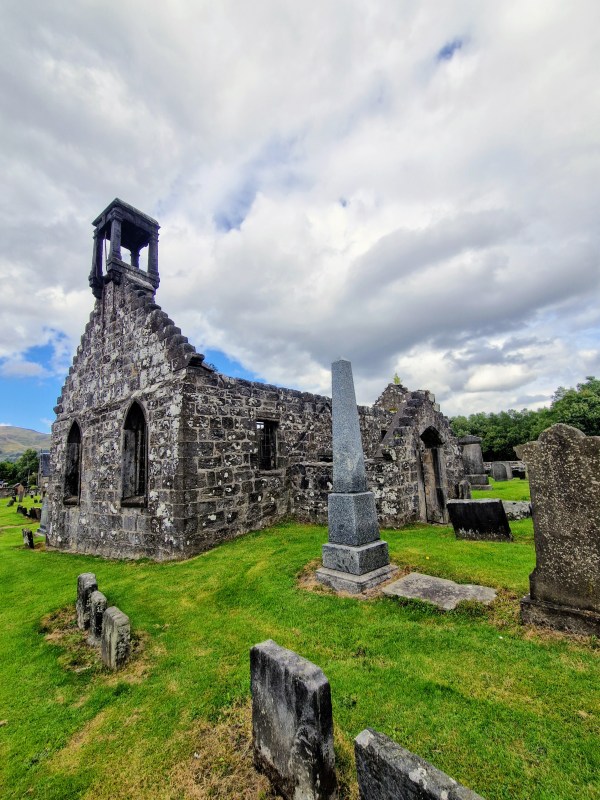
The roofless ruin of this Old Kirk in Tullibody, Clackmannanshire, is now a scheduled monument. It was founded in 1149, however, various sources note there were earlier churches on this site and it’s thought that there was a Kirk here from the end of the fourth century. This existing structure has been rebuilt a couple of times, first in the 16th century then again in 1760.

French troops removed the roof of the Kirk to build a bridge over the River Devon after Sir William Kirkcaldy of Grange destroyed the Tullibody Bridge to prevent them from retreating to Stirling at the end of 1560. Sir William was a Scottish Politician and Soldier who initially fought for the Scottish Reformation. He eventually vowed his allegiance to Mary Queen of Scots, became her champion during times of need and held Edinburgh Castle on her behalf from 1568 to 1573. Following the abdication of the Queen, the Marian Civil War ensued and Edinburgh Castle was eventually surrendered by the ‘Queens Men’ on May 28th 1573 when Kirkcaldy was taken prisoner and held at Holyroodhouse. Great efforts were made to save him from reprisal of his enemies, but they were all in vain. John Knox had prophesied that he would be hanged and so Sir William was taken and hanged at the Cross in Edinburgh on 3rd August 1573.
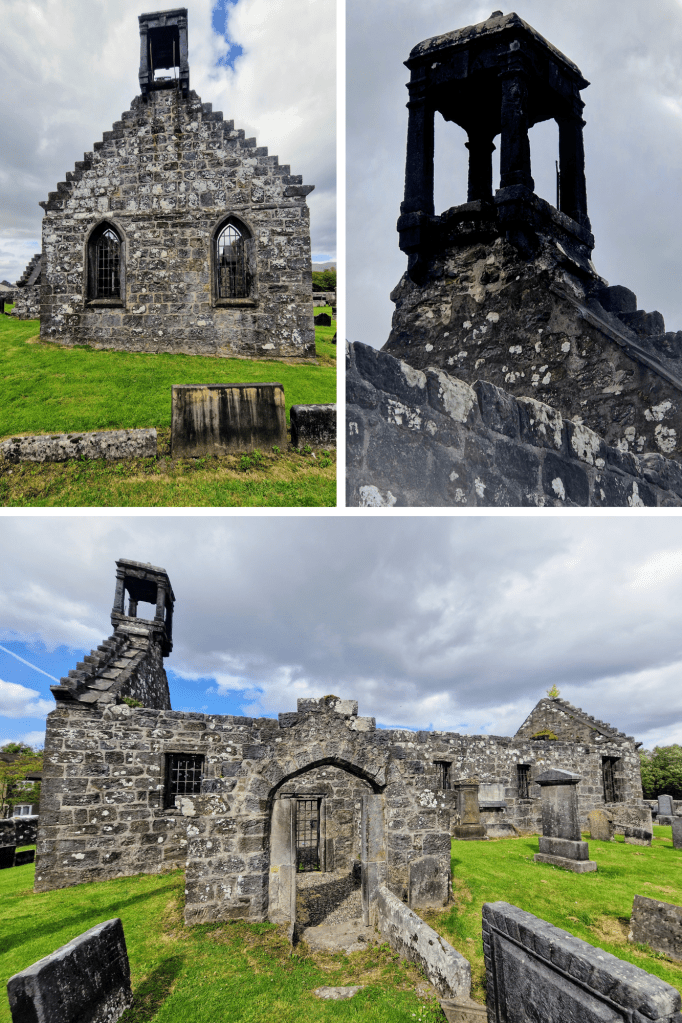
As it had become dilapidated, the Old Kirk was again renovated in 1760 with the bellcote being added in 1772, then latterly, the western windows and a south porch in the 1800’s. In 1904, St Serf’s Parish Church was built to the north of the Old Kirk which sadly thereafter, became disused.

There are many interesting grave stones and slabs to look at and ponder within the grounds of Tullibody Old Kirk but none more so than the ‘Maiden’s Stone’ and the story of forbidden love and tragedy woven around it.
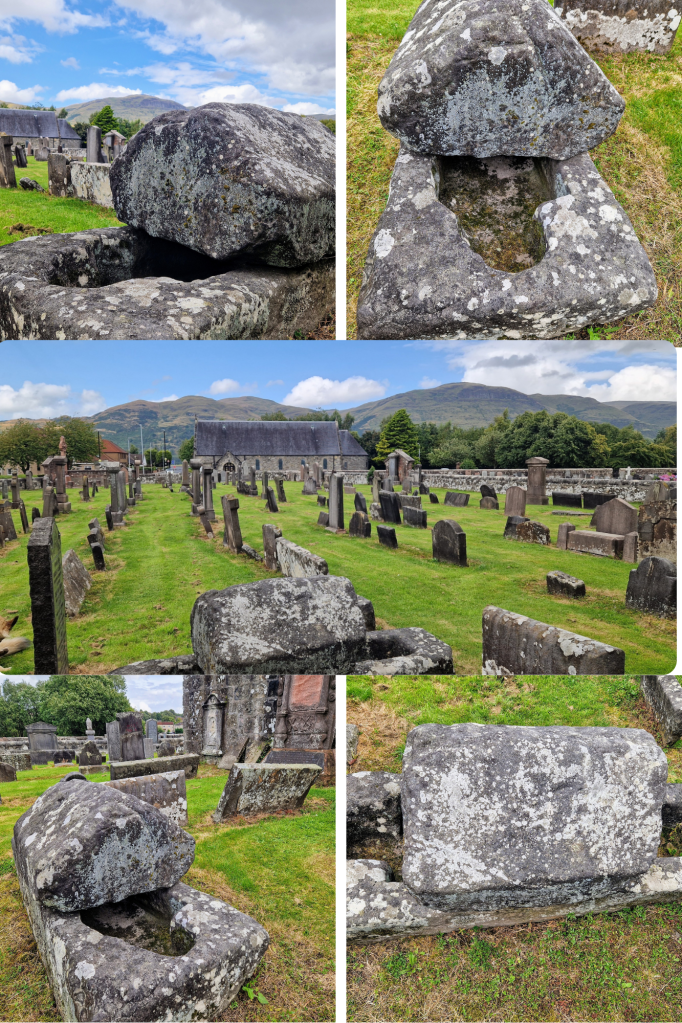
The ‘Stone’ is an ancient sarcophagus, topped with what remains of a coping stone lid. It’s said that this is was the coffin of Martha Wishart, the maid of Myretoun. In 1450, Martha, a beautiful maiden and only daughter of wealthy landowner, the Laird of Myretoun, fell prey to the young and very handsome local priest, Peter Beaton. He seduced her while she fell in love with him. On hearing the news she was pregnant, Beaton abandoned her to her shame. The unscrupulous and ambitious priest had toyed with her heart for access to her family connections. His sights were on rising through the ranks of the community and the church. Martha kept her pregnancy secret from those outside the family, languishing and dying of a broken heart before her child was born. On her deathbed, she requested her parents place her grave by the door of the Kirk so each time the priest entered he would be required to walk past her. Beaton blocked up the Kirk’s north door following Martha’s internment, establishing a new entryway through a south door in order to avoid passing her grave. Soon, the locals knew the truth and Beaton was shunned by the community he’d contrived to become such a lofty member off. The Abbot of Cambuskenneth heard of Beaton’s transgressions and it’s said that the news of his errant behaviour reached as far as the Vatican. One day however, Beaton simply disappeared, a story circulating that he had wandered off, a madman. Or, had he instead met vengeance in the form of a grieving Father?
The Eleanor Cross – Kenmore, Perthshire

I’d parked overnight in a layby at the east end of Loch Tay at Kenmore and took a swim in the morning sunshine alongside several other morning dippers. Slipping into the cool, clear water of the still loch was a refreshing way to wash away the remnants of sleep. Meanwhile, Millie danced around at the waters’ edge desperate for me to come out. She’s a paddler not a swimmer.

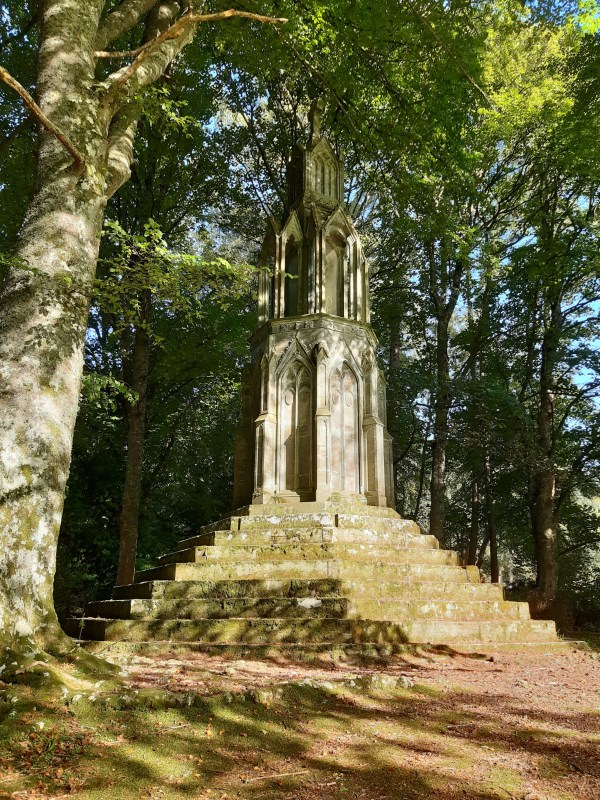
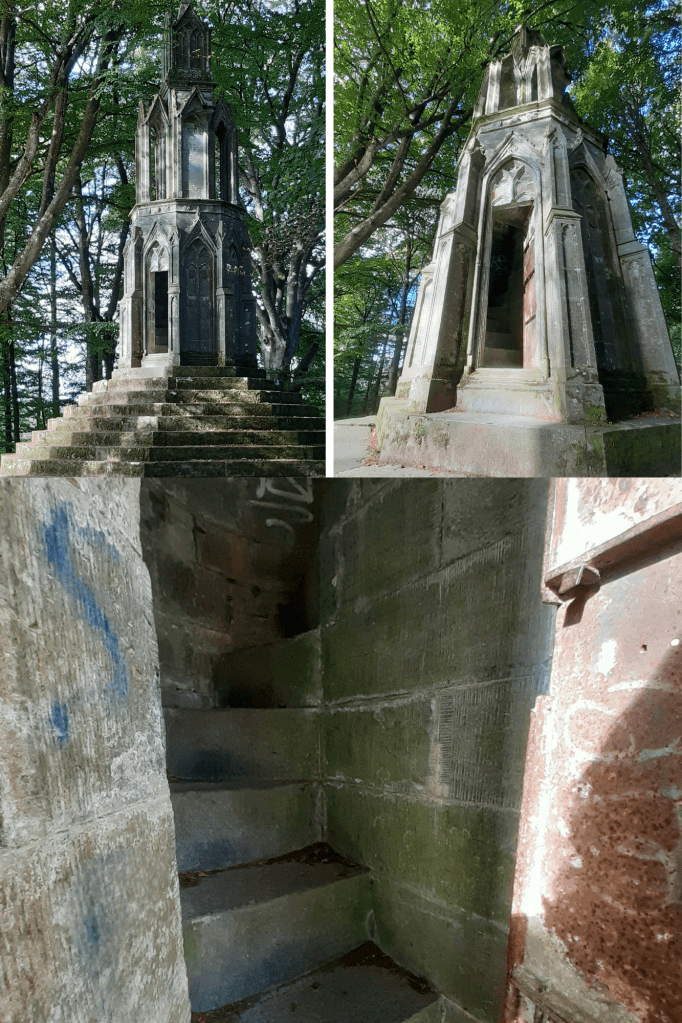
I’d brought my Children camping to Kenmore over the years so it evoked happy memories to be visiting again. There are lovely walks around this area and so Millie and I set off on a jaunt through the woods to take in the Eleanor Cross and onward towards Aberfeldy. The pathway starts by the bridge at the mouth of the Loch and meanders along the north side of the river for a while then heads up the hill through the woods. The Cross was commissioned in 1831 by Lord Breadalbane in tribute to his beloved wife Mary. At that time it would have had a view of the hills and down along the valley with beautiful vistas of the River & Loch Tay. In all these many years however the woodland has grown up high into beautiful mature trees with birdsong echoing through them.

Eleanor Cross is built on the site of an old summer house known as Maxwell’s House. It stands 30 feet tall with a 9 step octagonal base encircling it, a cruciform mid section and a square pinnacle top surmounted with a cross. Delightfully, a door on its south side opens to a spiral stairway. This leads to a small open-air arched gallery surrounding the structure. Climbing up the steps, it feels like a childhood adventure to reach the platform and look through the trees at height. Sadly the interior has been sprayed with graffiti: evidence of bored minds and idle hands.

A brass plaque acclaims – This Building is Dedicated to my Faithful Friend and Fellow-Labourer, MARY, COUNTESS OF BREADALBANE, whose maternal care has been extended to all around this place. anno domini, 1831.

I’ve been as yet unable to ascertain why this particular monument was named ‘Eleanor Cross’ so for the moment will surmise that the reason was purely a romantic gesture in keeping with Breadalbane’s status and the era. (The Victorians were fond of building ornamental ‘follies’ and they can be found throughout Scotland in beautiful rural settings.) NB: King Edward I of England had twelve Eleanor Crosses erected as markers built along the funeral route taken by his wife Queen Eleanor of Castile. They marked the nightly resting places of her coffin procession from Lincoln to Westminster Abbey in 1290.

Queen’s Well, Glen Esk

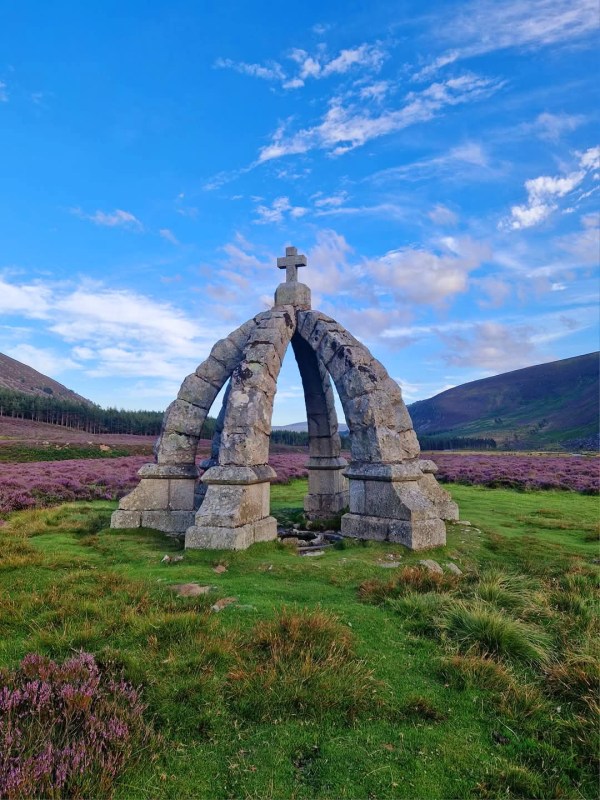
A 4mile (6.4Km) roundtrip ‘stroll’ will take you from Invermark to the magnificent ‘Queen’s Well’ in Glen Esk. The route is strewn with boulders so presents a bit of a challenge in places, however, certainly worth the effort as the scenery is spectacular, especially when the heather is in full bloom.

This granite crown shaped monument sits over a natural spring originally known as the ‘White Well’. The stone well was erected by Lord Dalhousie in 1861 to commemorate a visit made there by Queen Victoria and Prince Albert earlier that year. During their annual sojourn at Balmoral, the Royal couple and their entourage rode the 15mile (24Km) trip on ponies from Bridge of Muik, stopping for a picnic along the way. They met with Lord Dalhousie at the White Well where they refreshed themselves with the spring water before heading off to spend the night at his home, Invermark Lodge.

The inscription at the monument reads – ‘Her Majesty, Queen Victoria, and his Royal Highness the Prince Consort, visited this well and drank of its refreshing waters, on the 20th September, 1861, the year of Her Majesty’s great sorrow.’

Albert died on 14th December 1861, aged 42 years, having been diagnosed with typhoid fever.

Blog at WordPress.com.

Up ↑