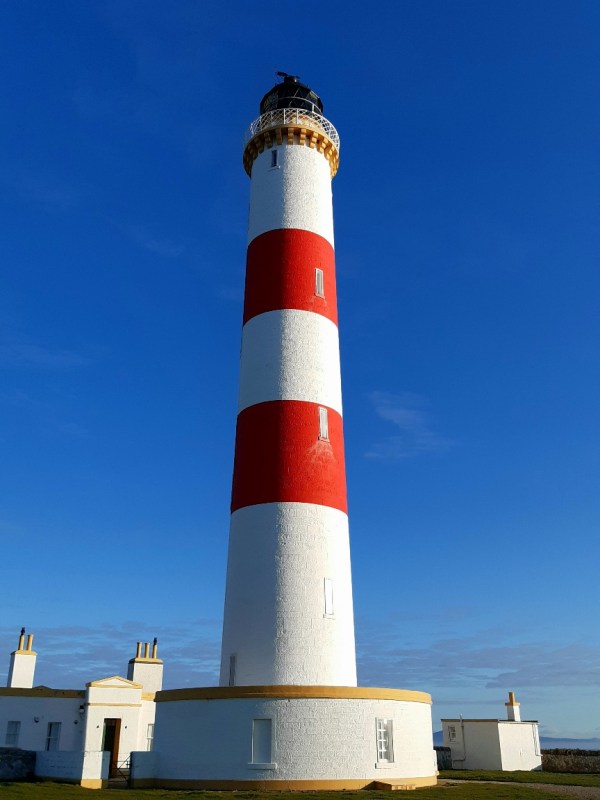
Tarbat Ness Lighthouse (Taigh-solais Rubha an Tairbeirt)-Portmahomack,Highland

Driving ever farther northward on my trip around Scotland, I reached the north west tip of Tarbat Ness peninsula, just outside the fishing village of Portmahomack on the east coast and parked for the night under the watch of this stunning lighthouse.

Tarbat Ness Lighthouse stands 41 meters high and is Scotland’s second tallest land-based lighthouse. It was designed by famous Scottish engineer, Robert Stevenson and was first exhibited on 26 January 1830. Its two red bands were added in 1915 to make it easily distinguishable from other lighthouses as a day marker.
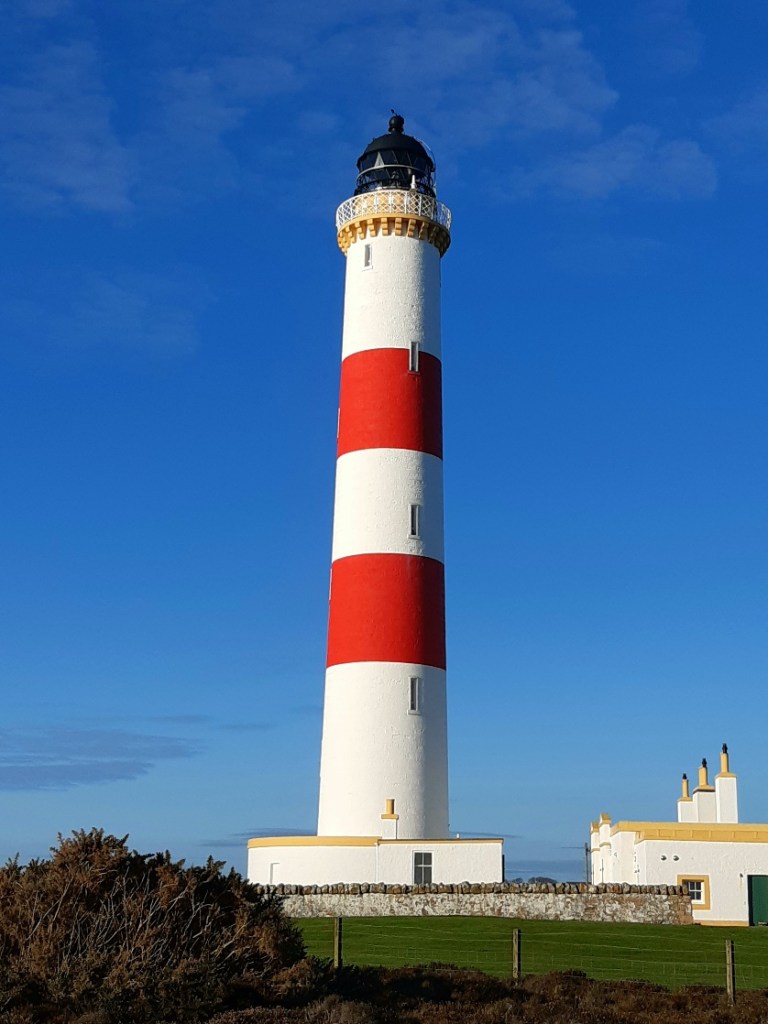
A principal lightkeeper, an assistant and their families lived here at Tarbat Ness until is was automated in 1985. The Keeper and Assistant would take shifts in keeping watch in the lightroom, ensuring the light flashed correctly to character. During the day they’d be busily engaged in cleaning, keeping everything in order and painting when necessary. After automisation the cottages and outhouses were sold into private ownership.

The light is automatically operated when daylight falls and rises between set levels when a sensor switches the light on or off. The light is monitored 24 hours a day remotely and technicians visit annually to service the light and carry out maintenance.

The Light flashes white, 4 times every 30 seconds and has a range of 24 nautical miles. The tower has an elevation of 53 metres (174 ft) and 203 steps to the top.

Navigating Scotland’s more than 6000 mile shoreline has always been a hazardous undertaking and it’s one of the most beautiful but treacherous coasts in Europe. In 1786 a Commission was set up to build, initially, four lighthouses. Now known as the Northern Lighthouse Board, it is responsible for over 200 lighthouses.
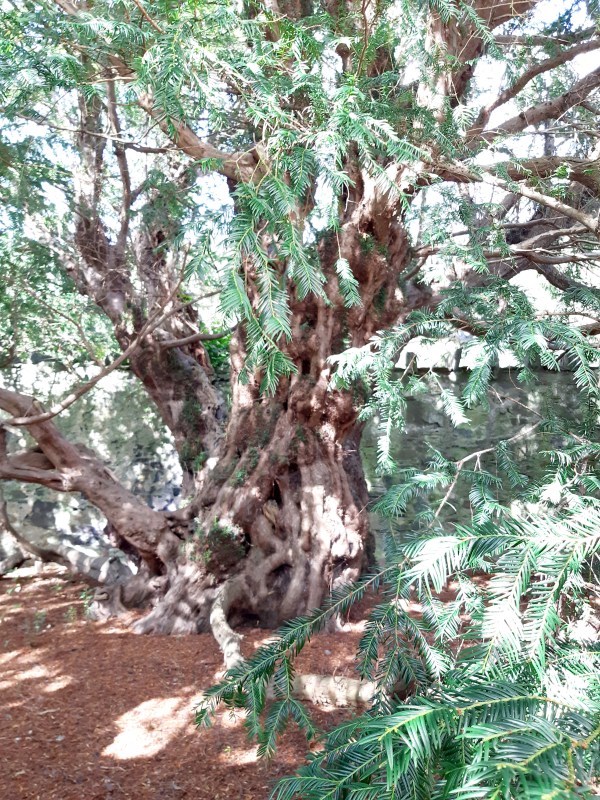
The Fortingall Yew

Just a short scenic drive from Loch Tay, in the hamlet of Fortingall, resides Europe’s (and possibly the World’s) oldest living thing. It’s estimated that the roots of this tree weave back over 5,000 years. Under a veil of coniferous needles you can see the relic trunks of what was once a huge, ancient Yew Tree. In 1769 the tree had a girth of approximately 56ft (17m) but sadly as a result of rapacious souvenir hunters, large sections of the yew were ‘appropriated’. Although sitting within the grounds of Fortingall churchyard, a new enclosure which it now occupies, had to be built to stop the tree from being completely destroyed.

Before the arrival of Christianity, the Yew was known as the tree of eternity. At around 500 years old, when most trees have died, Yews start to grow again. This otherworldly power led early people to revere the Yew and the Fortingall Yew Tree may have marked a place of worship for them. Archaeological evidence indicates this area has been inhabited for more than 5,000 years and three groups of standing stones and numerous large, cupmarked stones from that timeline can be found nearby. As with many ‘pagan’ sites, when early Christians arrived at Fortingall in the 7th century, they built their new church next to the Yew.

Over subsequent centuries, Yew trees continued to be cultivated within the enclosed grounds of Churches throughout Britain because although the Yew is toxic to livestock, the wood from these trees was best for producing longbows.

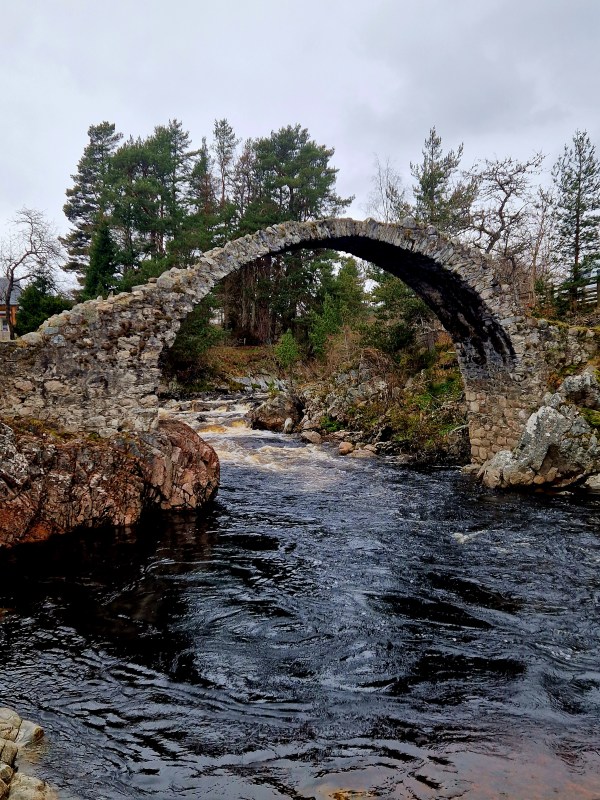
Packhorse Bridge, Carrbridge

While passing through the Cairngorms we stopped to take a look at this iconic old bridge. Situated in the picturesque Highland village of Carrbridge and also known as ‘Coffin Bridge’, this bridge was built in 1717 to allow funeral processions to reach Duthil Church by crossing the River Dulnain. Notwithstanding, it was a welcome addition to the village, providing a way for tradesmen and locals to traverse the river. It’s a single span humpback arched bridge, now no longer in use and with its side rails missing, all that remains is a slender arch across the river. The viewpoint plaque reads:

“At the beginning of the eighteenth century, to the inconvenience of both travellers and local people, there was no point at which the River Dulnain could be crossed when it was in spate, and burials at the Church of Duthil were often delayed.

Brigadier-General Alexander Grant of Grant, Clan Chief, commissioned John Niccelsone, a mason from Ballindaloch, to build a bridge at Lynne of Dalrachney. Built between May and November 1717, the bridge was paid for out of stipends of the Parish of Duthill.

Its parapets and side walls were badly damaged in the 18th century and again in the famous flood of August 1829, giving the appearance it still has today. At the beginning of the eighteenth century, to the inconvenience of both travellers and local people, there was no point at which the River Dulnain could be crossed when it was in spate, and burials at the Church of Duthil were often delayed.

Brigadier-General Alexander Grant of Grant, Clan Chief, commissioned John Niccelsone, a mason from Ballindaloch, to build a bridge at Lynne of Dalrachney. Built between May and November 1717, the bridge was paid for out of stipends of the Parish of Duthill.

Its parapets and side walls were badly damaged in the 18th century and again in the famous flood of August 1829, giving the appearance it still has today.”

Blog at WordPress.com.

Up ↑