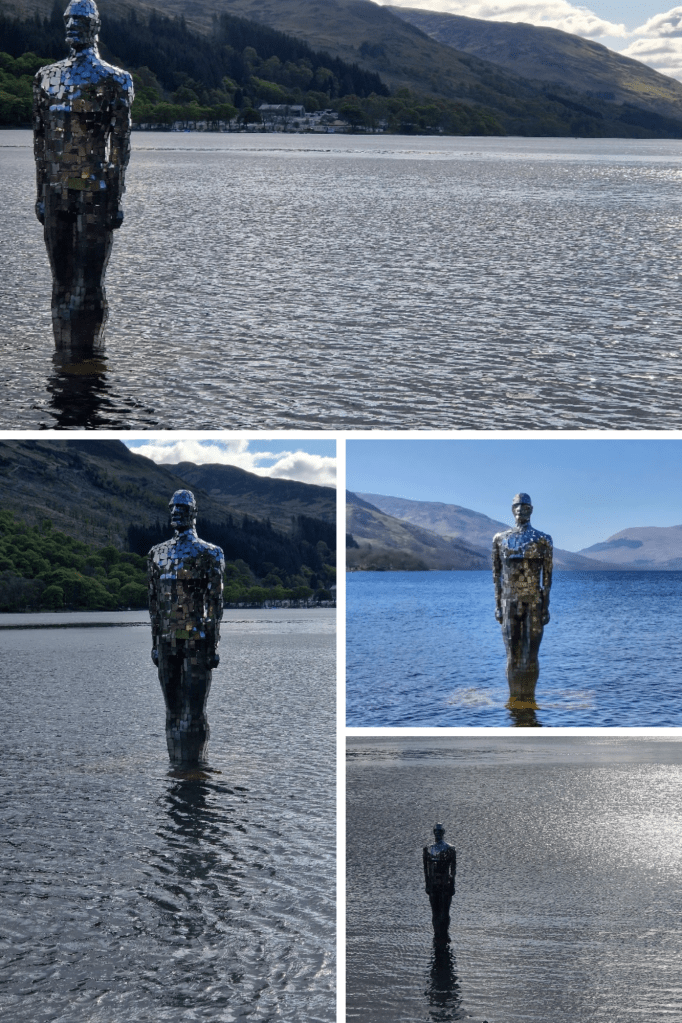
Made from over 800 hand-cut pieces of marine grade mirrored stainless steel, STILL was created by artist, Rob Mulholland. This solitary figure of the ‘mirror man’ as he is also known, stands partially submerged at the St Fillans end of the Loch. At 2.75m / 9ft tall, STILL is witness to the ever changing environment of this area, reflecting the surrounding landscape, sky and water.
Eight years since its removal in 2017, this enigmatic statue has returned to Loch Earn. The community here initiated a fundraising campaign to purchase, restore and reinstate this now beloved artwork. It certainly attracts lots of sightseers. I used to stop by with visitors to see this glimmering man of the Loch and he’s once again back on my list of points of interest.
The artist has said – “The figure is purposefully passive, reflecting the awe and power of nature, and yet can be interpreted as standing stoically – symbolising the human struggle to interact with nature”
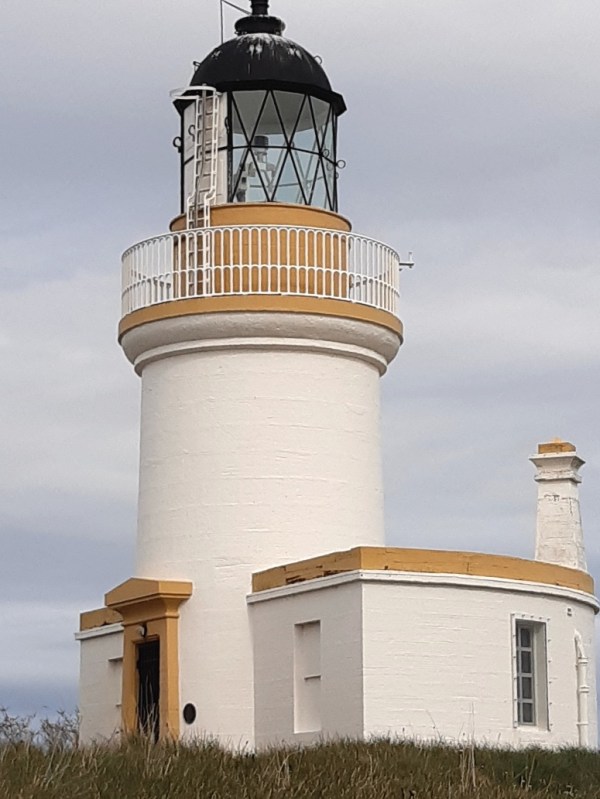
On my first trip around Scotland’s North Coast in the van, the first lighthouse on my itinerary was here at Chanonry Point. It’s one of over 200 that are located around Scotland’s wild and sometimes unforgiving coastline. Operated and maintained by the Northern Lighthouse Board they warn ships of dangerous waters and provide safe passage.
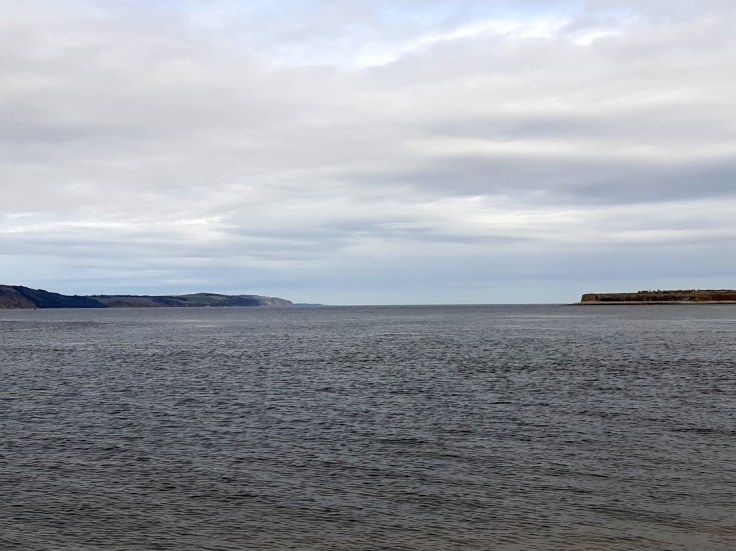
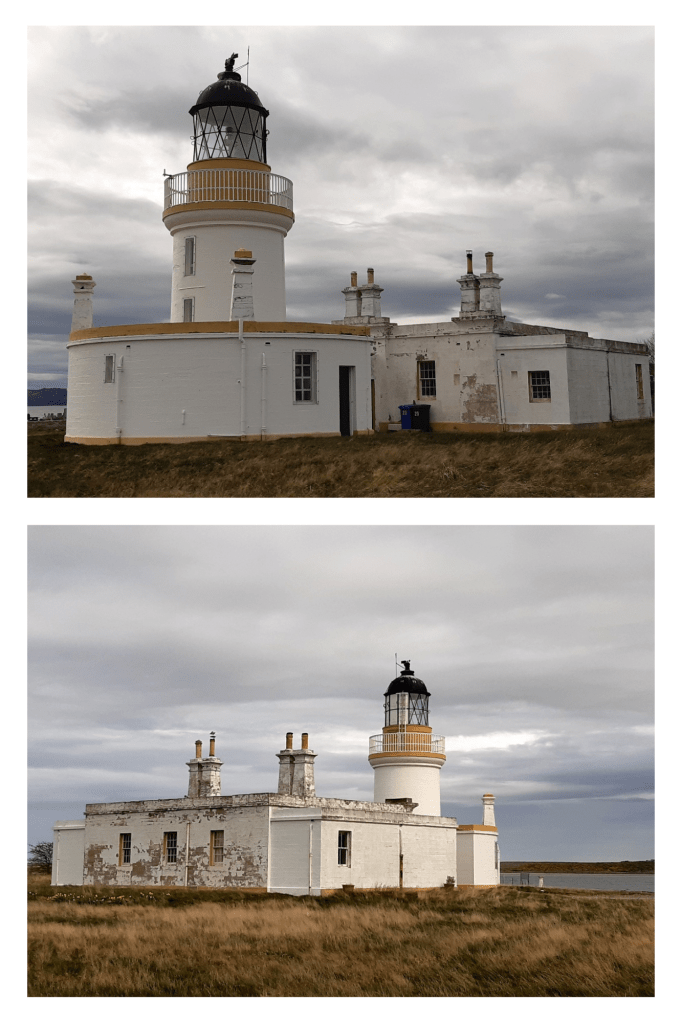
Chanonry Lighthouse is situated on the Black Isle, south of Rosemarkie, where the Moray Firth narrows between Chanonry Point and Fort George. Standing only 13 meters high, this lighthouse was designed by Alan Stevenson (1807-1865), who was also the engineer responsible for the building of the Scotland’s tallest lighthouse in the Herbrides, Skerryvore Lighthouse, in 1844, where it marks an extensive rocky reef. The establishment of a lighthouse here at Chanonry Point was first proposed in 1834 but not approved by the Commissioners of Lighthouses until 1843. It cost £3,570 (quite a handsome amount at that time) and the light first shone out to sea on 15th May 1846.
This was originally a ‘one man station’, a remote, lonely and hard existence. The keeper was required to keep a night-time watch in the lightroom to ensure the light flashed correctly, while during the day, he was expected to clean, paint (if necessary) and keep the premises tidy. The light here was eventually automated in 1984 and the former keeper’s cottages and outbuildings were sold and are now privately owned. They certainly could do with a lick of paint now!
The Lighhouse Stevensons Legacy – for over a hundred and fifty years, Robert Stevenson and his descendants designed most of Scotland’s lighthouses. The Stevenson family constructed wonders of engineering which have withstood time and the harsh Scottish elements. It’s said that Robert Stevenson’s talented literary grandson, Robert Louis Stevenson, took inspiration for his books ‘Kidnapped’ and ‘Treasure Island’ from visits to remote lighthouses with his Father and Grandfather.
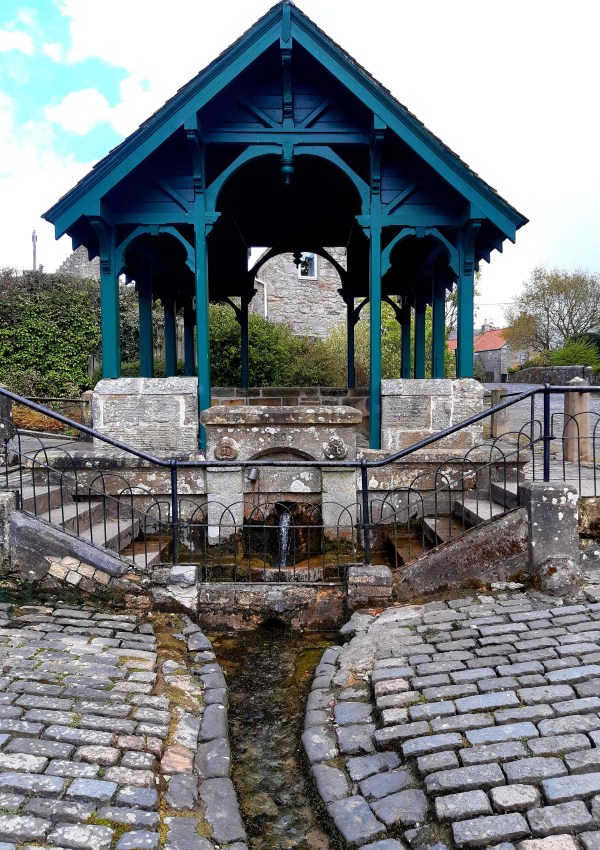
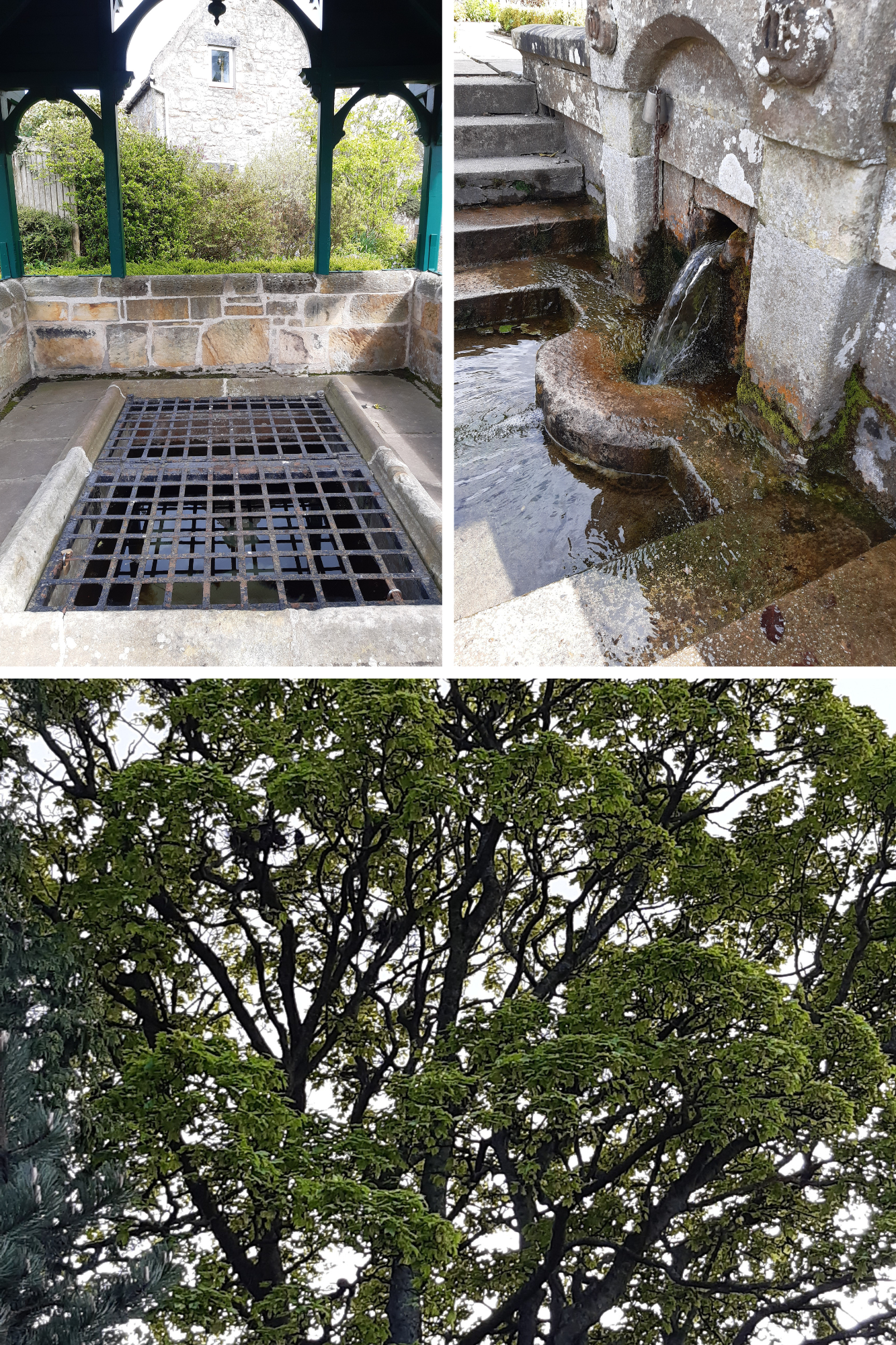
The natural spring water that bubbles up from deep underground and through the sand in the cistern of this well has a history mingled with folklore. It has been renowned for its curative properties for centuries and was first named ‘Fons Scotiae’ (Well of Scotland) by the Romans who passed through this area in 1st century AD.
The widespread assertion that the water had healing powers meant that Scotlandwell became a significant place of pilgrimage throughout the Medieval period.
Around 1250, the Trinitarian Friars (aka Red Friars) moved here to establish a hospice, using the healing waters from the holy well for patients in their new hospital of St Mary. It’s said that in the early 14th century, King Robert the Bruce came here in the hope of a cure for his leprosy and records show that Charles II travelled from his Palace in Dunfermline to take the ‘curative’. Mary Queen of Scots is also known to have visited the well to partake of its exquisite water.
The lovely, ornamental structure which now houses this ancient well is built from local sandstone, put in place and completed in 1858 by mason, Thomas Hay, and the wooden canopy constructed by joiner, Alexander Kelloch of Lindores. The reconstruction of the well, building of an adjacent wash house and drying green was benefacted to the local community by landowner, Thomas Bruce of Arnot and his wife Henrietta Dorin, at a cost of £154. Quite a tidy sum at the time.
I stop by here often to sit in the peacefulness of this place, drink the water and listen to the cascading of the water as it streams out of the well spout….if it’s not drowned out by the squawking of hundreds of crows that live in nearby sycamore trees.
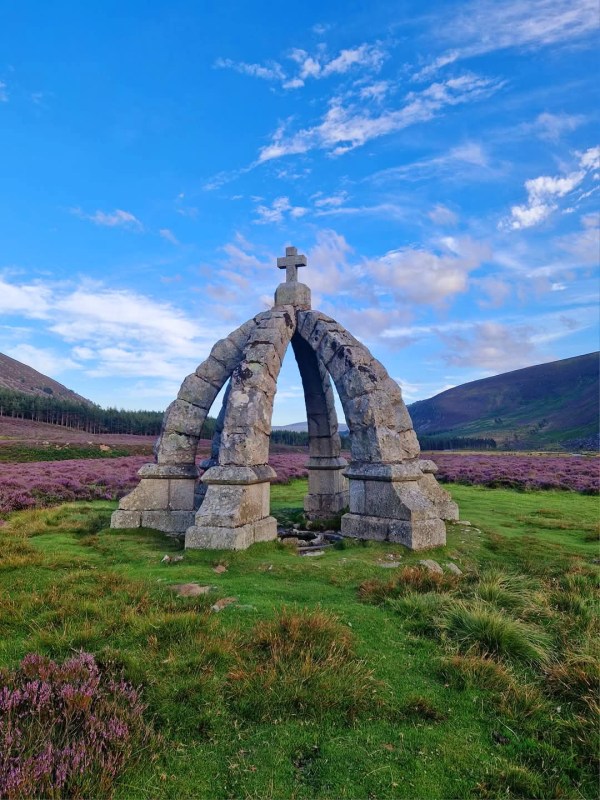
A 4mile (6.4Km) roundtrip ‘stroll’ will take you from Invermark to the magnificent ‘Queen’s Well’ in Glen Esk. The route is strewn with boulders so presents a bit of a challenge in places, however, certainly worth the effort as the scenery is spectacular, especially when the heather is in full bloom.
This granite crown shaped monument sits over a natural spring originally known as the ‘White Well’. The stone well was erected by Lord Dalhousie in 1861 to commemorate a visit made there by Queen Victoria and Prince Albert earlier that year. During their annual sojourn at Balmoral, the Royal couple and their entourage rode the 15mile (24Km) trip on ponies from Bridge of Muik, stopping for a picnic along the way. They met with Lord Dalhousie at the White Well where they refreshed themselves with the spring water before heading off to spend the night at his home, Invermark Lodge.
The inscription at the monument reads – ‘Her Majesty, Queen Victoria, and his Royal Highness the Prince Consort, visited this well and drank of its refreshing waters, on the 20th September, 1861, the year of Her Majesty’s great sorrow.’
Albert died on 14th December 1861, aged 42 years, having been diagnosed with typhoid fever.

 Scottish Adventures - in a van