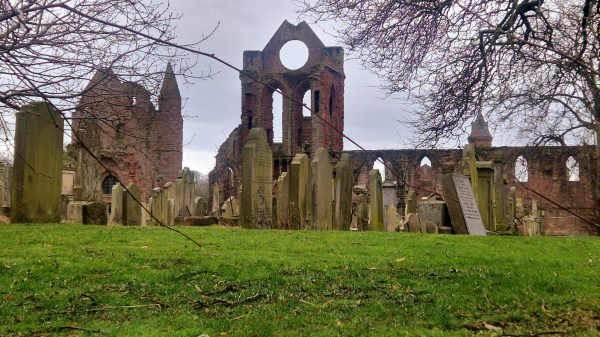
As you walk into the heart of the city of Arbroath, you get a feeling of the enormity that this Abbey once was. Impressive parts of this red sandstone cruciform Church still survive, the west end, south transept & sacristy, the gatehouse and the Abbot’s house which is now the museum. The cloister and other buildings are now ruinous but their foundations are still apparent and there’s also a large cemetery within the grounds.
Arbroath Abbey was founded in 1178 by King William (1st), the Lion, for the Tironensian Benedictin Monks from Kelso Abbey. King William bestowed considerable lands and great wealth upon the Abbey as well as custody of the Monymusk Reliquary, the casket believed to contain the relics of St Columba. It’s believed that he had the Abbey built in memory of his murdered dear friend, Thomas Becket (St Thomas the Martyr) and in the hope of currying favour with God for his own safety. William had been captured by English forces at the Battle of Alnwick in 1174 and only released by King Henry II a year later after being forced into signing the Treaty of Falaise which acknowledged Henry as William’s feudal superior. William was eventually buried here in 1214.
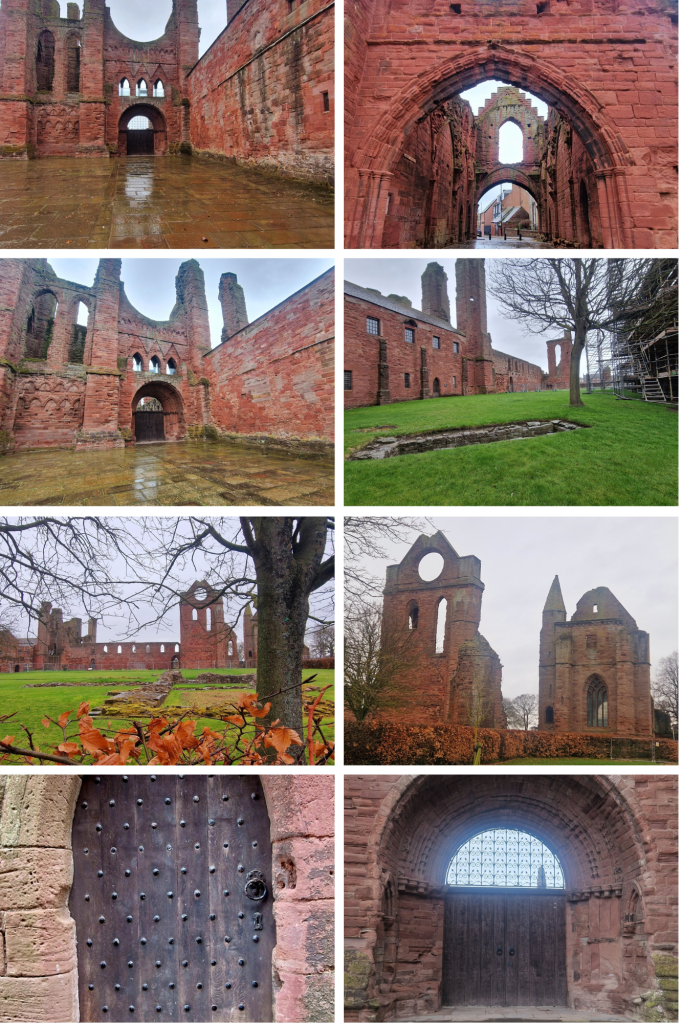
The Declaration of Arbroath, asserting Scottish independence over English aggression, was signed here in 1320. The original document is in the keeping of National Records of Scotland however a copy can been seen in the abbey’s museum. In 1951 a group of students stole back Scotland’s Stone of Destiny from Westminster Abbey. It had been seized in 1296 by Edward I of England from Scone Palace (nr Perth) where all Scottish Kings were crowned upon it. Edward took the stone to demonstrate his power over Scotland. It was used in the coronation of British monarchs thereafter however this was hugely resented by Scots. The students eventually placed it at the High Alter of Arbroath Abbey. The Stone of Destiny is now currently on display at Perth Museum.
In the 1800’s Arbroath’s huge fishing fleet would look for the massive round window of the Abbey’s south transept gable to guide them home from the open sea. A red beacon fire was lit at the iconic window and this practice gave the people from Arbroath the nickname of ‘Red Lichties’ (red lights).
 Scottish Adventures - in a van