The Fortingall Yew

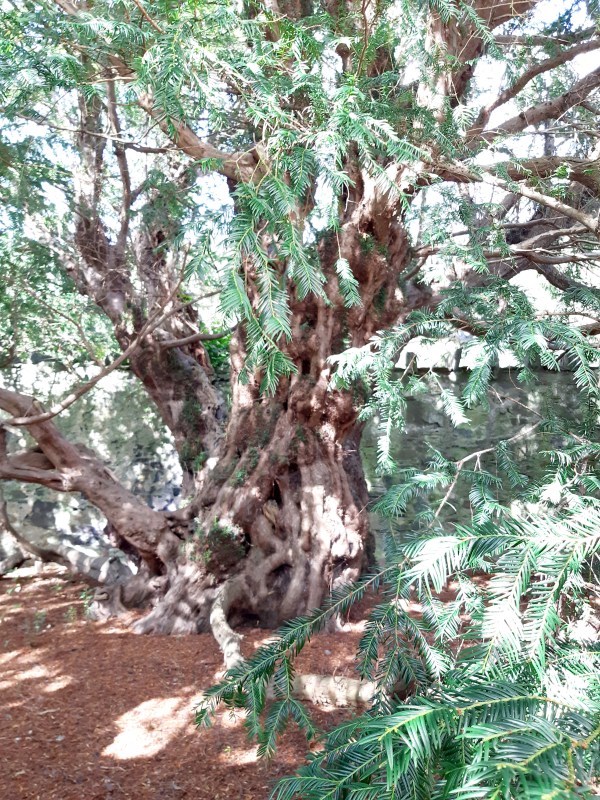
Just a short scenic drive from Loch Tay, in the hamlet of Fortingall, resides Europe’s (and possibly the World’s) oldest living thing. It’s estimated that the roots of this tree weave back over 5,000 years. Under a veil of coniferous needles you can see the relic trunks of what was once a huge, ancient Yew Tree. In 1769 the tree had a girth of approximately 56ft (17m) but sadly as a result of rapacious souvenir hunters, large sections of the yew were ‘appropriated’. Although sitting within the grounds of Fortingall churchyard, a new enclosure which it now occupies, had to be built to stop the tree from being completely destroyed.

Before the arrival of Christianity, the Yew was known as the tree of eternity. At around 500 years old, when most trees have died, Yews start to grow again. This otherworldly power led early people to revere the Yew and the Fortingall Yew Tree may have marked a place of worship for them. Archaeological evidence indicates this area has been inhabited for more than 5,000 years and three groups of standing stones and numerous large, cupmarked stones from that timeline can be found nearby. As with many ‘pagan’ sites, when early Christians arrived at Fortingall in the 7th century, they built their new church next to the Yew.

Over subsequent centuries, Yew trees continued to be cultivated within the enclosed grounds of Churches throughout Britain because although the Yew is toxic to livestock, the wood from these trees was best for producing longbows.
Packhorse Bridge, Carrbridge

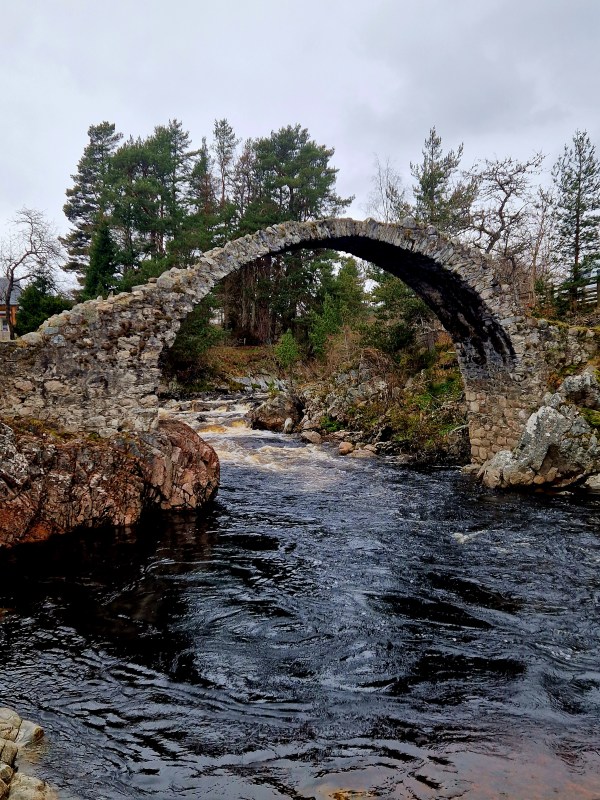
While passing through the Cairngorms we stopped to take a look at this iconic old bridge. Situated in the picturesque Highland village of Carrbridge and also known as ‘Coffin Bridge’, this bridge was built in 1717 to allow funeral processions to reach Duthil Church by crossing the River Dulnain. Notwithstanding, it was a welcome addition to the village, providing a way for tradesmen and locals to traverse the river. It’s a single span humpback arched bridge, now no longer in use and with its side rails missing, all that remains is a slender arch across the river. The viewpoint plaque reads:

“At the beginning of the eighteenth century, to the inconvenience of both travellers and local people, there was no point at which the River Dulnain could be crossed when it was in spate, and burials at the Church of Duthil were often delayed.

Brigadier-General Alexander Grant of Grant, Clan Chief, commissioned John Niccelsone, a mason from Ballindaloch, to build a bridge at Lynne of Dalrachney. Built between May and November 1717, the bridge was paid for out of stipends of the Parish of Duthill.

Its parapets and side walls were badly damaged in the 18th century and again in the famous flood of August 1829, giving the appearance it still has today. At the beginning of the eighteenth century, to the inconvenience of both travellers and local people, there was no point at which the River Dulnain could be crossed when it was in spate, and burials at the Church of Duthil were often delayed.

Brigadier-General Alexander Grant of Grant, Clan Chief, commissioned John Niccelsone, a mason from Ballindaloch, to build a bridge at Lynne of Dalrachney. Built between May and November 1717, the bridge was paid for out of stipends of the Parish of Duthill.

Its parapets and side walls were badly damaged in the 18th century and again in the famous flood of August 1829, giving the appearance it still has today.”

Cult Of St Andrew, Patron Saint Of Scotland

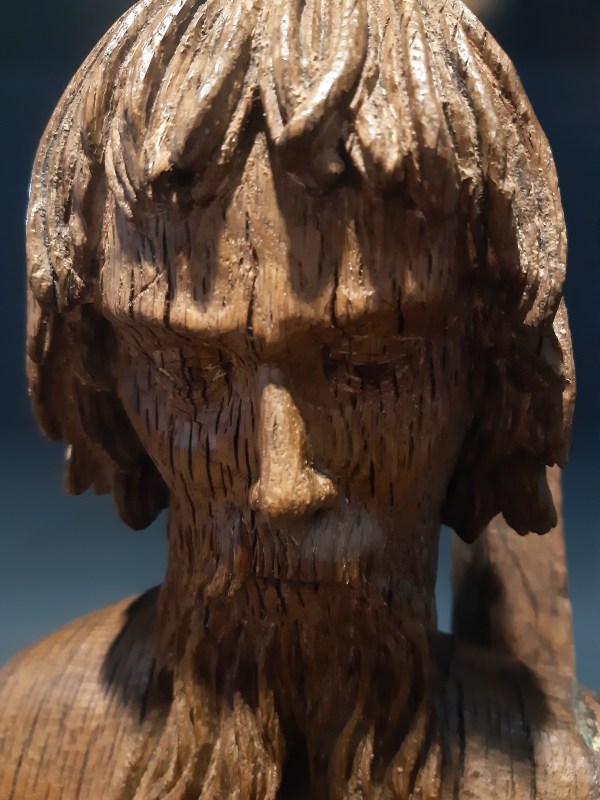
This oak carving of St Andrew is thought to have come to Scotland from a church in Northern Europe. Legend says that the bones of St Andrew, disciple of Jesus, were brought from Greece in the 350’s by Bishop Regulus. Objects associated with holy people were the focus of Christian devotion in medieval Europe hence the town (originally Kilrimund) became a major pilgrimage site and the centre of the cult of St Andrew. Pilgrims made long journeys to visit his relics and in the 1100’s, Queen Margaret of Scotland established a free ferry across the Firth of Forth to enable an easier journey north to St Andrews. When pilgrims arrived, the town’s street layout directed them to the Cathedral where the relics were richly housed.

By around 1200, the town was named after St Andrew and in 1320 he was officially adopted as Scotland’s patron saint and explicitly mentioned in the Declaration of Arbroath. St Andrew’s symbol of the saltire, an X-shaped cross, became a national emblem and later was assumed as our National Flag.

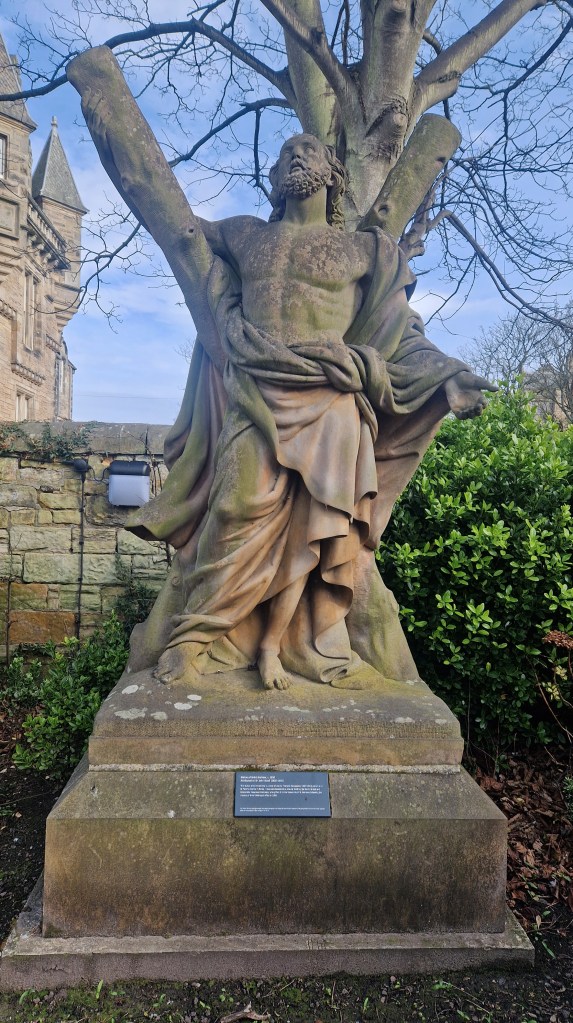
The above Statue of St Andrew, which is in the grounds of Wardlaw Museum in St Andrews, is attributed to Sir John Steell (1804-1891) and is a copy of one sculpted by Francios Duquesnoy (1597-1643) which sits in St Peter’s Basilica in Rome.

First Detailed Map of Scotland

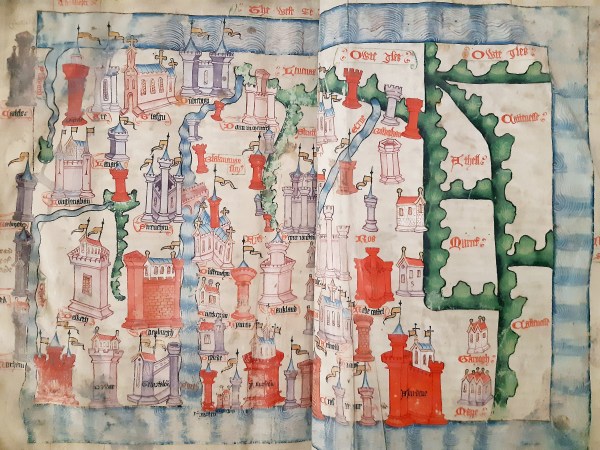
This outstanding map shows Scotland as an inviting and wealthy Country with great cities, walled towns, majestic castles and grand churches. Presented to King Henry VI of England in 1457 by chronicler, John Hardyng, it was done so as an enticement for the King to invade Scotland.

Hardyng had originally been sent as a spy on a secret mission to Scotland by Henry V (1413-1422) who intended to invade. However, Henry V died so the map became part of Hardyngs first chronicle, ‘A History of England and its Neighbours’. Hardyng suggested a route England’s army could take to invade Scotland.

The Map was being displayed at Wardlaw Museum, St Andrews, while on loan from the British Library, so I took the opportunity to pop by to see it. Being a fan of using maps to find my way around rather than relying on GPS, I was intrigued to see this. It’s not everyday you can have a close up look at something that’s almost 800 years old!

Guard of Honour

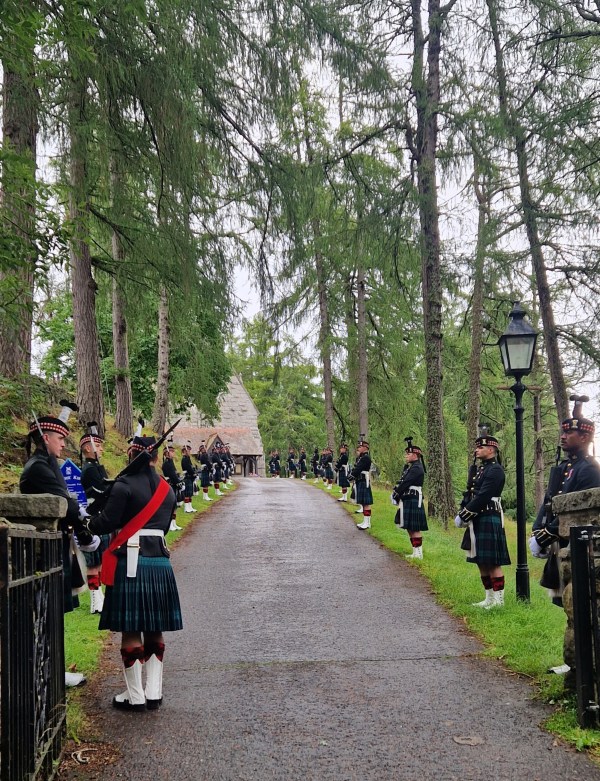
Fortuitously, I was in a café in Ballater when I heard this event would be taking place and as I was only a 15 minute drive away I thought I’d go along to watch the proceedings.

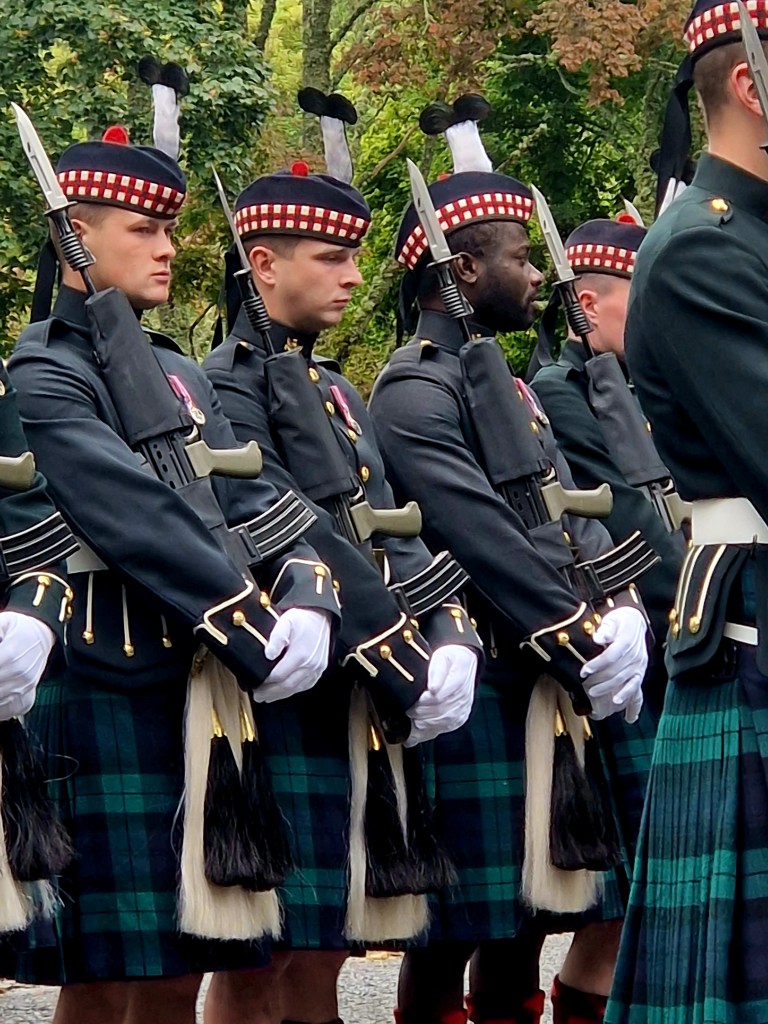
Balaklava Company, 5th Battalion of the Royal Regiment of Scotland, forms a Guard of Honour at Crathie Kirk to welcome members of the Royal Family. The British Royal Family have worshiped here at Crathie for over a century. While they are an independent rifle company, Balaklava Company are renowned for their ceremonial role in Scotland and remain on Royal Guard at Balmoral for the duration of the Monarch’s summer stay there.

Balaklava Company participated in ceremonies to escort the late Queen, Elizabeth II, in her coffin from Balmoral to Edinburgh then onward to London. They were also involved in her funeral. Lieutenant General, Nick Borton, said “It’s a deeply personal attachment for all the soldiers in the regiment to be involved in her funeral arrangements,” he said. “She was very fond of the regiment and all the soldiers in it. For us, it’s not just a military task, we’re saying goodbye to our Commander in Chief and our Colonel.”

Old Boat of Caol

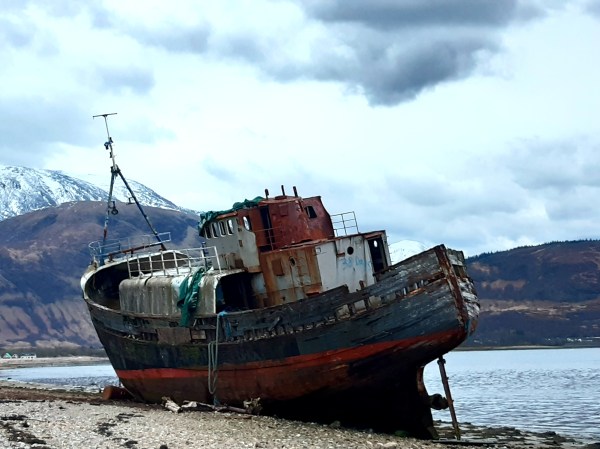
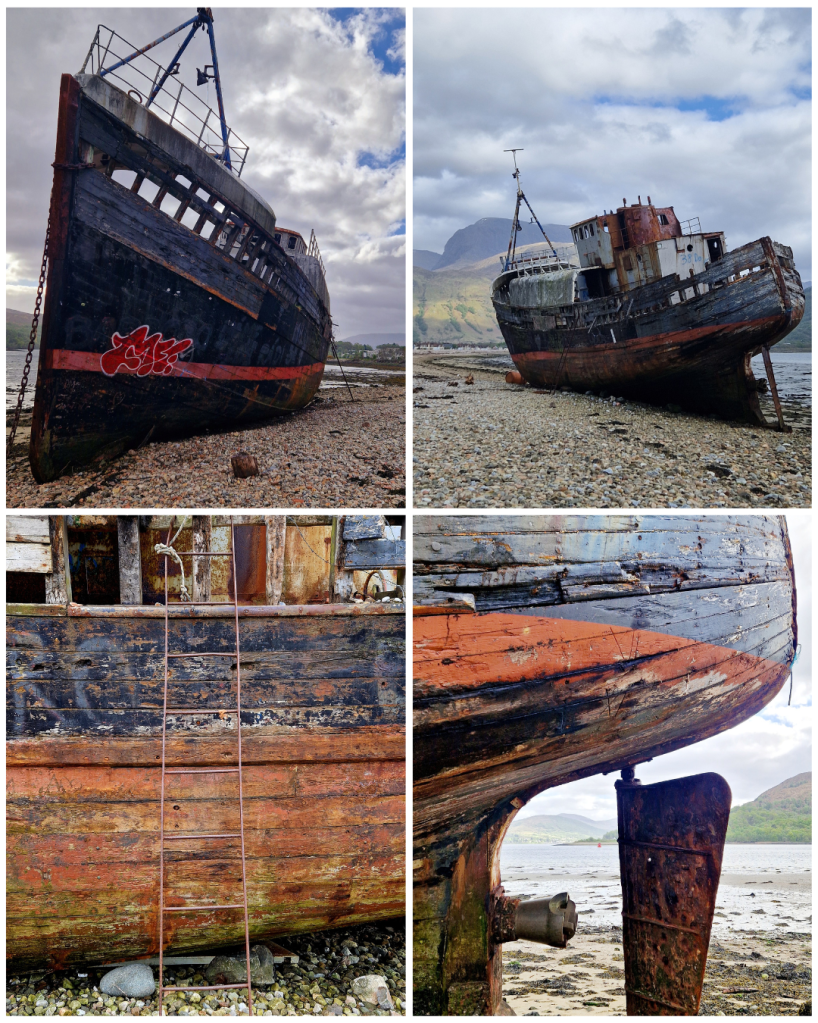
Abandoned on the stony beach between Caol and Corpach where Loch Linnhe meets Loch Eil, rests the ‘MV Dayspring’. Nicknamed ‘Golden Harvest’ she worked out of Kilheel in Northern Ireland as a trawler boat, fishing herring & mackerel until 2001. She was retired to Kinlochleven Pier in 2009 with plans to transform her into a floating restaurant. During a violent storm in 2011, Golden Harvest broke free from yet new moorings at Camusnagaul Bay, when the coast guard was required to rescue then guide her to her pebbly repose in the shadow Ben Nevis. She remains there, a photogenic and beloved celebrity.

Blog at WordPress.com.

Up ↑